Portuguese
  Spanish


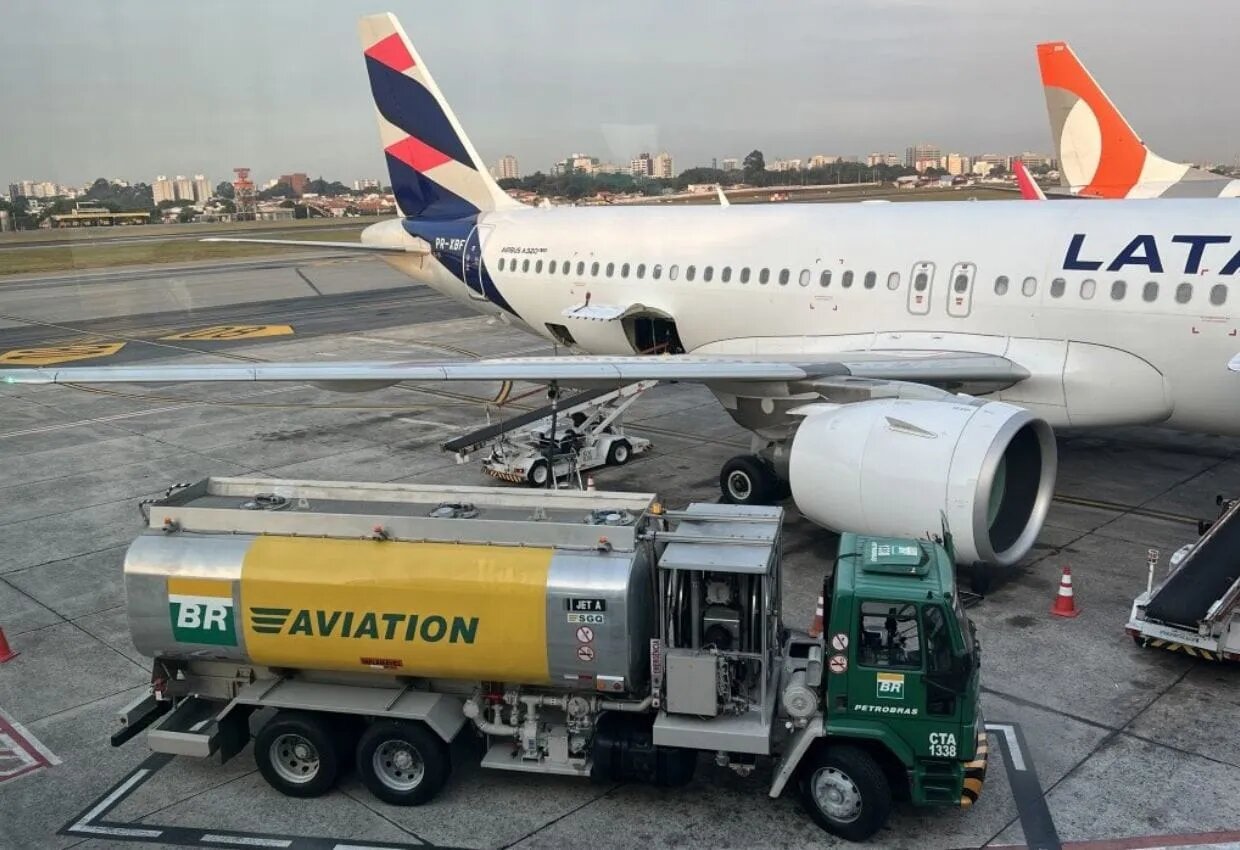

Petrobras Implements 17.1% Increase in Aviation Kerosene.
Petrobras indicated last Wednesday (02/02) the 17.1% increase in the price of aviation kerosene (QAV). The adjustments are already being applied at the state-owned refineries and represent the first fuel increase of the year.
Learn About the Differences Between Aviation Kerosene and Other Fuels


Aviation Kerosene is Adjusted and the Increase is 17.1%
Aviation kerosene (QAV), fuel used in large aircraft, following a 17.1% adjustment on February 1, was sold to distributors for approximately R$5.30 per liter or R$ 5,268.95 per m³, on average.
The increase occurred after an 11.6% drop announced at the beginning of January.
-
While NATO secured more than $10 billion in missiles and space surveillance at a single forum, Brazil still spends 1.1% of its GDP on defense and is stalling its own anti-aircraft system.

-
Corn ethanol attracts R$ 23 billion in 21 new plants and prepares for a nearly 50% jump in Brazilian production by 2027, even with high interest rates.
-
A newly opened terminal in the middle of the Amazon has begun transporting soy and corn through Amapá, eyeing the queue of ships that is congesting the ports in the South.
-
Tesla injected an additional $250 million into the German factory, doubled the battery cell target, and opened its own production line for startups.


The oil company stated that adjustments in fuel prices occur monthly and are defined by contractual formulas negotiated with distributors.
It also noted that “Petrobras’ aviation kerosene (QAV) selling prices seek to balance with the market and follow variations in the value of the product and the exchange rate, both upwards and downwards, with adjustments applied on a monthly basis, mitigating daily volatility of international quotations and exchange rates.”
Unlike the reduction on January 1, the recent increase was not announced by the company on its investor relations platform, but rather through an updated spreadsheet listing the new prices practiced by the state-owned company.
Petrobras Fuel Pricing Policy
In 2016, Petrobras established a price correction system encompassing gasoline and diesel oil, taking into account variations in the exchange rate and the value of the barrel of oil in international trade.
Shipping costs, port fees, and internal transportation costs are also considered in the calculations.
This method protects the company against possible political interventions to delay adjustments.
Conversely, price increases tend to be nearly constant in times of instability, such as the war between Russia and Ukraine, being directly felt by consumers.
The aviation kerosene produced at the company’s refineries or imported is sold by Petrobras only to distributors, who forward and sell the products to resellers, air transport companies, and other end consumers at airports.
The distributors and resellers are responsible for the installations at the airports and supply services.
After the establishment of the PPI (International Parity Price), Petrobras enjoyed successive profits and was able to distribute dividends at record levels.
According to Eduardo Sanovicz, president of Abear, “the rise in QAV prices remains the biggest challenge for Brazilian airlines, as this input represents about 40% of total costs. The volatility of the dollar exchange rate is also concerning, as more than 50% of costs are dollarized.”
Abear (Brazilian Association of Airlines) stated in a note that, over the last 12 months, fuel has accumulated a 37.8% increase.
The adjustments leading to increases in QAV fuel prices practiced by Petrobras have been identified as impactful on the total costs of air operations.