Portuguese
  Spanish


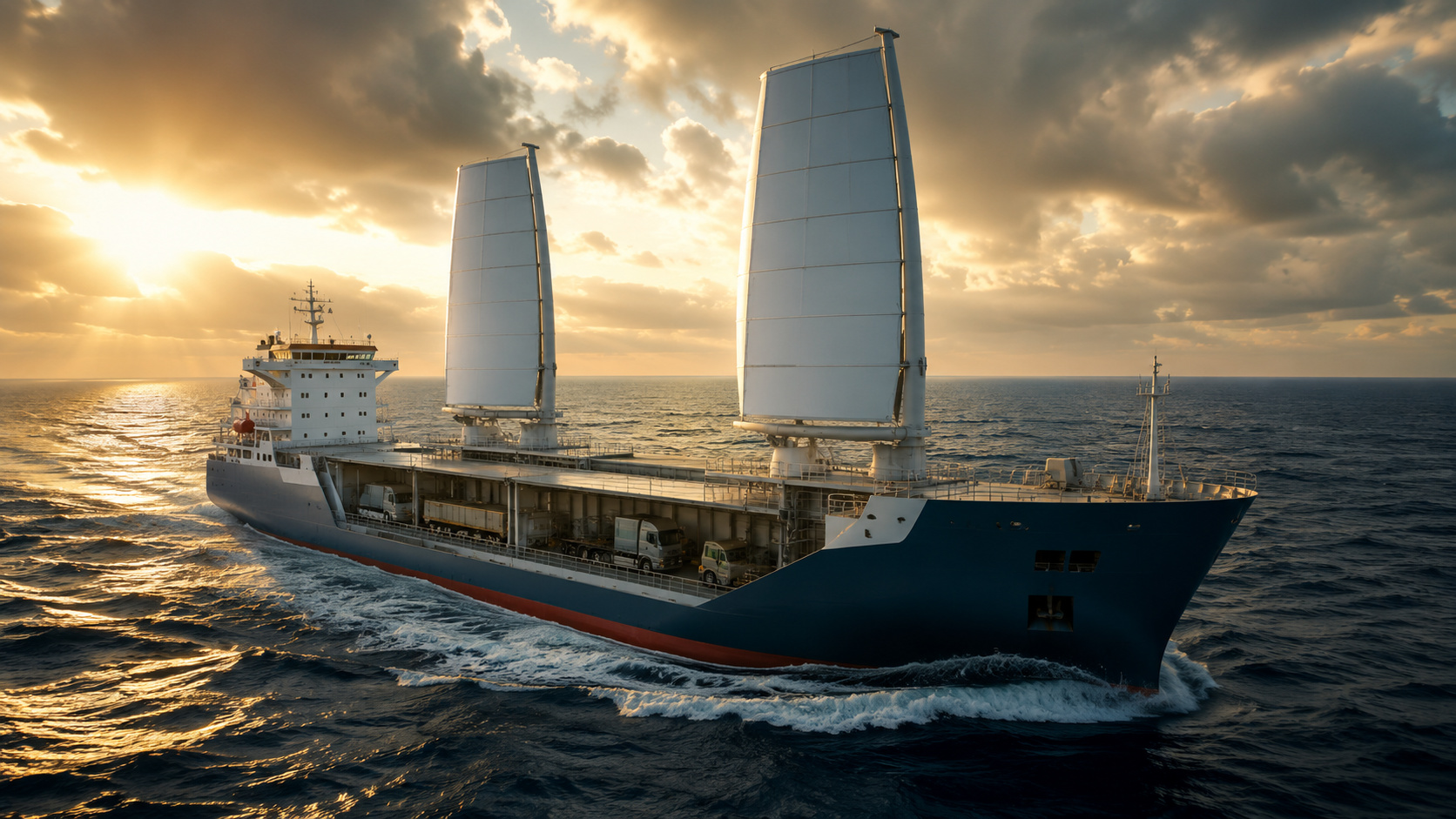
The CY Frontier was christened this week, a heavy cargo ship 180 meters long with a free deck almost the size of a football field, designed to transport giant industrial modules of up to 25,000 tons across the oceans that simply don’t fit in any container.
There is a whole universe of cargo that common logistics cannot move: an entire wind turbine foundation, an oil platform module, a refinery piece assembled on land. It is for these colossal loads that ships like the CY Frontier exist, and the new giant has just entered the scene.
A ship made for what doesn’t fit anywhere
The christening took place on July 8. The CY Frontier is 180 meters long and 43 meters wide, but the number that really impresses is the deck: a free cargo area of 43 by 140 meters, around 6,000 square meters of flat and unobstructed space.
To visualize, it’s like having a football field floating on the water, ready to receive any monstrous piece that the industry needs to transport from one continent to another. The cargo capacity reaches 25,000 tons of gross tonnage, enough to transport structures that, on land, would require dozens of trucks and weeks of logistics.
-
While modern cities rely on pumps and electricity, in Iran, ancient tunnels carried water through the desert using only slope and gravity.
-
In the land of soybeans, Sinop’s first 42-story skyscraper will consume 1,900 truckloads of concrete and 350,000 kilograms of steel, with a foundation of 50 meters, deeper than that of the future “tallest building in Brazil” in Balneário Camboriú.

-
Instead of sending families far from the city, a project in Chile intentionally created incomplete houses on expensive urban land and left technical space for each to grow.

-
To erect the “Baleia” building on the richest avenue in Brazil, he bought 35 houses, paying with trips to Disney, a truck, and even an apartment, waited over 20 years, and today the complex is valued at R$ 2.5 billion.


The CY Frontier is just the first of a series of four ships ordered by shipowners from the Netherlands and South Korea, and built in China. Ordering four ships of this size at once is a heavy bet, justified only if the demand for transporting giant cargo is truly taking off. And it is.
The engineering behind balancing colossal loads
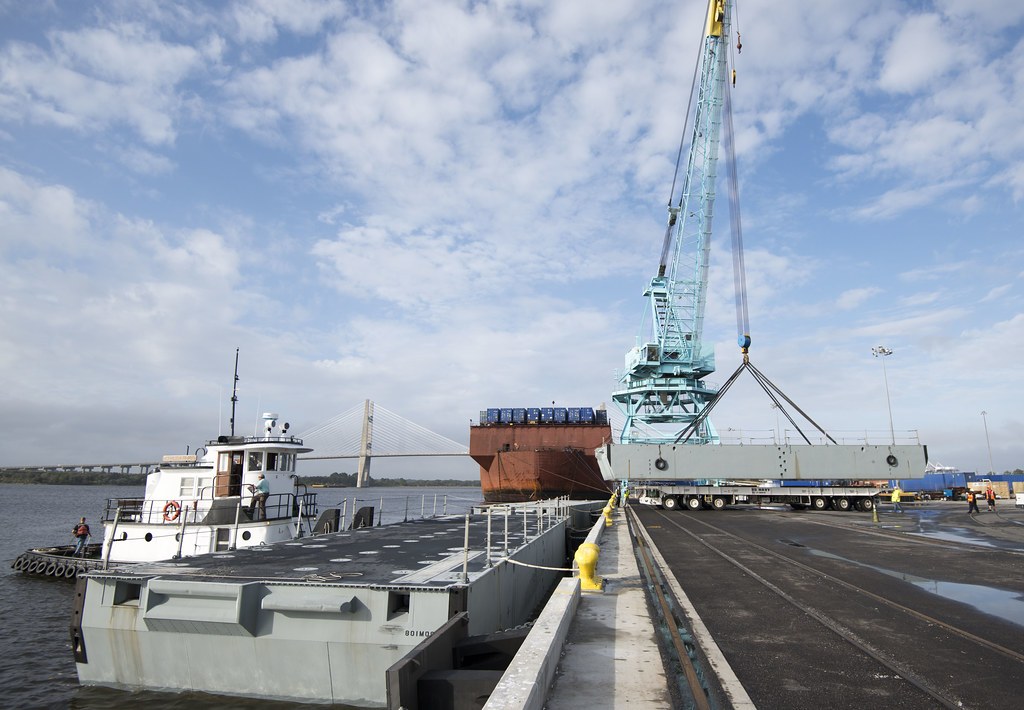
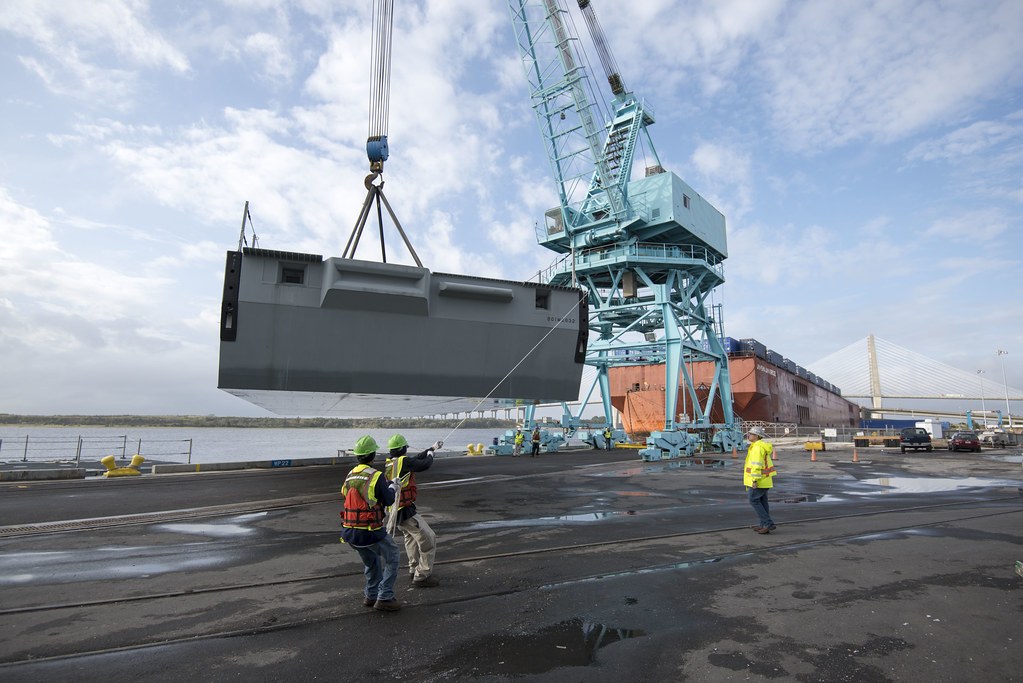
Moving 25,000 tons over water is not just a matter of having space. It’s necessary to balance the weight with surgical precision so the ship doesn’t capsize. The CY Frontier has a ballast system capable of pumping 12,000 cubic meters of water per hour, filling and emptying tanks to compensate for each cargo movement.
This type of technology allows for something spectacular: partially submerging the deck in the water so that the cargo floats over it and is simply positioned, then emerging carrying the piece. It’s the difference between hoisting a thousand-ton object with a crane and letting the physics of flotation do the heavy lifting.
I confess I find it fascinating how naval engineering solves problems that seem impossible. Transporting a unique piece the size of a building, crossing oceans, without it swaying, breaking, or destabilizing the ship, is the kind of silent feat that sustains the global economy without anyone noticing.
The energy transition driving demand
It’s no coincidence that such ships are being ordered now. The offshore wind energy boom is one of the major drivers of this demand, because each offshore wind farm requires transporting increasingly larger foundations, towers, and turbines, often assembled in one country and installed in another.
Add to that the construction of oil and gas platforms, power plant modules, and industrial equipment that grow larger with each generation, and you have an expanding market. Whoever controls the fleet capable of moving these giant pieces controls a strategic bottleneck of the global industry, and that’s why shipowners are heavily investing in ships like the CY Frontier.
Offshore wind turbines are the best example of this growing gigantism. The newest models exceed 15 megawatts of power, with blades reaching over 100 meters in length, pieces that cannot be manufactured at the installation site and need to travel whole by sea. Each of these parks requires dozens of trips by specialized ships.
It’s a market that has practically doubled in size over the last decade and continues to accelerate, driven by clean energy goals in Europe and Asia. The global fleet of heavy cargo ships is too small to meet the emerging demand, and that’s why series orders, like the four CY Frontier, have become a future bet rather than an exception.
Why China dominates the construction of these giants
It’s worth noting a detail about the CY Frontier: ordered by Europeans and Koreans, but built in China. Chinese shipyards have become world champions in manufacturing complex ships, from giant container ships to specialized heavy cargo ships, offering prices and deadlines that Western competition struggles to match.
This gives China a silent power over global logistics. Whoever builds the world’s ships influences the world’s trade, and this concentration worries governments that see dependence on shipyards from a single country as a strategic risk. The United States and Europe are already discussing how to revive their own shipbuilding industry, without much success so far.
For Brazilian readers, it’s worth remembering that the country is one of the major stages of this dance of giant pieces. The pre-salt platforms, FPSO modules, and offshore equipment that drive the national economy depend exactly on this type of specialized logistics to reach the right place.
We see a ship on the horizon and imagine stacked containers or oil in the hold. But there is a whole category of vessels that carries what no one else can, and the CY Frontier has just joined this discreet fleet that, piece by piece, is assembling the planet’s heavy infrastructure. These are ships that almost never appear in the news, but without which neither the energy transition nor deep-sea oil would get off the ground.
Have you ever stopped to think about how the giant pieces of oil platforms reach the middle of the sea?