






 Portuguese
  Spanish
  4 min of reading
  0 comments


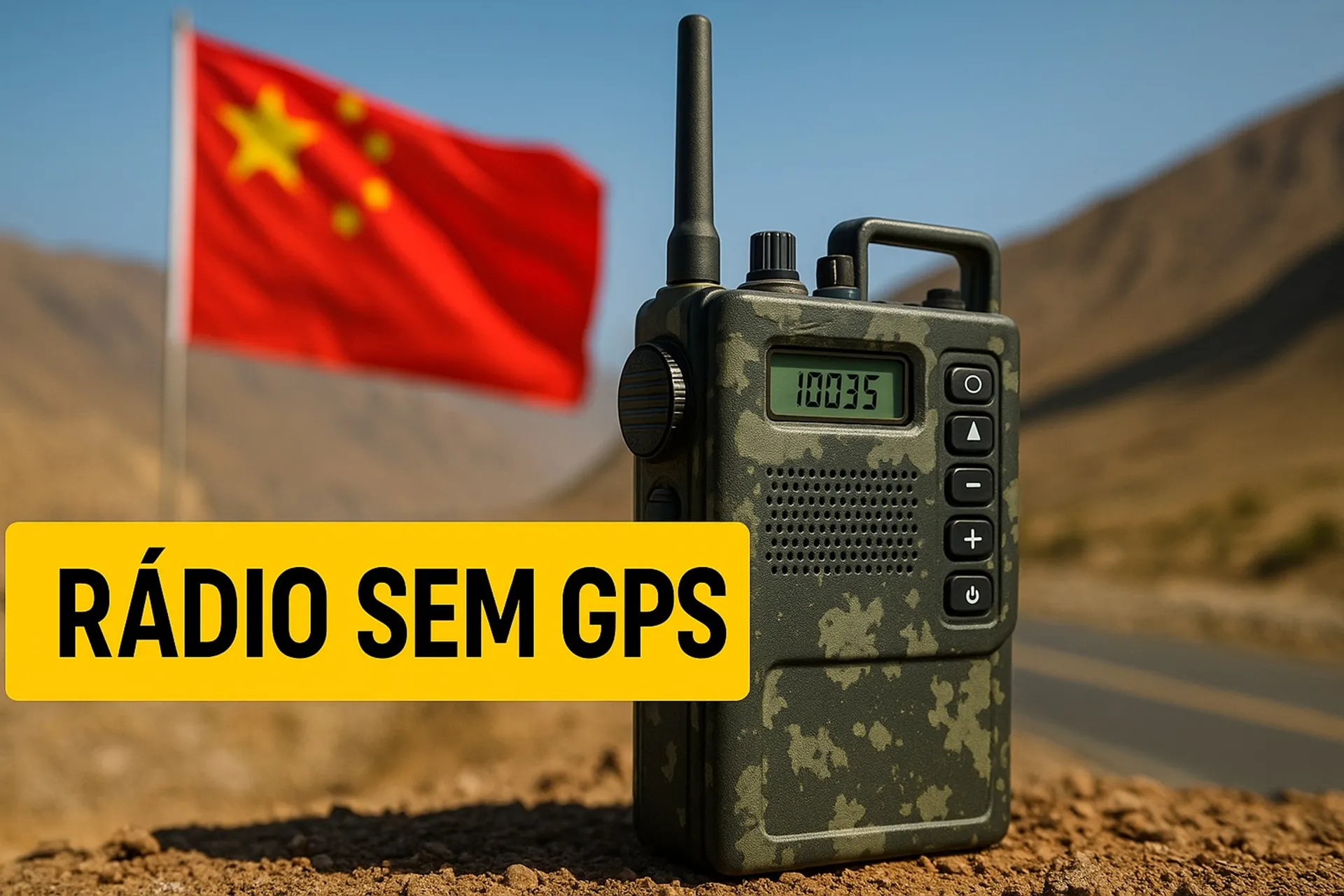
Quantum Radio Prototype Receives Signals Over Long Distances in Border Exercises, Uses Miniaturized Reception Mechanism, and Advances the Integration of Quantum Technologies into Chinese Military Operations
China has begun testing a portable 3 kg quantum radio that received signals over several kilometers in remote border areas, as it seeks to enhance military communications when conventional antennas fail in critical terrain.
China has advanced the practical application of quantum science by starting tests of a portable device designed to enhance communications for units positioned in remote border areas, according to Science and Technology Daily.
The equipment is under evaluation by teams from the People’s Liberation Army, who are seeking alternatives for regions where standard systems frequently fail due to rough terrain or limited existing infrastructure.
-
Self-Taught Chinese Farmer Builds 5-Ton Submarine from Scrap, Launches It in Anhui River

-
Invisible Induction Technology Enables Wireless Power for Blenders, Coffee Makers, and Air Fryers, Reducing Countertop Cables

-
Smart Outdoor Lighting Transforms Gardens into Living Spaces with Weather Resistance and App-Controlled Scenes

-
Green dot on top of smartphone intrigues users, signals privacy alert in Android 12 that experts say shouldn’t be ignored.




The Information Support Force confirmed that the 3 kg prototype received radio signals over several dozen kilometers during field exercises, allowing real-time decoded reading, as reported by the South China Morning Post.
Engineer Zhan Zihao stated to the outlet that the experiment will provide a new means of communication for future combat forces, especially in emergency scenarios subject to natural obstructions.
Patrol units operate in steep ravines, isolated highlands, and rugged forests where conventional signals weaken, reflect off the terrain, or cease to function, hindering strategic operations.
The new device aims to address these limitations by offering a reliable alternative when larger antennas become unfeasible, especially in areas with scarce infrastructure or physical obstacles.
Miniaturization of the Reception Mechanism
Radio communication remains essential for long-distance links as it traverses obstacles more efficiently, even though it required large antennas that reduced troop mobility on the front lines.
Traditional antennas take up significant space and incur additional costs, as well as complicating rapid movements, which led the team to completely rethink the reception model.
Zhan partnered with a manufacturer to redesign the receiver mechanism, reducing the set to just a few centimeters and allowing for a lightweight device without significant loss of perceived signal strength.
The resulting prototype maintains sufficient power for practical field use and can be carried by a single soldier, preserving mobility and ensuring continuous operation in complex terrains.
After successful tests in the Saibei grasslands, north of the Great Wall, the team is preparing additional evaluations in coastal positions deemed of higher operational risk.
Zhan stated that the battlefield can be unpredictable but predictable in trends, advocating for intensified research to ensure the rapid arrival of effective equipment to the troops.
Quantum Technologies Enter Military Units
An unidentified officer from the Information Support Force stated to SCMP that the unit is accelerating efforts to incorporate cutting-edge technologies into military digital and cyber operations.
According to this source, devices based on quantum theory in the areas of communication, detection, and computation are gradually exiting laboratories and entering operational frameworks.
The officer emphasized that a new generation of equipment will emerge aimed at strengthening the military’s cyber system, focusing on security and performance in the field.
China and the United States are heavily investing in quantum technologies, seen as capable of reshaping detection, cryptography, secure data transfer, and situational awareness in military environments.
Both countries assess that quantum devices could represent a significant strategic advantage in potential future disputes, enhancing monitoring capabilities and protecting critical information.
Growing Competition Between China and the United States
In recent months, China has unveiled various quantum innovations, including a mass-produced ultra-low noise single photon detector in October, designed to track stealth aircraft with greater precision.
Called a photon collector, the system identifies minimal units of electromagnetic energy and is compatible with quantum radar platforms and quantum principle-based encrypted communication.
A November report from the U.S.-China Economic and Security Review Commission noted that quantum computers will profoundly affect communications and data security while generating important military advantages.
The document highlighted that the United States leads much of the quantum research but acknowledged that China has mobilized industrial-scale funding and centralized coordination to advance quantum systems.
The commission assessed that China leads in quantum communication and is rapidly progressing in computing and sensing, driven by integration among state laboratories, defense-related companies, and PLA demands.
The report concluded that China’s pursuit of quantum technologies aligns with national security objectives, indicating a trend of continued expansion of these tools.
Additional elements of the document mention that cooperation between state and military sectors accelerates the practical application of research, expanding quantum presence in critical operations, which has generated some technical debate.
The final assessment reinforces that the transition of these technologies for military uses represents one of the central points of strategic competition between the two powers in recent years.





Be the first to react!