






 Portuguese
  Spanish
  5 min of reading
  0 comments


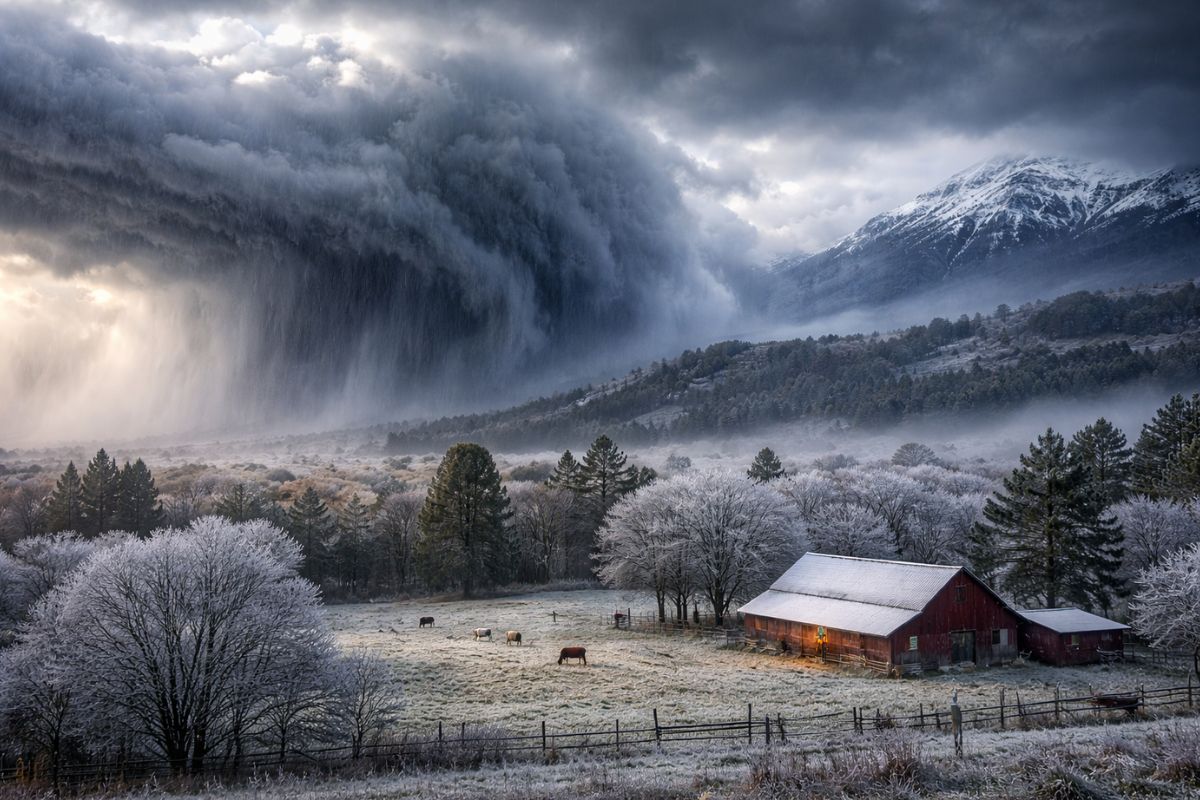
An extratropical cyclone alters the weather across Brazil this weekend, bringing rain of up to 100 mm over the North and Northeast while pushing polar air to the South, lowering temperatures and increasing the risk of frost in the southern and Santa Catarina mountains.
Meteored confirmed this Friday (18) that an extratropical cyclone already in action over Brazil will intensify its effects on Sunday (19), altering the wind circulation in the central-southern part of the country and pushing concentrated moisture to the North and Northeast regions. The cyclone migrates towards the Atlantic, but even as it moves away from the national territory, it continues to influence the weather through the wind patterns it reorganizes. In the North and Northeast, the cyclone favors the transport of warm and humid air that feeds the formation of heavy clouds, while in the South the effect is the opposite: a pocket of polar air penetrates the continent and lowers temperatures, with the possibility of frost in the mountainous regions.
The scenario is concerning because the second half of April had already begun with instability in the North, fluctuations in the South and Southeast, and elevated temperatures that do not give way in the central part of the country. The capitals of the Northeast are in a particularly delicate situation, as the soil is saturated from rains that have not stopped for several consecutive days, which amplifies the risk of flooding if new episodes of heavy precipitation occur. Meteored advises that populations in risk areas stay alert to official communications and take extra precautions while the cyclone maintains influence over the weather.
How the extratropical cyclone changes the direction of winds in Brazil

The mechanism behind the climate changes this weekend lies in how the cyclone reorganizes the wind patterns over the continent. As it migrates to the Atlantic, the system changes the direction of the currents in the central-southern part of the country, directing dry air inland and reducing cloud cover in those regions. This is why states like São Paulo and Minas Gerais may experience clearer skies while the North and Northeast face heavy rain.
-
Brazilian student creates a cheap formula that makes plants grow up to 90% faster and wins an award in a global scientific competition.

-
Europe unveils armored tank with remote turret, 1,500 horsepower, and 120-millimeter cannon

-
Old hard drives may hide neodymium, dysprosium, praseodymium, and terbium, and a United States company is expanding its network with a new 93,000-square-foot facility to recover rare earths used in electric cars, artificial intelligence, defense, and renewable energy.

-
Giant crane lifts up to 3,000 tons, requires special logistics to reach the site, and can transform 18-hour operations into just 3 hours, speeding up the hoisting of oil platforms, refineries, and plants in giant industrial projects.




In the opposite direction, the cyclone pulls tropical moisture upwards, feeding instability in the northern regions. The contrast between the dry air advancing inland and the humid air concentrated in the North and Northeast is precisely what produces the high accumulations forecasted by Meteored. This circulation pattern is typical of extratropical cyclones that form in the southern part of the continent and migrate to the ocean, leaving a trail of climate changes that extends for thousands of kilometers.
Rainfall of up to 100 mm: where the cyclone is expected to cause the most impact
The most significant volumes of precipitation are expected in the North and Northeast, with accumulations that may reach or exceed 100 mm in isolated spots throughout Sunday. Meteored has released specific projections for some capitals: Porto Velho may receive 80 mm, São Luís 57 mm, Manaus 55 mm, Natal 46 mm, and Belém 42 mm. These are significant values, especially when concentrated in a short span of hours.
The aggravating factor is that the soil in several northeastern capitals is already saturated. Days of continuous rain have reduced the ground’s capacity to absorb new volumes of water, turning any additional precipitation into a potential for flooding. The cyclone, even as it moves away, maintains the flow of moisture that feeds these rains, and the trend is that the risk of disruptions will remain high until the system loses strength over the region’s wind patterns.
Freezing air in the South: the other side of the cyclone
While the North and Northeast deal with excess water, the South of Brazil faces the opposite effect of the same cyclone. The passage of the system paves the way for a cold air mass of polar origin to advance across the continent, significantly dropping temperatures in states like Rio Grande do Sul, Santa Catarina, and Paraná. The drop is more pronounced in mountainous areas, where conditions favor the formation of frost.
The risk of frost in the southern mountains is real and deserves the attention of rural producers and residents of high-altitude regions. The combination of the cold air brought in the wake of the cyclone and the reduction of cloud cover inland, which allows for greater heat loss during the night, creates ideal conditions for temperatures to drop below zero in the early mornings. This scenario is common during the passage of extratropical cyclones through the southern part of the continent, but it still surprises those who expect mild temperatures in mid-April.
What the cyclone means for the central-south of Brazil
The Southeast and Central-West regions find themselves in an intermediate position in this episode. The change in wind circulation caused by the cyclone tends to reduce humidity inland in these areas, which may result in drier days with greater temperature variation. This means cold mornings and hot afternoons, with few chances of significant rain while the system remains active over the Atlantic.
The high temperatures that have dominated the central part of the country since the beginning of the second half of April may remain or even rise with the arrival of dry air. The extratropical cyclone, therefore, does not affect all regions in the same way: it brings excess rain to some, cold to others, and dryness to a third group. It is this diversity of simultaneous impacts that makes this type of phenomenon relevant for the entire country, even when the center of the system is already over the ocean.
How to protect yourself from the effects of the cyclone this weekend
The main guidance is to follow the alerts issued by meteorological services and avoid risk areas during periods of heavier rain. In the North and Northeast, the priority is to avoid unnecessary movements in areas prone to flooding and to monitor the levels of rivers and streams nearby. Saturated soil makes any additional volume of water potentially dangerous.
In the South, the concern is with the sudden drop in temperature and the risk of frost. Agricultural producers should protect crops sensitive to cold, and the general population needs to prepare for early mornings with temperatures close to or below freezing in the mountains. The extratropical cyclone is already in the process of moving to the Atlantic, but its effects on the climate in Brazil are expected to extend until the beginning of next week before dissipating completely.
And you, have you felt the change in weather in your city? Are you preparing for the rain or the cold? Tell us in the comments how the cyclone is affecting your region.


Be the first to react!