Portuguese
  Spanish


China Reinforces Control Over Rare Earth Magnets, Restricts Exports, and Exposes Global Automakers’ Dependence on Electric Vehicle Production.
Rare earth magnets are essential for electric cars. They are present in most synchronous electric motors, converting energy into motion.
The most important thing is that 90% of these magnets come from China, produced from lanthanides such as neodymium and dysprosium. These elements support the efficiency and range of electric and hybrid vehicles.
Despite the name, rare earths are not scarce. The problem lies in their low concentration in the Earth’s crust. Extracting and refining these minerals requires expensive and complex processes.
-
Egypt Discovers 18 Ancient Tombs with Gold Tongues, Unveiling Unusual Funeral Rituals and Amulets Believed to Give Voice to the Dead

-
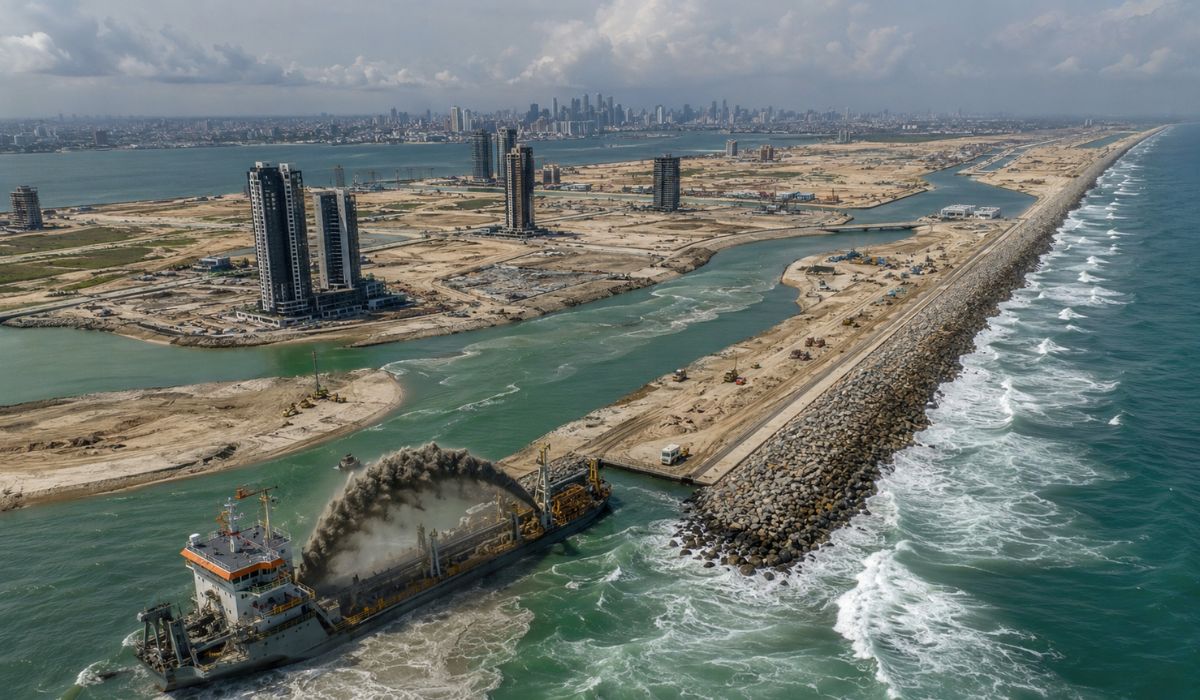
Nigeria Dumps 120 Million Tons of Sand into Atlantic to Build Massive City with 8.4 km Sea Wall for Protection Against Ocean Waves and Erosion
-
German Engineer Developed Diesel Engine Running on Vegetable Oil Decades Before Electric Cars Became Popular; Can This Forgotten Idea Work in 2026?

-
James Webb Telescope Uncovers Unexpected Clues on Mysterious Moon, Potentially Redefining Planetary Origins




The China stood out because it built a complete supply chain, from mining to finished magnets, thus consolidating its monopoly.
The Role of Permanent Magnets
In current vehicles, neodymium-iron-boron (NdFeB) and samarium-cobalt (SmCo) magnets dominate the motors. They ensure higher energy efficiency, reduced consumption, and greater range per charge. Additionally, they allow for compact and lightweight motors that generate high power and can withstand high temperatures without compromising performance.
This combination has made permanent magnets virtually indispensable for automakers. Therefore, any change in the supply flow generates immediate effects in the automotive industry.
The New Restrictions Imposed by Beijing
At the beginning of 2025, China tightened control over these materials even further. First, it required special licenses for the export of rare earth compounds and oxides. Then, in April, it expanded restrictions on already manufactured magnets and seven heavy elements of the group. This means that any shipment abroad now requires government authorization.
The result was immediate. Only about 25% of license requests were approved. This blockade brought delays, uncertainties, and risks of shortages. The global supply chain began to operate under constant pressure.
Automotive Industry Reaction
The automakers felt the direct impact. The difficulty in securing supply threatens both electric vehicle production and assistance systems. Some companies are studying the possibility of moving part of their production outside China. Others are looking for new suppliers. However, building refining and magnet manufacturing capacity in the West takes time and requires high investments.
Therefore, alternatives are not immediately available. Structural dependence remains a real challenge.
Motors Without Rare Earths
Meanwhile, engineers are working on solutions that eliminate the need for these magnets. One example is induction motors, used in certain Tesla models. They generate the magnetic field from currents in coils, thus eliminating the need for rare earths. However, they have limitations: they tend to be larger and may be less efficient in some situations.
Another option is switched reluctance motors. They do not use permanent magnets but bring other problems. They are noisier and require sophisticated control systems. This implies complex redesigns in the projects.
Projects to Reduce Dependence
In light of this scenario, governments and companies in Europe and the United States are investing in “mine-to-magnet” projects. The goal is to create their own supply chains.
In the U.S., the Mountain Pass mine has been reactivated. In Europe, factories are being set up to produce magnets locally.
Despite the progress, the process is not simple. Producing high-performance magnets takes time and involves overcoming intellectual property barriers and high costs. Therefore, the expectation is that results will come gradually.
A Strategic Turning Point
The struggle for control over rare earths has become a turning point for the automotive industry. The tug-of-war between Chinese dominance and diversification efforts will shape the near future. Additionally, it directly influences the transition to cleaner mobility.
Ensuring access to these materials while exploring alternative motors has become a strategic priority. The success or failure of these initiatives will determine the strength of automakers and even the geopolitical balance. Because, despite the name, rare earths are proving to be central to the future of electric mobility.