Portuguese
  Spanish


On the night of July 30-31, the sky promises a rare spectacle: two meteor showers will share the same night, offering the Southern Hemisphere a privileged chance to observe luminous trails without a telescope or binoculars.
According to the National Observatory, the Alpha Capricornids and Delta Aquariids meteor showers peak in the same week at the end of July — and in 2026, both maximums precisely coincide on the night of July 30-31. The Delta Aquariids is one of the most reliable winter showers in the Southern Hemisphere, with a rate of 15 to 25 meteors per hour at its peak and observation favored from 10 PM anywhere in Brazil.
The Alpha Capricornids, with a more modest rate of 5 meteors per hour, compensate in quality what they lack in quantity: they are famous for their bolides — exceptionally bright meteors that can illuminate the entire field for fractions of a second, leave persistent colorful trails in the sky, and, in some cases, visibly fragment as they cross the atmosphere. “Meteors are small celestial bodies that cross space and penetrate the Earth’s atmosphere, igniting partially or completely due to interaction with the atmosphere and oxygen,” explained Dr. Marcelo de Cicco, coordinator of the Exoss meteor monitoring project, linked to the National Observatory.
“This phenomenon creates a luminosity in the sky, commonly known as a shooting star.” On the night of July 30-31, instead of one shower of shooting stars, the Brazilian sky will have two — with different characteristics, different origins, and different spectacles, superimposed in the same field of view.
-
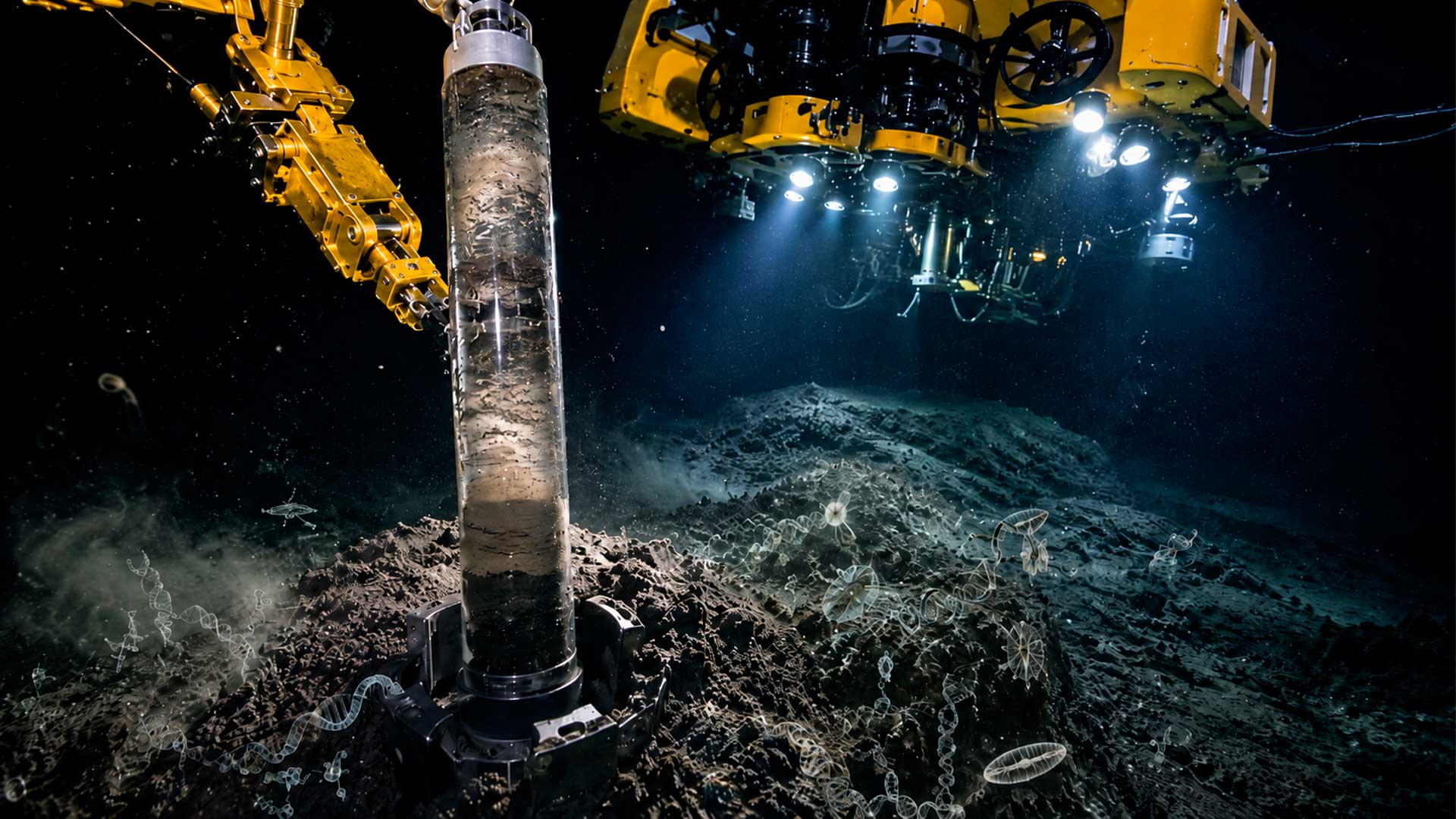
At a depth of 5,000 meters, where there is no sunlight, researchers found ancient DNA preserved in the mud of the South Atlantic and discovered signs of organisms that did not match known records.

-
At 77 years old, a retired woman who never tires of learning completes her second degree in design in Ceará and moves people by revealing the help of her 98-year-old mother in the final project.
-
China’s masterstroke: a plant capable of regrowing even when buried by sand helps to recover more than 7,300 hectares of desert with 5 million seedlings, roots over 10 meters deep, and rainfall below 150 mm per year.
-
Portugal placed 1.4 million m³ of sand in the Algarve, spent 14.9 million euros to recover 6.7 km of beaches between Quarteira and Garrão, and is now trying to gain 37.5 meters of shoreline before the sea advances again.



Why July and August are the best time to see meteors in Brazil
There is a pattern in the astronomical calendar that systematically favors the Southern Hemisphere in late winter: July and August concentrate some of the best meteor showers of the year in terms of visibility for Brazilian observers.
The reason is geometric and has to do with the position of the radiants — the points in the sky from which meteors appear to emerge — in relation to the observer’s latitude. Northern Hemisphere showers, like the famous August Perseids, have their radiant high in the sky for European and North American observers but low on the horizon for Brazilians, significantly reducing the visible rate. Showers with a radiant near the Equator or in the southern celestial hemisphere are seen in better conditions from here.

The Southern Delta Aquariids have their radiant near the star Delta Aquarii, in the constellation Aquarius — a constellation that rises well in the Brazilian sky during winter. The Alpha Capricornids have their radiant in the constellation Capricorn, equally favored in tropical and subtropical latitudes during this period. The Southern Delta Aquariids are a constant and reliable shower, with good visibility in Brazil from 10 PM.
The austral winter — July and August — is also a period of drier skies in much of Brazil, especially in the Central-West, Southeast, and South, where the dry season reduces cloudiness and increases the chances of clear nights. This makes late July particularly convenient for astronomical observation in the country: two simultaneous showers, potentially clearer skies, and an accessible start time, 10 PM, without needing to wake up in the middle of the night.
The Delta Aquariids: the shower nobody knows but everyone should
The Southern Delta Aquariids are one of the most underestimated meteor showers in the Brazilian astronomical calendar — underestimated because they rarely receive the coverage of the Perseids or Geminids, but consistently produce one of the best visible spectacles in Brazil during winter.
The shower occurs between mid-July and late August, peaking on the night of July 30-31. The zenithal hourly rate at the peak is 15 to 25 meteors per hour under ideal conditions — in a completely dark sky, without the Moon, with the radiant at the zenith. In practice, an observer in a semi-urban area with some light pollution can expect to see between 10 and 15 meteors per hour during peak hours, which is equivalent to one shooting star every four to six minutes — a frequency sufficient to maintain attention without frustrating those watching.

The Delta Aquariid meteors fly at about 145,000 km/h. This speed is moderate for a meteor shower — the Perseids reach 210,000 km/h and the Leonids 250,000 km/h. Slower meteors tend to be visually more satisfying for casual observers: the trail lasts longer, the brightness is more sustained, and it’s easier to follow the meteor’s full path before it disappears.
The origin of the Delta Aquariids still has an unresolved scientific mystery. The comet that gives rise to the Delta Aquariid shower is possibly 96P Machholz, although scientists are not yet certain. Comet 96P Machholz is an unusual object — its chemical properties are different from most comets in the solar system, with very low concentrations of certain organic compounds that most comets have in abundance.
Some researchers have suggested that it may be of interstellar origin — a visitor from another star system that was captured by solar gravity. If this hypothesis is correct, the Delta Aquariid meteors could literally be fragments of material that formed around another star.
The Alpha Capricornids: few meteors, many fireballs
The Alpha Capricornids are the complementary shower on the night of July 30th to 31st — and their complementarity is almost perfect in terms of profile: where the Delta Aquariids offer frequency, the Alpha Capricornids offer intensity. The hourly rate of the Alpha Capricornids is modest: about 5 meteors per hour at its peak. For an observer who spends the entire night looking at the sky, this amounts to one meteor every twelve minutes on average. It’s not a frequency that impresses in itself. What is impressive is what these meteors do when they appear.
The Alpha Capricornids are known for producing fireballs — meteors of such high magnitude that they can be brighter than Venus at their peak, sometimes reaching negative magnitude and illuminating the field like a flash. Some Alpha Capricornid fireballs leave persistent trails that last 5 to 30 seconds after the meteor passes — streaks of ionized gas that the high-altitude wind progressively distorts, creating shapes that change as you watch.
Some visibly fragment into multiple points of light that diverge in the sky. In previous years, Alpha Capricornid fireballs have been recorded as visible to the naked eye during the day, such was their intensity.

The shower is active between July 3rd and August 15th, peaking on July 30th. Its radiant is in the constellation Capricorn, a neighbor of Aquarius in the Southern Hemisphere’s winter sky. Since the two constellations are in close positions in the sky, the meteors from both showers appear to emerge from neighboring regions — meaning an observer doesn’t need to choose between one and the other. Just look south and southeast after midnight to be well-positioned to see meteors from both.
The mystery of origin: two comets that science has not yet fully confirmed
One aspect that rarely appears in meteor shower coverage — because it’s more complicated than the numbers of meteors per hour — is the question of origin. For most showers, the origin is established: the Perseids come from Swift-Tuttle, the Eta Aquariids and Orionids come from Halley, the Geminids come from the asteroid Phaethon. For the Delta Aquariids and Alpha Capricornids, the origin still has scientific uncertainty.
The Delta Aquariids are associated with comet 96P/Machholz — but “associated” does not mean “confirmed.” 96P/Machholz has an orbit that passes near the shower’s radiant point and an orbital period of approximately six years, making it a plausible candidate. But definitive confirmation would require more precise trajectories of individual meteoroids, which current instrumentation does not provide with the necessary accuracy for all particles of the shower.
The Alpha Capricornids have an even more uncertain situation. Different analyses point to different comets as possible progenitors, with no consensus in the literature. Some studies associate the shower with comet 169P/NEAT; others find better matches with different objects. The uncertainty about the origin does not diminish the spectacle — but it adds a detail that makes observing these showers more interesting for those who know: every meteor you see is a fragment of an object whose name is still debated by science.
How to observe and what to expect in practice
Preparation for the night of July 30-31 follows the same principles as any meteor shower observation — and simplicity is the most important characteristic of the event. No equipment is necessary. Telescopes and binoculars are counterproductive for meteor showers: their narrow field of view captures only a tiny fraction of the sky and misses meteors that appear outside the field.
The eyes, with their nearly 180-degree field of view, are the only instrument needed — provided they are adapted to the dark. The process of visual adaptation to darkness takes approximately 20 minutes, during which the photoreceptor cells called rods reach maximum sensitivity. Any bright light restarts this process.
The best observation window is from 10 PM until dawn, with the meteor rate progressively increasing as the radiant rises in the sky. Peak activity usually occurs between 2 AM and 4 AM, when the radiant is at its highest point in the sky and Earth is rotating head-on into the meteoroid stream. At this time, an observer in a low light pollution area — a rural site, a field area far from highways, a park away from urban centers — can expect to see 20 to 30 meteors per hour from the combination of the two showers.
For those in the city who cannot or do not wish to travel to a rural area, observation is still possible. Areas with good views to the south and east — away from yellow sodium streetlights, which are the most interfering — can offer a rate of 5 to 10 visible meteors per hour at the peak. It’s not the dark sky spectacle, but it’s enough to see the bolides of the Alpha Capricornids, which are bright enough to cut through moderate light pollution.
Apps like Stellarium, Star Walk, and Sky Safari show the real-time position of the constellations Aquarius and Capricorn according to the observer’s location — useful for those still learning to navigate the night sky without prior experience.
The Week’s Context: A Dawn the Sky Remembers
The night of July 30-31 will not have significant lunar interference — the Moon will be in its waxing crescent phase, setting relatively early and leaving the sky dark during the most productive hours of the early morning. This is different from other peak shower nights throughout the year when a full Moon can drastically reduce the rate of visible meteors.
Beyond the two showers, the July sky offers one of the best planetary contexts of the year: Saturn will be visible in the southern part of the sky, with its rings discernible through a small telescope or quality binoculars. Mars, fainter, shares the winter sky. Venus, on the western horizon at dusk, is still in its evening visibility phase.
The combination of two simultaneous meteor showers — one frequent and one of bolides — with a favorable sky, an absent Moon during peak hours, and a rich planetary context makes the turn from July to August one of the most complete moments in the Brazilian astronomical calendar of 2026. There’s no eclipse. There’s no rare alignment. There’s just the winter sky doing what it does every year at this time — but in 2026, doing it double.