






 Portuguese
  Spanish





Self-Regularization Letters Reach 2025 Income Taxpayers with Guidance to Correct Discrepancies Before Audits. The Cross-Check Includes Consolidated Data from e-Financeira, Such as Pix, TED, DOC, and Cards, with Semiannual Deadlines and a Focus on Risk Management.
The Federal Revenue Service began sending letters to taxpayers with their 2025 Income Tax return caught in the review process, informing them of inconsistencies and guiding them on self-regularization before potential summons.
According to the agency, the letters started to be mailed on October 1 and will continue in batches until October 18, covering 397,731 individuals across the country.
This measure is part of the 2025 Letters Project and aims to encourage the voluntary correction of information, with the possibility of avoiding the administrative penalty of 75% stipulated in the law for cases where the assessment is made by the tax authority.
-
Brazilian Startup Turns Coffee Grounds into Plant-Based Leather, Cutting Water Use by Over 50 Times for High-Impact Sustainable Fashion

-
Eco Invest Auction Aims to Unlock $10 Billion in Investments, Focusing on Green Fertilizers, Critical Minerals, Batteries, and AI for Clean Industry in Brazil

-
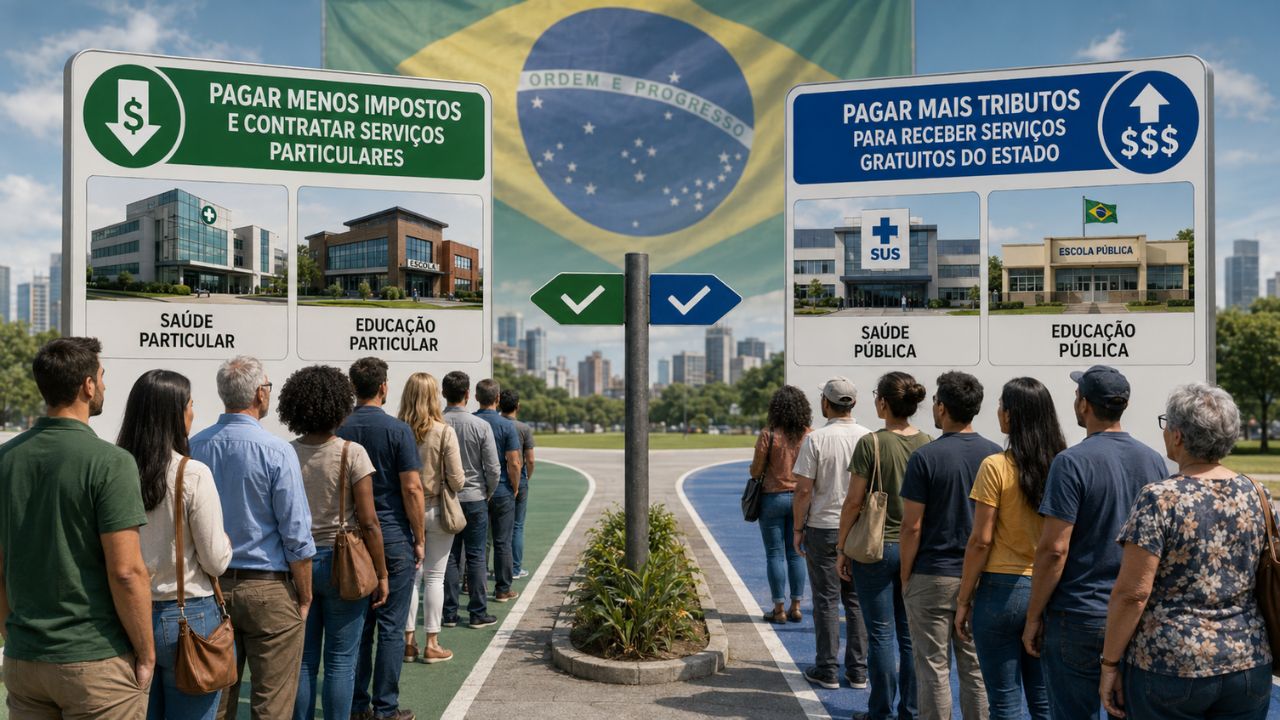
Half of Brazilians Prefer Lower Taxes with Private Health and Education, While 44% Opt for Higher Taxes for State-Provided Services, Datafolha Survey Reveals

-
Brazil’s Most Expensive Toll Rises to R$ 40.60 on Route from São Paulo to the Coast, Nearly Matching Bus Fare to Santos



How to Proceed in e-CAC
The procedure indicated by the Revenue Service does not require in-person attendance.
The taxpayer should access the My Income Tax service on the e-CAC portal or the official app, check if the return shows “With Pending Issues” and consult the reason for being under review.
When there is an error, it is possible to amend the return and pay any tax difference along with the required legal additions.
The guidance aims to expedite the resolution of discrepancies and reduce costs for public administration and for the taxpayer, who can regularize their situation before a formal tax action.
Data Cross-Check via e-Financeira
The sending of letters occurs in a context of expanding data cross-checking through e-Financeira.
Starting in 2025, financial institutions, card administrators, and payment entities will report to the Federal Revenue the monthly totals of inflows and outflows by account, without identifying each individual transaction.
The information comprehensively covers operations such as Pix, TED, DOC, cards, withdrawals, and deposits.
For individuals, the reporting obligation considers transactions that exceed R$ 5,000 in a month; for legal entities, R$ 15,000 monthly.
According to the Revenue Service, there is no detailing of the source or destination of funds, and the focus is on risk management.
The calendar for delivery is semiannual: first-semester data must be reported by August and second-semester data by February of the following year.
There Is No Tax on Pix
The Revenue Service reiterates that there is no tax or fee on the use of Pix.
The regulatory changes, in effect since January, update an old accessory obligation, replacing the Declaration of Credit Card Transactions (Decred) with a specific module within e-Financeira.
The purpose is to expand coverage and standardize the receipt of consolidated data, respecting banking and tax secrecy.
In addition to supporting the selection of taxpayers for analysis, the information can be used to improve services, such as the pre-filled tax return, reducing the occurrence of discrepancies due to the involuntary omission of income.
Self-Regularization Avoids Administrative Penalty
The 2025 Letters Project does not constitute an assessment.
It is a preventive notice for the taxpayer to check data and, if necessary, to promote self-regularization.
Spontaneous amendment, made before a summons, avoids the 75% administrative penalty and subjects the taxpayer to the payment of the owed tax with a delinquency penalty calculated per day of delay, limited to 20%, in addition to interest based on the Selic rate.
Those who do not correct the information and are summoned may be assessed, with the imposition of the administrative penalty and other charges provided for by law.
Common Reasons for Review
The discrepancies that motivate the sending of letters are varied and are not limited to financial transactions.
In previous years, the main reasons for retention included omission of taxable income, incorrect deductions — especially medical expenses without proper documentation or inconsistent with what was reported by the providers —, inconsistencies in rents and income received from individuals, in addition to income from financial investments not fully reflected in the return.
In 2025, the integration of sources such as e-Financeira and third-party declarations is likely to increase the accuracy of the cross-check, raising the chances of detecting discrepancies between reported incomes and the consolidated movements reported by institutions.
What Is Reported by Institutions
Regarding transactions via Pix and other payment methods, the Revenue Service clarifies that institutions report only the monthly totals moved to and from.
This means the system does not identify to whom a specific payment was made or the nature of each transfer.
The risk analysis, therefore, considers the set of available information — such as income reported by paying sources, invoices issued, service declarations, and registry data — to assess the consistency of what has been declared.
Ultimately, being under review does not, by itself, constitute an accusation of irregularity, but a signal that the declaration requires documentation verification or correction.
Combating Misinformation
The Revenue Service has also been disseminating alerts against misinformation.
Among the key points reinforced are the non-existence of new taxes on payment methods, preservation of banking secrecy, and the consolidated nature of reports.
The new rules apply to institutions regulated by Central Bank, CVM, Susep, and Previc, which must comply with reporting deadlines and technical standards within the Public Digital Accounting System.
The stated goal is to concentrate fiscal oversight efforts on situations with signs of material inconsistency and, at the same time, reduce approaches to taxpayers without fiscal risk.
Practical Guidance for Taxpayers
In practical terms, the recipient of a self-regularization letter should confirm that all received income is included in the return.
They should check if deductions, such as medical expenses and education, are properly documented.
They need to verify the consistency between income reports, invoices, and information that may have impacted tax calculations.
When there is an error, the amendment is made through the same channels, with the submission of a new return.
If the data is correct, the guidance is to keep the supporting documentation for potential presentation, if the return remains under review until a conclusive analysis.
Reach and Audience
The initiative is part of the annual compliance routine and tends to have a direct impact on the audience with greater exposure to electronic payments and service receipts, such as freelancers and self-employed professionals, without being restricted to this group.
The Revenue Service does not disclose breakdowns by economic activity or region in the communications about the letters but informs the total volume of recipients and the sending period.







Imposto criado a pouco mais de cem anos para combater a pobreza.
População, depois de um século ainda permanecendo pobre.
Imposto é roubo e sonegar é auto defesa.
O negócio então é parar de pagar os cartões de crédito, pq como vou declarar que emprestei o cartão para familiares e eles fazem Pix na minha conta pra pagar os cartões?