Portuguese
  Spanish


International study tracks fan data during the Cup to understand how football emotions affect the body.
An initiative led by the University of Bielefeld in Germany is mobilizing fans from different countries for a study that aims to observe something little explored on a large scale: the physical changes caused by the emotions of football. Using information recorded by smartwatches and other wearable devices, the study seeks to track how the body reacts during the Cup in moments of tension, celebration, or frustration experienced throughout the matches.
The proposal is to gather data from fans of all teams involved in the tournament to identify patterns related to the body’s behavior in situations of strong emotional involvement. The records analyzed include indicators related to the body’s functioning and the daily habits of the participants.
How does the study turn emotions into data?
Instead of relying solely on interviews or reports from fans, the researchers opted for an approach based on information automatically collected by the devices used by the volunteers.
-
Tesla injected an additional $250 million into the German factory, doubled the battery cell target, and opened its own production line for startups.

-
No more TV stuck on the wall: Samsung The Freestyle+, the new projector with over 400 lumens projects on walls, floors, and ceilings, bringing cinema to any corner of the house.

-
A Japanese governor single-handedly stalled the construction of the world’s fastest train for nine years, and only now has he agreed to allow a tunnel excavated at a depth of 1,400 meters.
-
Almost 1 billion euros, two gigafactories, and a million-dollar public investment, Chinese company aims to turn Spanish city into Europe’s new battery hub.



From these devices, the team can access records related to different aspects of the participants’ routines. The goal is to observe how certain situations on the field can cause measurable changes in the body.
Among the data used in the research are:
- Heart rate;
- Stress indices calculated by the devices;
- Information about sleep;
- Levels of physical activity.
The records are used anonymously and comply with requirements related to personal data protection.
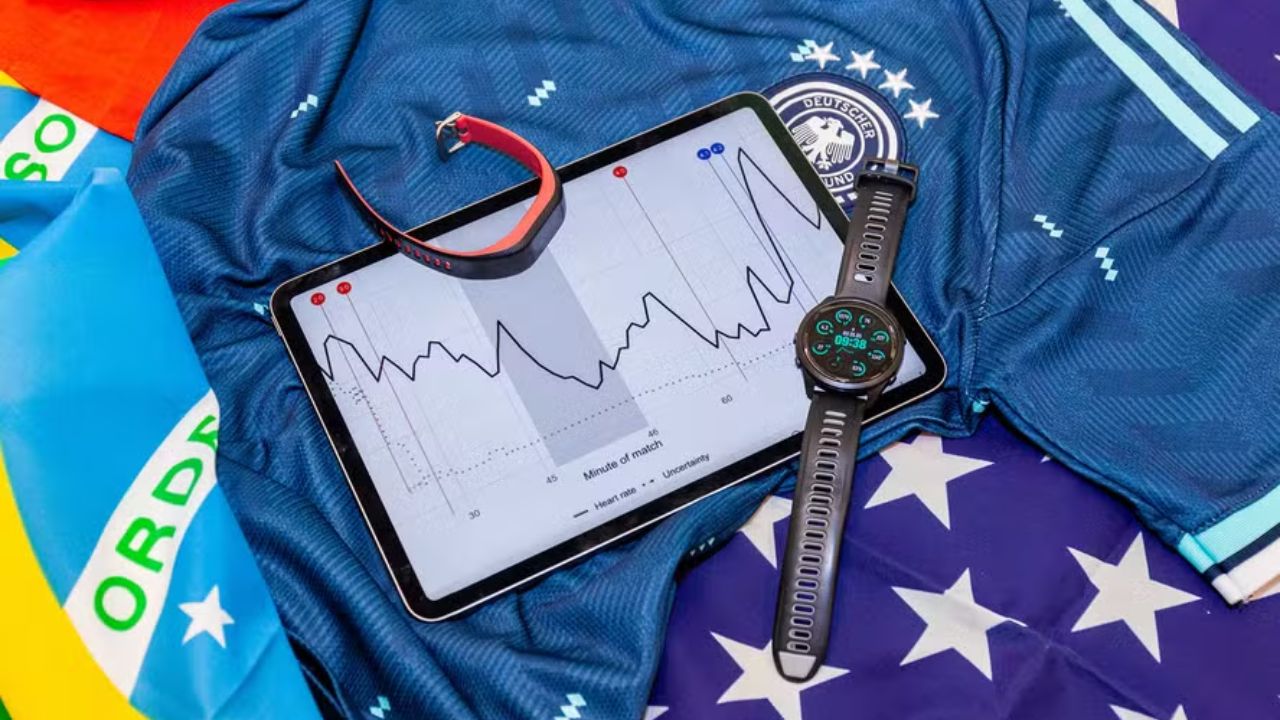
Study Expands Participation to Reach More Fans
Since the launch of the initiative on May 28, researchers have been expanding participation possibilities. Initially, only Garmin device users could contribute information.
As the project progressed, other platforms began to integrate into the research. This change allowed for an increase in the potential number of participants and diversification of profiles present in the database.
Currently, devices from the following brands are accepted:
- Apple Watch;
- Google Pixel Watch;
- Samsung Health;
- Withings;
- Fitbit;
- Oura;
- Polar;
- Amazfit;
- Coros;
- Whoop;
- Xiaomi Mi Fitness;
- Wahoo;
- Garmin.
The expectation is that the expansion will help build a more representative panorama of the fans following the competition.
What Do the Researchers Intend to Discover?
Although it is common to associate football with intense emotions, scientists want to go beyond subjective perception. The goal is to understand more precisely how different events within a match reflect on the physiological indicators of spectators.
Situations such as goals, clear scoring chances, penalty kicks, and unexpected results are among the events that can generate relevant reactions for analysis.
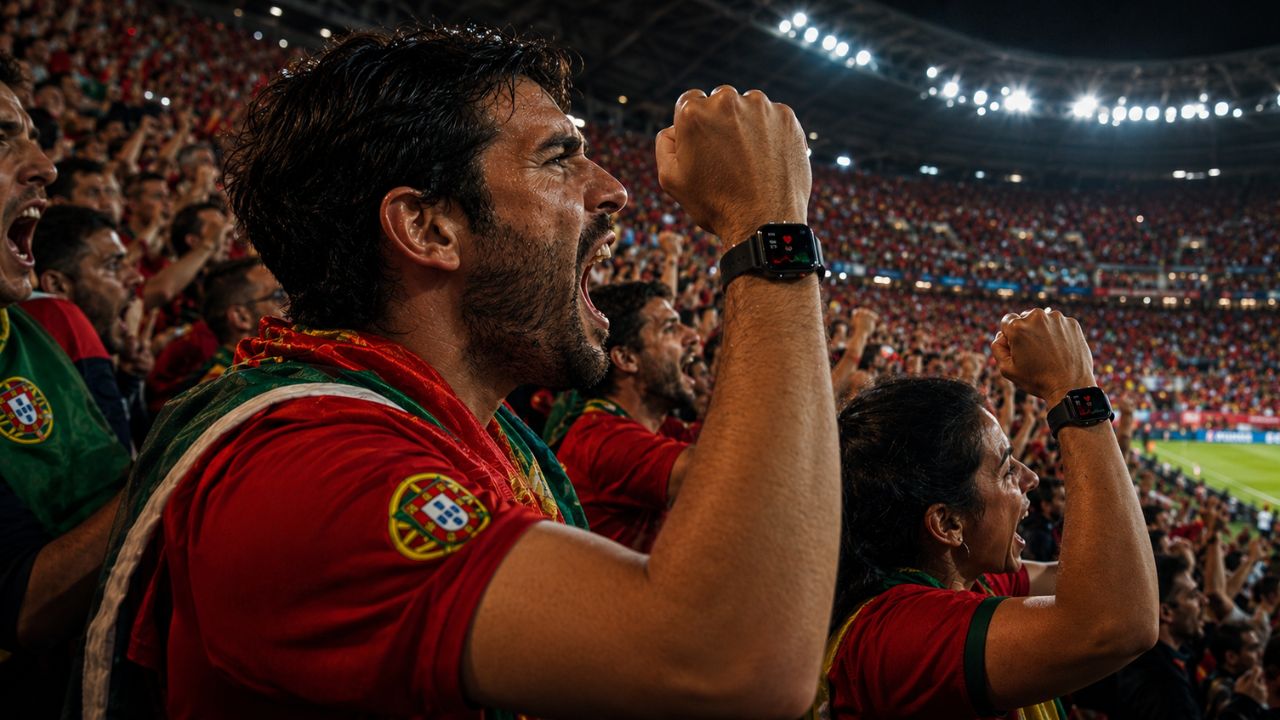
In a statement released on Tuesday (16), Professor Christian Deutscher, who co-leads the project, highlighted the importance of increasing public participation.
According to him, the research aims to gather as many fans as possible, regardless of the team supported or the brand of smartwatch used. The researcher emphasized that a broader base strengthens the quality of the analyses conducted.
Participation remains open during the competition
The organizers state that it is still possible to join the research even after the tournament has started. The contribution does not require the participant to follow all the matches of the competition. Watching just a few games can already provide relevant information for the database.
Professor Christiane Fuchs, co-leader of the project, explained that even records obtained during isolated games are useful for the researchers.
The university also informed that fans of any nationality can participate. However, some regions have lower representation among the registered volunteers so far. This is the case for Eastern Europe, Southern Europe, and Turkey.
Interested parties can register at this link
Previous research pointed out differences between stadium and television
The current investigation was supported by results previously observed by researchers linked to the same group.
During the final of the 2025 German Cup, a study involving 229 DSC Arminia Bielefeld fans identified significant changes in the participants’ vital signs.
The data showed that those who watched the decision directly in the stadium had an average of 94 heartbeats per minute. Among those who watched the match on television, the recorded average was 79 beats per minute.
The greatest changes occurred during the most exciting moments of the match. After the goals, the increase in heart rate among fans present in the arena reached up to 36%.
Study seeks to understand reactions on a global scale
Unlike the research conducted in 2025, limited to a specific group of fans and a single match, the new initiative intends to work with a much larger amount of information.
The project is part of the QUAMU research area, linked to the University of Bielefeld and dedicated to the analysis and quantification of uncertainties in different contexts.
By gathering data from fans spread across various countries, the researchers hope to deepen the understanding of the relationship between intense emotions and physiological responses.
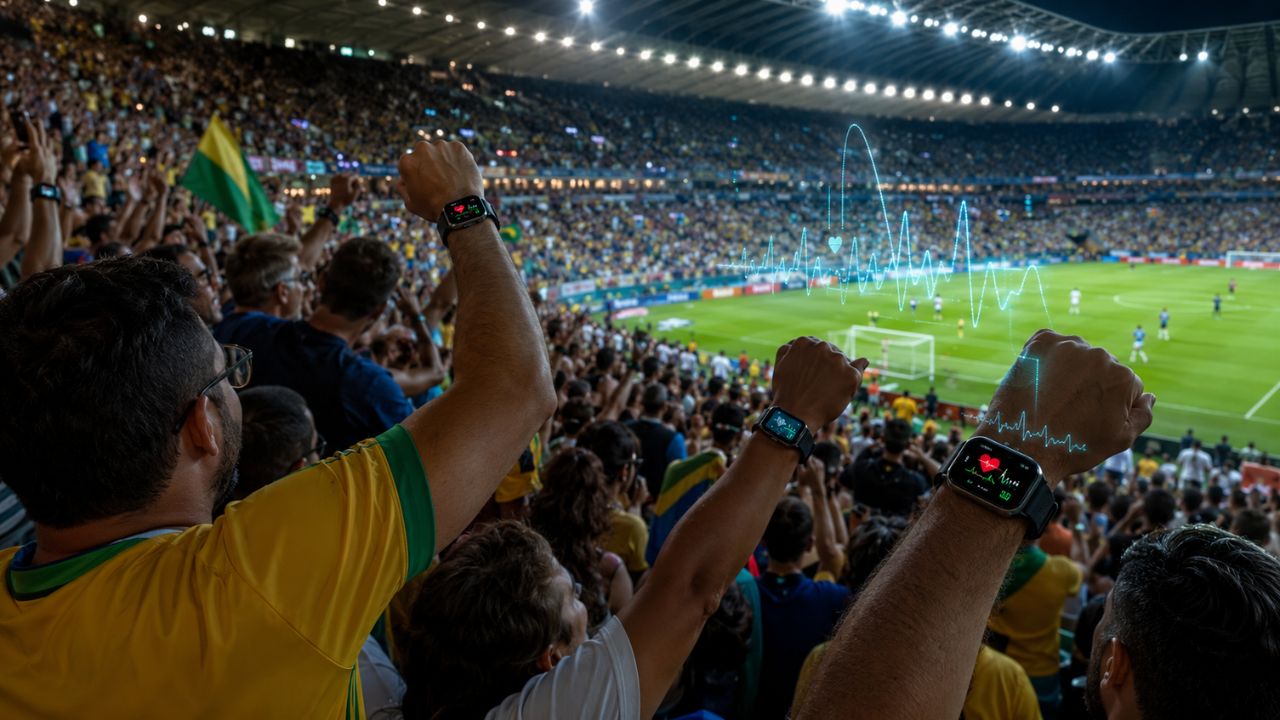
The first results are expected to be presented throughout the competition, with releases especially planned after the German team’s matches.
The expectation is that the volume of information obtained will allow for the identification of trends capable of showing more clearly how football influences the human body during moments of great emotional involvement.
Source: Revista Galileu