Portuguese
  Spanish


Research reveals how a deep-sea isopod combines physical adaptations and genetic mechanisms to survive in extremely food-scarce environments.
Surviving weeks without eating would already be a challenge for most living beings. However, a species of deep-sea isopod manages to take this endurance to an impressive level: surviving more than five years without ingesting food. Now, scientists believe they have discovered the mechanisms that make this ability possible.
The results were published in a study in the scientific journal Cell and conducted by researchers from the University of the Chinese Academy of Sciences (UCAS). The investigation analyzed species of the genus Bathynomus, known for their large size and ability to withstand long periods of food scarcity in deep ocean regions.
According to the researchers, the survival of these animals depends on a combination of anatomical adaptations and genetic processes that allow them to store energy and drastically reduce metabolic consumption.
-
She spent 73 years breathing inside an iron lung, survived the aftereffects of polio, and became the last woman in the United States dependent on the equipment before dying at 78 years old.

-
Brazilian students created a $1 filter using pine bark, cotton, and 3D-printed parts to clean cassava wastewater, reduce the toxicity of a hazardous waste, and transform contaminated water into biofertilizer.

-
Astronaut from Artemis II steps down after mission to the Moon and decision surprises after a record of 406,771 km, a historic 10-day journey, and an unprecedented achievement for Canada.

-
A fossil kept for years in a small museum in Montreal concealed 450-million-year-old soft tissue, a discovery that has only happened once before in history.


Life in an environment where food is rare
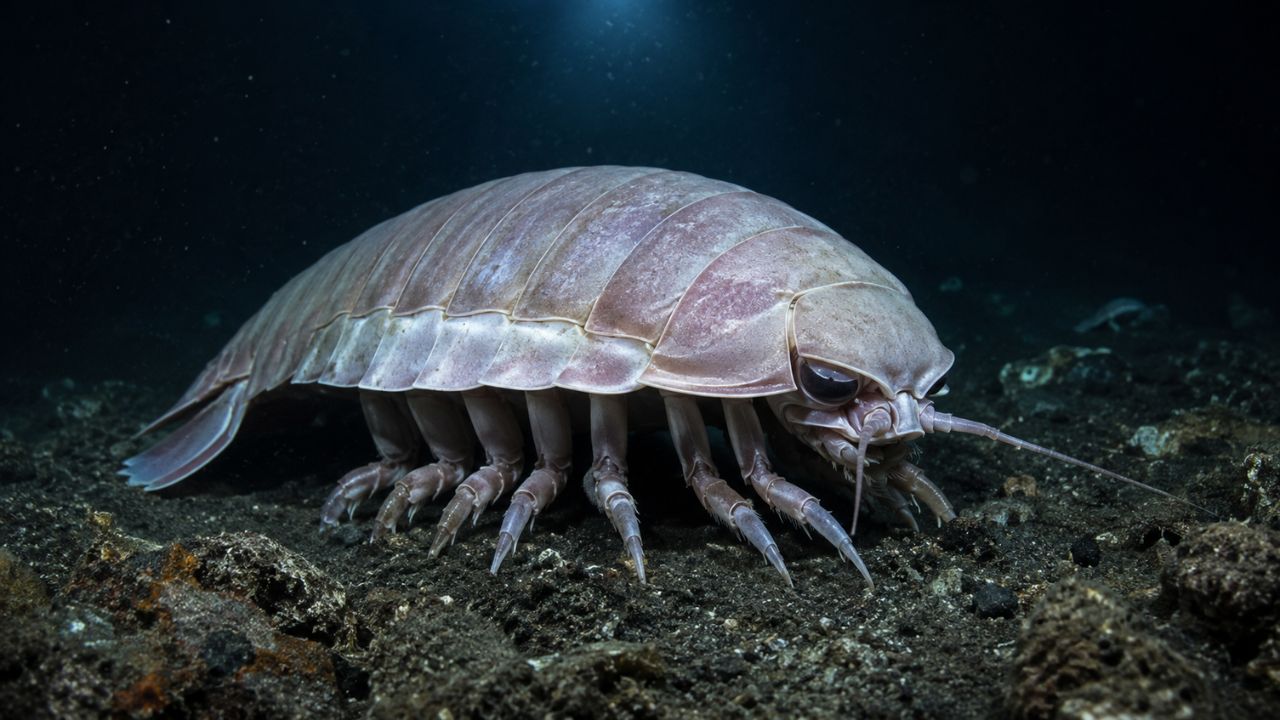
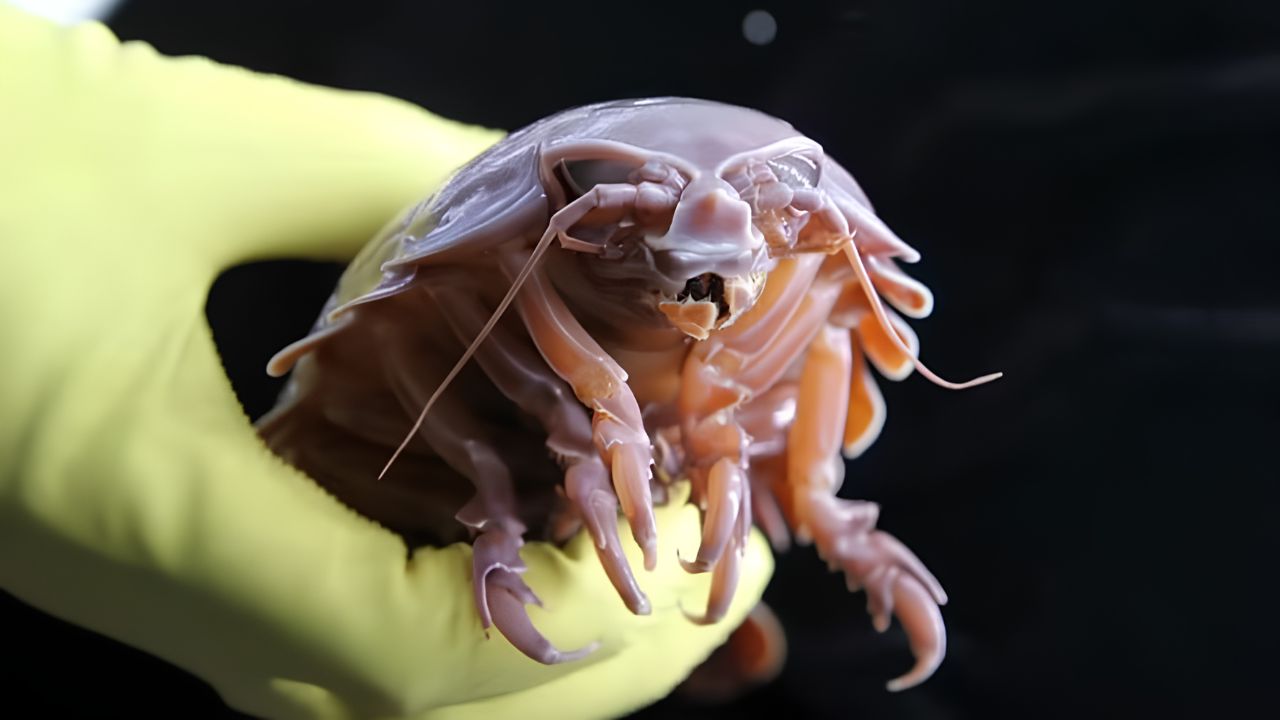
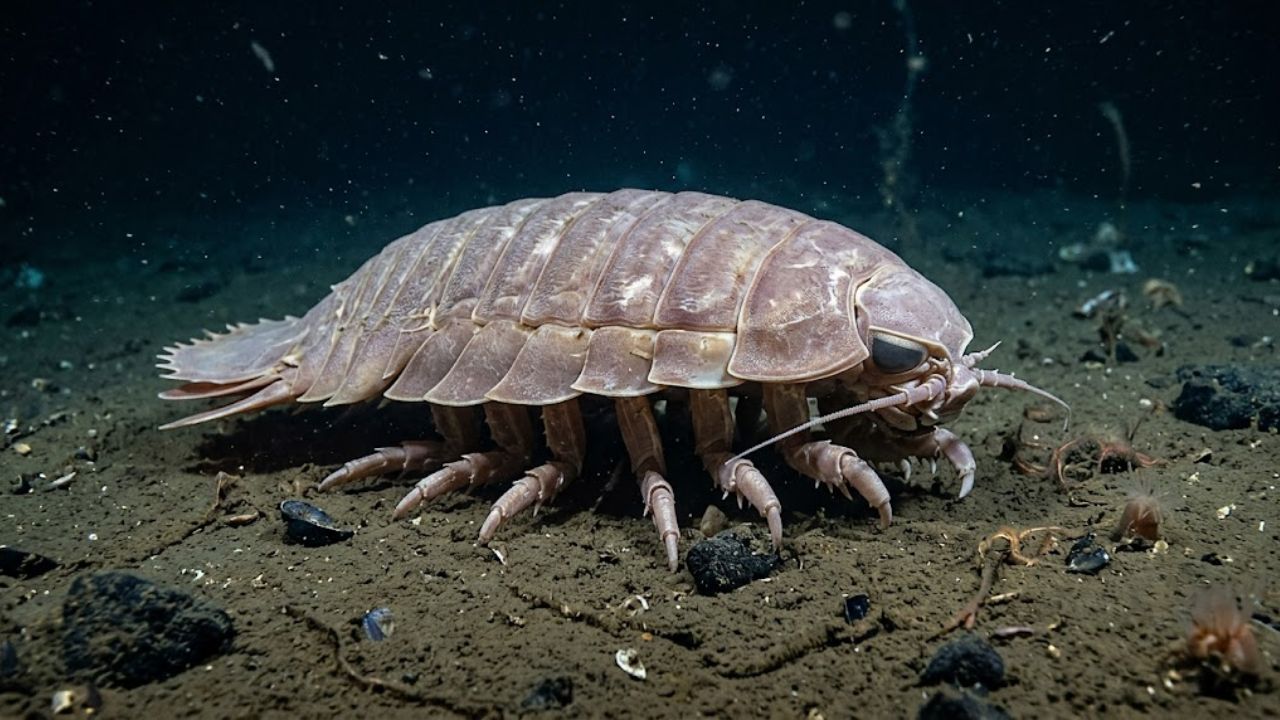
The supergiant bathynomids live in deep oceanic areas, locations characterized by low nutrient availability. This condition makes it even more surprising that these organisms have relatively large bodies, which would normally require higher energy consumption.
To understand how they manage to thrive in this scenario, scientists studied two species: Bathynomus doederleini, found at about 300 meters deep, and Bathynomus jamesi, recorded at approximately 898 meters.
The research combined different approaches, including genomic, physiological, behavioral, morphological, and metagenomic analyses, providing a broad view of the biological functioning of these animals.
A giant stomach helps store reserves
Among the most striking discoveries is the size of these isopods’ digestive system.
Researchers identified that the stomach occupies about two-thirds of the animal’s body, a much higher proportion than observed in similar species living in shallower waters.
When they find available food, these organisms can ingest large amounts at once. The stored content undergoes intense digestion and assumes a paste-like consistency, remaining in the organism as an important energy reserve.
The analysis of this material revealed a low presence of digestive bacteria and a higher concentration of microorganisms from the Chlamydiae group, associated with lipid storage.
The results indicate that the animals take advantage of sporadic feeding opportunities to accumulate enough energy to endure long periods without new sources of nutrients.
Reduced metabolism complements the survival strategy
Storing food is just part of the equation. The other half involves the ability to spend as little as possible of this accumulated energy.
According to the study, isopods can reduce their metabolic activity after feeding, decreasing the consumption of internal resources and prolonging the use of available reserves.
This strategy allows the energy stock to be utilized during extremely long periods, contributing to the resilience observed by scientists.
Gene acquired from bacteria caught researchers’ attention
In addition to physical adaptations, the team found evidence of a genetic mechanism considered relevant to the animals’ energy metabolism.
The study identified the presence of the ND1 gene, which, according to researchers, was incorporated into the isopod’s genome from an external symbiotic bacterium through horizontal gene transfer.
Unlike traditional genetic transmission between generations, this process occurs between organisms of the same generation.
Scientists believe that ND1 plays an important role in how these animals regulate energy use under extreme conditions.
How ND1 contributes to energy conservation
Research has shown that the high expression of this gene is associated with the control of the mitochondrial metabolic network, structures responsible for energy production in cells.
According to the authors, ND1 helps adjust the level of metabolic depression in the organism, allowing bathynomids to maintain their body size even in environments where food is limited.
Another observed aspect was that the gene’s performance becomes more efficient at low temperatures, a typical condition of the deep waters where these species inhabit.
This characteristic may explain why the strategy is so effective precisely in the deepest oceanic environments.
Experiments helped confirm the gene’s role
To better investigate the effects of ND1, researchers introduced the gene into zebrafish, nematodes, and human 293T cells.
The tests showed that, at normal temperatures, the organisms exhibited lower tolerance to nutrient deficiency. In conditions similar to those found in ocean depths, the ability to withstand food scarcity increased by 37%.
The results reinforced the hypothesis that the gene directly influences the energy conservation mechanisms observed in the studied isopods.
Discovery points to evolutionary strategy of the deep-sea isopod
According to the research authors, the work revealed for the first time an evolutionary strategy based on the combination of horizontal gene transfer and epigenetic optimization to reorganize energy storage.
Scientists claim that the discovery helps explain how certain organisms can balance body growth and survival in environments marked by resource scarcity.
In addition to clarifying one of the most intriguing aspects of the biology of deep-sea isopods, the study offers a new perspective on the mechanisms that allow life to adapt to conditions considered extreme.