





 Portuguese
  English
  Spanish
  3 min of reading
  0 comments


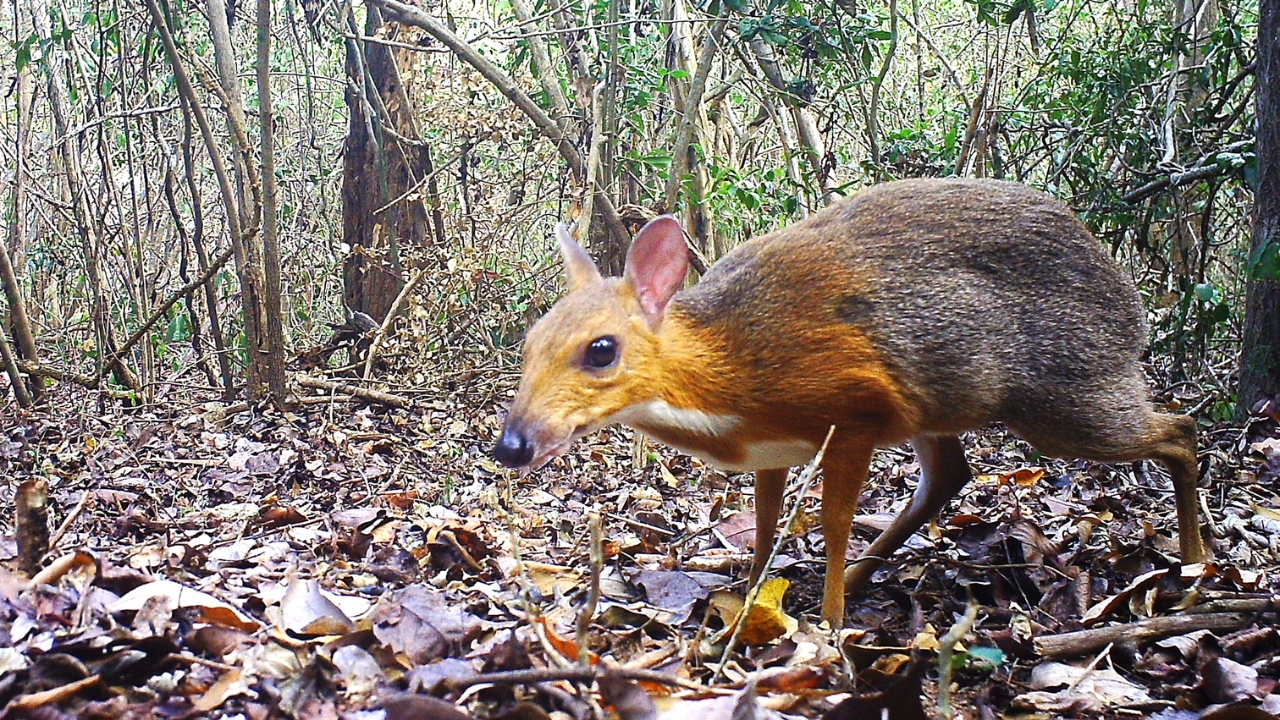
Researchers Registered in Southern Vietnam, with Camera Traps, the Return of the Mouse Deer After Nearly 30 Years, Emphasizing the Importance of Protecting Pressured Forest Areas
A small and rare mammal has reappeared in the forests of Vietnam after a long period without modern scientific records.
The images obtained with camera traps confirmed that the species still exists and highlighted risks such as hunting and traps in forest areas.
Who Is the Silver-Backed Chevrotain and Why Is It Not a True Deer
The animal is the silver-backed chevrotain (Tragulus versicolor), popularly known as “mouse deer.”
-
The iPod is back in full force: young people are reviving Apple’s old device to escape digital distractions and control their own soundtrack.

-
For the first time in history, a submarine cable will descend to four thousand meters deep under the ice of the North Pole to ensure that the internet between Europe and Asia no longer depends on conflict zones in the Middle East.

-
A British company has installed in the middle of the ocean the world’s first floating platform that generates electricity 24 hours a day from the temperature difference between the surface and the depths of the Atlantic, without relying on wind or sun.
-
The James Webb telescope spotted a planet 700 light-years from Earth with mornings full of sand clouds and nights with clear skies, the temperature difference between the two hemispheres reaches an impressive 170 degrees.




Despite the nickname, it is not a deer from the cervid family. It belongs to the Tragulidae family, a group of small ungulates referred to as chevrotains or mouse deer.
The compact body, thin legs, and hooves help explain why it has gone unnoticed for so long in dense vegetation.

Size and Weight of the “Mouse Deer” Registered in Vietnam
The available data indicates a truly small animal, with a body length of 40 to 48 cm, a tail around 5 cm, and an adult weight close to 1.7 kg.
These measurements place the chevrotain in the group of the smallest ungulates, which aligns with the popular comparison to the size of a cat or rabbit.
Still, the species from Vietnam is not always cited as the smallest of all, because there are other very small chevrotains in Southeast Asia.
How Camera Traps in Southern Vietnam Forests Revealed the Animal
The confirmation came through camera traps set up in forest areas in the southern part of the country.
The equipment recorded the animal in the wild in a coastal region near Nha Trang, providing the first modern scientific evidence after a long interval without verifiable proof.
The result showed that, even in pressured areas, there is still wildlife that is difficult to detect without continuous monitoring.
Evidence Published in November 2019 Consolidated the Rediscovery

According to Nature, a scientific journal, the rediscovery was presented as the first modern scientific evidence of the animal in almost 30 years, with photos obtained by camera traps near Nha Trang.
The publication provided a basis for new discussions about field research and habitat protection.
It Is the Smallest Ungulate in the World
The title of smallest ungulate is often associated with other chevrotains, such as the lesser mouse deer and the Java mouse deer, with a cited weight range of 1.5 to 2.5 kg and body length of 42 to 55 cm.
This helps to place the “mouse deer” from Vietnam in the right context: it is one of the smallest ungulates, but it is not mandatory to treat it as the absolute smallest.
Rediscovery Is Not a Guarantee of Safety and Threats Remain
Even with the confirmation, the species remains vulnerable to common pressures in Southeast Asia forests, such as hunting and traps.
The practical consequence is direct: now that there is modern record, it becomes easier to guide searches, identify priority areas, and discuss conservation measures.
The reappearance of the “mouse deer” reinforces that monitoring and habitat protection can make a difference before rare species return to silence.







-

-

-

-

-

-

23 people reacted to this.