Portuguese
  Spanish


Difference in IPVA Rates Fuels Debate on Tax Fraud and Tax Planning
In different regions of Brazil, drivers resort to changing vehicle registrations to pay less IPVA. In some cases, this practice is considered tax fraud. In others, it can be seen as a form of tax planning.
The lack of a specific complementary law regarding the tax contributes to keeping the discussion open and without a definitive consensus.
Difference in Rates Motivates Maneuvers
This is a good example. Between Paraná and Santa Catarina, the disparity in rates is the central point. While in Paraná the rate is approximately 3.5%, in Santa Catarina it drops to 2%.
-
End of an era: Fiat announces the end of production of one of the best-selling cars

-
Nothing about Polo, HB20, or Kwid: the cheapest automatic car in Brazil abandons the flex system, brings back an exclusive ethanol engine, delivers 115 hp, and accelerates from 0 to 100 km/h in 10.5 seconds.
-
Hilux’s little sister: Toyota relaunches the Land Cruiser 70 in the 2027 lineup with over 40 years of production, a 2.8 turbo diesel engine with 201 hp and 51 kgfm, a six-speed automatic transmission, and a renewed retro look.
-
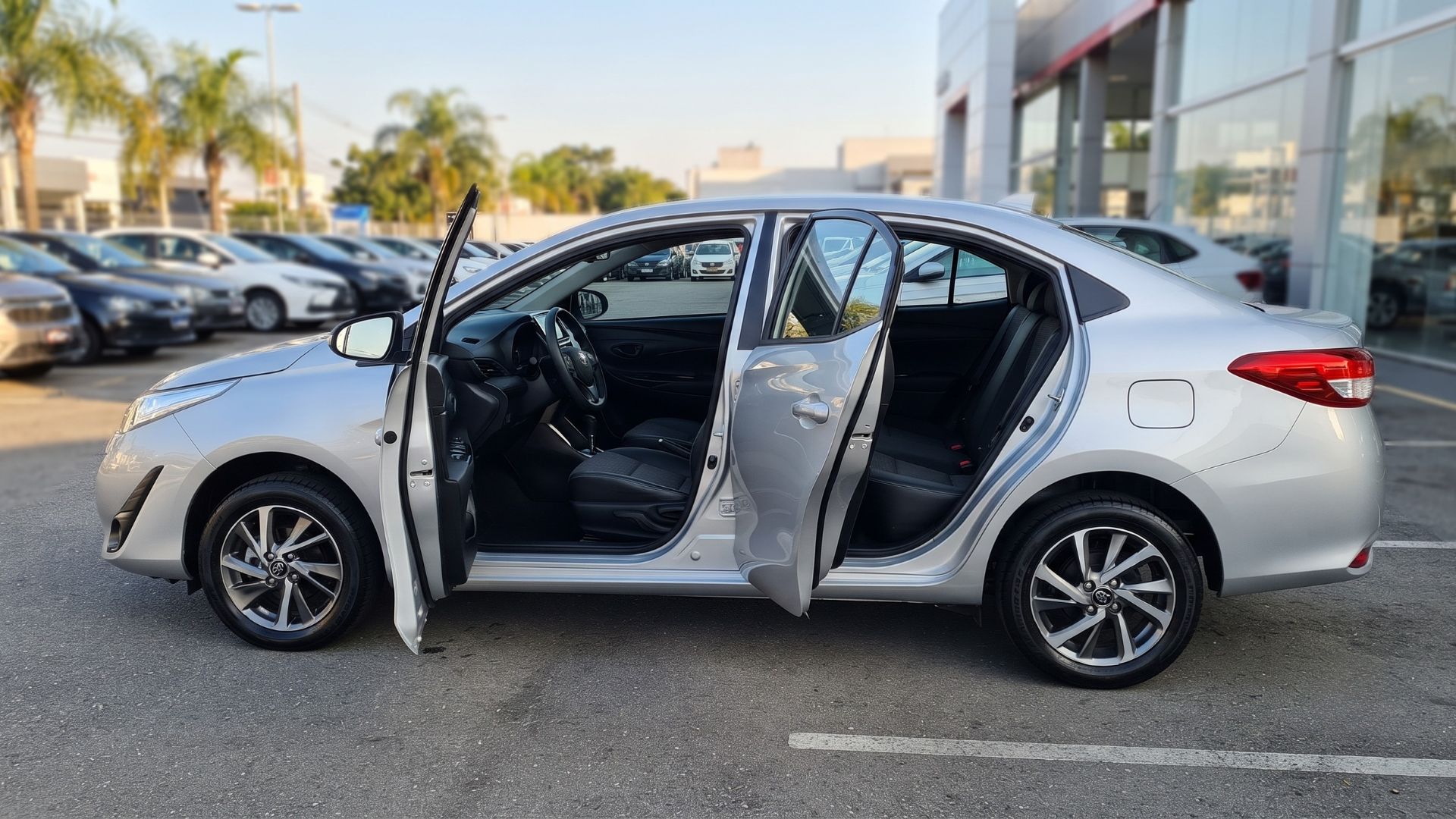
Automatic, economical, and known for reliability: with a 1.5 engine of up to 110 hp, CVT transmission, seven airbags, and fuel consumption of up to 15.9 km/l, this used hatchback appears as a rational alternative to Polo, HB20, and Onix; meet the Toyota Yaris XLS 2020.


This difference encourages residents of neighboring cities, such as União da Vitória and Porto União, to seek alternatives to save on the tax.
Some vehicle owners go so far as to register their cars at the addresses of relatives or friends in Santa Catarina.
In these cases, the act is classified as fraud. Tax attorney João Eloi Olenike, from IBPT, explains that the practice is only considered fraud when there is a clear intention to deceive the tax authorities.
According to him, declaring a false address in cities where one does not reside or conduct business is illegal. For Olenike, the decisive element is the proof of the taxpayer’s real residence.
Electric Vehicles Lose Exemption in Paraná
Until the end of 2023, a contrary situation was also happening. Residents of Santa Catarina registered vehicles in Paraná to obtain the IPVA exemption on electric models. The advantage ceased to exist in 2024, when the benefit was revoked.
Thus, the tax was reinstated, aligning Paraná with the existing practice in Santa Catarina.
Tax Planning is Possible
Experts claim that, in some situations, the taxpayer may legally choose in which state to register the vehicle.
To do this, it is necessary to prove a connection to the location, either through residence or economic activity.
According to Olenike, the legislation does not prevent a person from opening a business in a city and registering their vehicles there, as long as they meet minimum requirements for activity and address.
This type of choice can be made without violating the law.
Limited Financial Impact in Paraná
Despite the difference in rates, the government of Paraná does not consider the so-called “flight” of vehicles to Santa Catarina to be significant.
The Secretary of Finance, Renê Garcia Júnior, states that the numbers are small and do not affect state revenue.
He emphasizes that, although the driver saves on the tax, they may end up paying more for other services, such as insurance, which considers the risk of the circulation area.
States Try to Curb Irregular Vehicle Registrations
In São Paulo, there is the operation “Keep an Eye on the Plate.” The goal is to identify vehicles that circulate in the state but are registered in other locations. The initiative results in fines and additional tax charges.
Even so, court decisions have frequently been unfavorable to the São Paulo government. In the São Paulo Court of Justice, rulings tend to favor drivers.
Minas Gerais Takes Cases to Court
In Minas Gerais, there are also disputes. A company from Uberlândia, for example, has its headquarters and operations in the city but registered its fleet in Goiás, where the rate is lower. While Minas charges 4%, Goiás applies 3.75%.
The case reached the Minas Gerais Court of Justice, which ruled against the company. The process was then taken to higher courts, reaching the Supreme Federal Court (STF).
Discussion Remains Open
While the final decision is not made, drivers and companies continue to seek legal loopholes to reduce costs.
The lack of uniformity in tax collection fuels controversies and keeps the debate alive about where exactly the IPVA should be paid.
With information from Gazeta de São Paulo.