Portuguese
  Spanish





French Car Manufacturer Evaluates Global Cuts That Could Affect Human Resources, Finance, And Marketing Sectors Amid Restructuring And Uncertainties In The Automotive Market
Renault is studying a new restructuring plan that could result in the loss of up to 3,000 jobs worldwide, according to information from the French site l’Informe, cited by the France Press agency. The measure is part of a strategy by the automaker to reduce 15% of jobs in administrative and support areas, such as human resources, finance, and marketing, in light of the scenario of strong competition and a downturn in global sales.
In a statement, Renault stated that no final decision has been made, but confirmed that it is evaluating ways to simplify its structure, accelerate internal processes and reduce fixed costs. The announcement comes amid an environment of uncertainty for the automotive industry, marked by technological transition, high electrification costs, and tighter margins.
Restructuring Affects Administrative Areas And Not Production
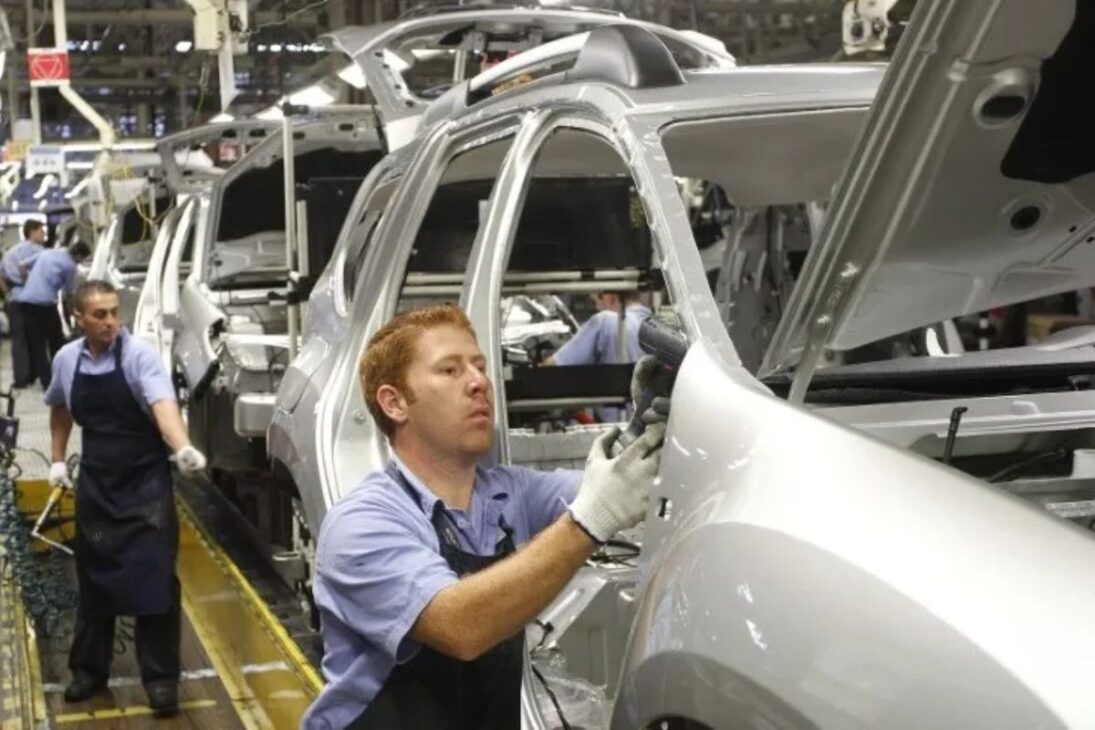
According to the French press, the planned cuts would not directly affect production lines, but rather corporate and support areas at the company’s headquarters in Europe and other regions.
-
BYD’s All-Electric Sedan with 530 HP and 0-100 km/h in 3.8 Seconds Becomes a Used Car Bargain After Depreciating by R$ 117,000

-
Electrified Cars Made or Assembled in Brazil Now Account for 39% of Sales, Driving Industrial Shift in the Sector

-
Renault Kwid Outsider 2023: Affordable Used Hatchback with 1.0L Engine, 15.7 km/l Efficiency, and Ample Cargo Space for Around $11,000

-
Chevrolet SUV Offers 153 hp Engine, 620 km Range, and ADAS Features at a Lower Price Than a New Kwid



The plan is being analyzed by Renault’s senior management as part of an operational efficiency program initiated in 2023.
Sources close to the company say the goal is to reduce overlap of roles among the group’s brands and to adapt the structure to the new business model, more focused on electric mobility, digitalization, and strategic partnerships.
The measure also aims to free up resources for investments in new electric vehicle projects and automotive software technologies.
Automotive Market Pressures For Margins And Adjustments
Renault is facing one of the most challenging periods in the global automotive industry, with a decline in demand for vehicles in Europe and margins squeezed by rising energy and raw material costs.
Furthermore, competition with Chinese manufacturers, which offer electric vehicles at aggressive prices, has forced European automakers to rethink their cost and production strategies.
Experts point out that accelerated electrification requires significant investments, but still does not generate sufficient returns to sustain the same level of employment and administrative structure.
In this context, companies like Volkswagen, Stellantis, and Ford have also announced job cuts and operational reviews in Europe and the United States.
Partnerships And New Directions For Renault
The automaker has been undergoing a profound transformation since the departure of Carlos Ghosn, the former CEO who led the Renault-Nissan-Mitsubishi alliance.
Under new management, the company has been betting on strategic partnerships with automakers and technology companies, seeking to balance costs and accelerate the development of electric and connected cars.
In South America, Renault has been studying new industrial agreements, including a possible joint production with the Chinese company Chery, signaling a structural change in its operation.
The company has also resumed investments in factories in Brazil and Argentina but remains primarily focused on global restructuring to ensure competitiveness in more mature markets.
Uncertainties And Impact On Employees
The possibility of cutting 3,000 positions has raised concerns among French unions, which demand guarantees of protection for workers and transparency regarding termination criteria.
In response, Renault reiterated that discussions are still in the preliminary phase and that it intends to conduct the process within the labor laws of each country.
“Given the uncertainties in the automotive market and the extremely competitive environment, we confirm that we are considering ways to optimize our fixed costs and improve the execution of our projects,” the company stated in a note.
Even without official numbers, market analysts say that the cuts, if confirmed, could generate annual savings exceeding €300 million, strengthening the company’s cash flow amid rising transition costs to electric and hybrid vehicles.
The possible decision by Renault to cut thousands of jobs reinforces the atmosphere of global readjustment in the automotive sector, where major automakers seek to balance costs and investments in innovation.
While some bet on the expansion of electric production, others need to streamline corporate structures to survive the new phase of the industry.
Do you believe that these layoffs are part of a necessary adaptation strategy or reflect a deeper crisis at Renault and in the European automotive sector? Share your opinion in the comments; we want to hear from those closely following the industry’s transformations.