Portuguese
  Spanish


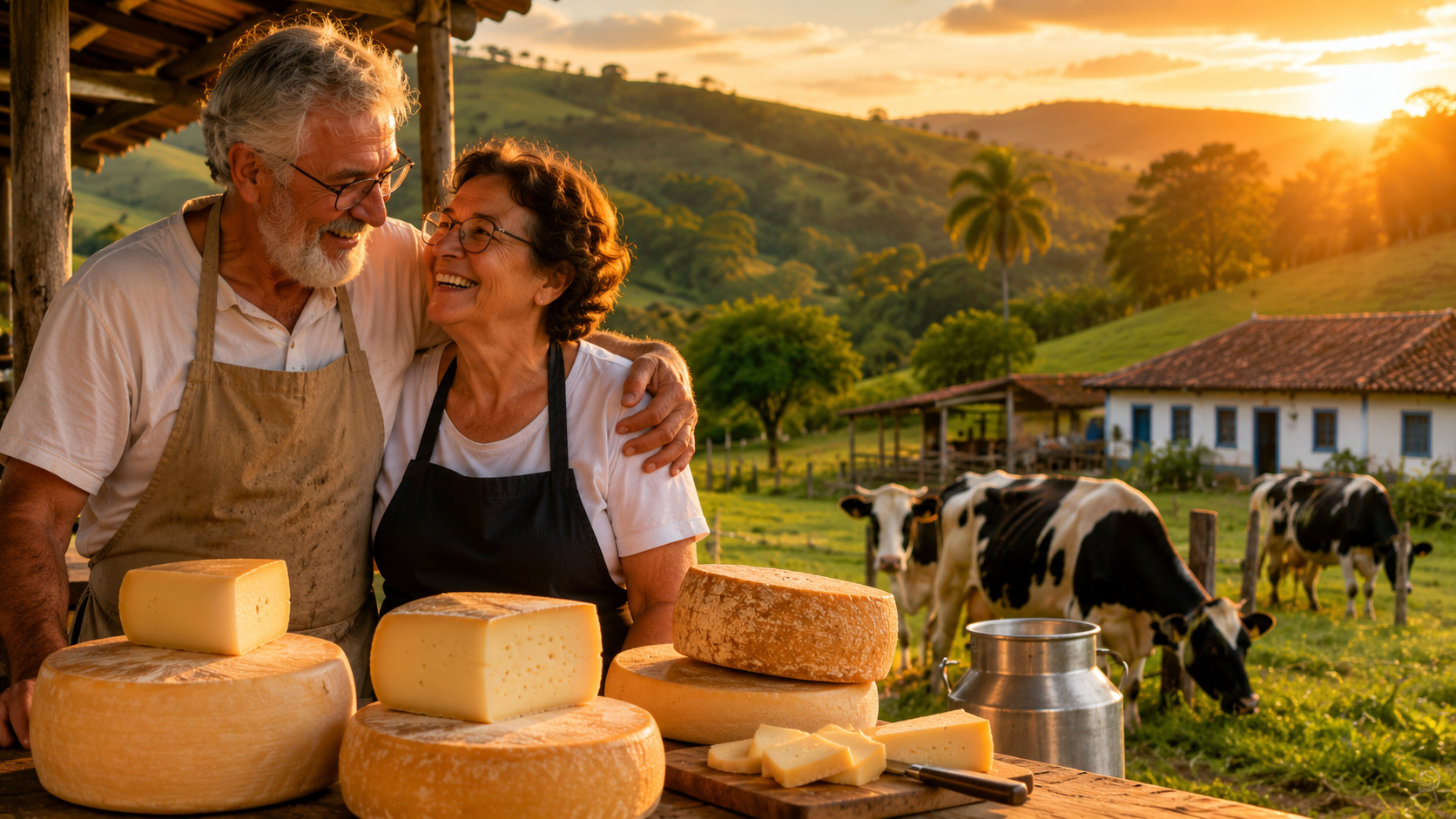

Couple swaps retirement in Rio for a farm in Minas, learns to make cheese from scratch, and transforms a small internationally awarded artisanal production into a new passion after turning 60.
According to the Tribuna de Minas, Jorge Luiz Bezerra and Maria Elisa de Almeida lived in Rio de Janeiro when they retired and asked themselves a simple question: what are we going to do here if we no longer have obligations? The answer was to move to Lima Duarte, a city in the Zona da Mata of Minas Gerais, 60 km from Juiz de Fora, where they had been visiting for over 30 years without ever imagining they would one day live there.
They bought a 50-hectare farm on the Pão de Angu road, not far from the Ibitipoca State Park, and spent the first times trying to understand how to make a rural property work — first with beef cattle, then trying fruits, without experience in either. The turning point came with Elisa’s enthusiasm. She enrolled in a course on making Artisanal Minas Cheese and made her first cheese. “It was wonderful. I immediately signed up for the next module,” she recalled with the same sparkle in her eyes as someone reliving a discovery.
Jorge closely followed, and together they have been building, over the last ten years, Sítio Primavera — an artisanal cheese factory that today produces eight types of cheese with one hundred liters of milk per day, all stages done by hand, and which has already won national and international awards. In November 2021, they were awarded a silver and gold medal at a contest in Araxá. They were not present at the ceremony because they had to leave earlier — it was a ten-hour journey. “When we arrived, we received the information that we had won. Elisa and I read and reread it three times to believe it,” says Jorge.
-
Stingless Bee Honey from Brazil Can Cost Up to $120 a Liter, Surprises with Flavors of Wood, Citrus, and Even Cheese

-
Woman Claims to Have Spotted a Technical Pattern in Recent FIFA Tournaments, Predicts Possible World Cup Winner
-
Chevrolet Offers Chance to Win a 2026 Sonic RS for Free via WhatsApp
-
Earthquake vs. Tsunami: Which Causes More Destruction and Why One Can Be Even More Dangerous


The gate they passed through and never left
The choice of Lima Duarte was not the only option. Andrelândia was also on the list. But the water decided. The farm on the Pão de Angu road had five protected springs on the property — a detail that Jorge and Elisa treated as a definitive criterion from day one.
“When we entered through the farm gate and saw the lake, the stones, and everything else, we thought: this is it,” says Jorge. The decision was made based on a simple perception: they were looking for rest, and that landscape delivered exactly that. The couple thought they would be isolated from the world. They discovered the opposite. Elisa says she doesn’t miss the hustle and bustle of the city — only the cinema and theater. But what they expected to be solitude turned into a constant flow of visits, new friends, and guests.
“Every person who comes is another friend we gain and welcome,” said Jorge, with tears in his eyes, when Tribuna de Minas visited the farm in June 2025. Elisa added that she has already adopted the Minas way of living — “I already speak the Minas dialect, I just don’t say ‘trem'” — while Jorge joked that he already does.
How a QMA is made by hand and why it can’t be any other way
The legislation regulating the Artisanal Minas Cheese is not just bureaucracy. It is the description of a process that exists to ensure the cheese is exactly what the name says: artisanal. And at Sítio Primavera, every detail of this legislation is followed not out of obligation, but out of conviction.
“In the case of QMA, nothing mechanical can be used during the process. The legislation does not allow it. It needs to be completely manual, without machines. The dough cannot be heated. Pressing, stirring, and all stages are manual. No yeast is used either,” explains Jorge. The cattle milking is done by hand, without machines, precisely to maintain the milk’s temperature right before production. The milk is never bought from third parties. All the farm’s cows have calves nursing from them — which reduces production but ensures quality.
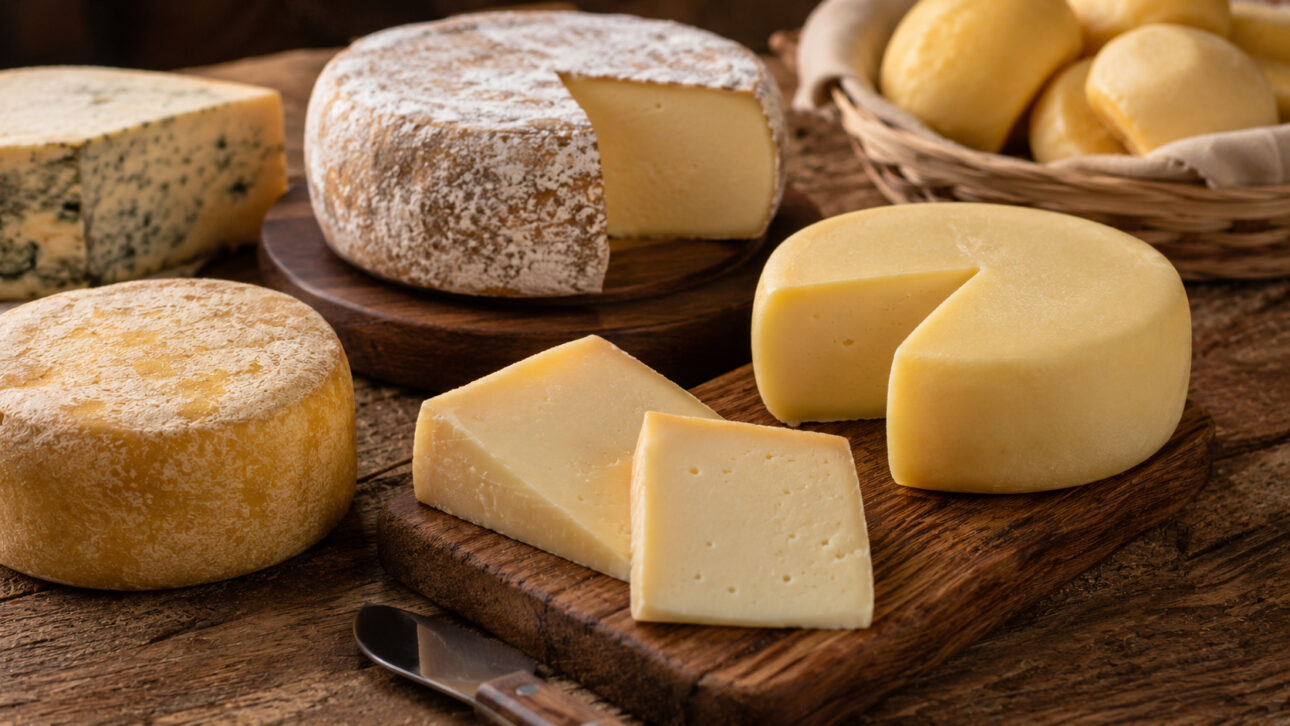
The cheese factory started too small for what the couple wanted to produce. Over time, they expanded the space and separated the environments — because QMA and other types of cheese cannot be produced in the same place. Today, besides QMA, they produce queijo do reino, ementhal, grana matured for two and a half years, cheese matured in wine, and others. The sliced requeijão, served cold, is Elisa’s favorite — and it’s made with cheeses that were out of shape or cracked. Instead of wasting them, she discovered they turned into award-winning requeijão.
The grana that waits two and a half years to be tasted
Maturing a cheese for two and a half years requires more than technique. It requires patience, control, and a relationship with time that most large-scale productions could never have. The grana from Sítio Primavera stays in the cold chamber with controlled humidity and temperature as the months pass.
Every week, the pieces are turned and observed. Jorge explains that the production volume is what makes this attention possible. “It’s impossible to maintain the quality of a QMA if made on a large scale. Unless you have a larger team, which already gives it the status of a factory instead of artisanal.” Each piece of grana that comes out of the chamber after two and a half years is a piece that Jorge and Elisa have followed from the raw milk hand-milked in the corral.


The quality of cheese begins before the dairy. “We always take care of the cattle to keep them healthy and emphasize the hygiene of the space. Their well-being is fundamental,” says Jorge. The cheeses from Sítio Primavera have been awarded in Araxá, at the 3rd World Cheese Contest in São Paulo, and in other competitions. In all of them, Jorge was clear about what they represent. “I have attended many events bringing our cheeses and at no time did I say they were from Sítio Primavera — but from the region. I am very proud of that.”
One hundred liters of milk, eight cheeses, and a guesthouse that grew to 25 people
The farm that started as a peaceful retirement grew in directions that Jorge and Elisa did not plan — and each new activity emerged as a response to a concrete demand of life on the property.
With the demand for visits to the farm increasing, the couple transformed part of the property into a guesthouse. Today it accommodates 25 people. Breakfast is made with products from the farm itself — the bread, the jam, the coffee harvested from the vineyard on the land and processed up to the cup. In the afternoon, guests can taste the cachaças aged in oak and amburana that Jorge produces. The wood-heated sauna operates year-round. The rooms were designed with a view of the sunset and with accessibility for wheelchair users — a declared priority of the couple.
Sustainability is not a marketing agenda. It is the way the farm has been built from the beginning. The five springs are protected. The sewage goes to a biodigester septic tank. The energy comes from photovoltaic panels. “We protect the environment here. We do not focus on profit. The prices we set are only to cover the cost of living. My goal is to live here without worry,” says Jorge.
What Unesco recognized in December 2024 — and what Sítio Primavera represents in this
In December 2024, the Methods of Making Minas Artisanal Cheese were recognized as Intangible Cultural Heritage of Humanity by Unesco. Minas Gerais has about 9,000 QMA producers, according to the State Department of Culture and Tourism.
Jorge and Elisa do not fit the profile of those born into the tradition. They came from Rio, learned by doing, made mistakes, redid, and won awards they did not expect. “At the first award ceremony, we weren’t even there. We didn’t believe it. Due to a delay in the event, we had to leave earlier. When we arrived, we received the information that we had won,” recalls Jorge. Their story is, in a way, the same story that Unesco’s recognition celebrates: QMA is not just a recipe. It is a way of living that requires people willing to follow it with patience and care.
“Even the care in the corral makes a difference,” says Jorge. And then, summarizing what Sítio Primavera is in one sentence, Elisa completes what her husband started — as they always do when telling their story. “Here, we are no longer two. We are Elisa and Jorge.”