Portuguese
  Spanish


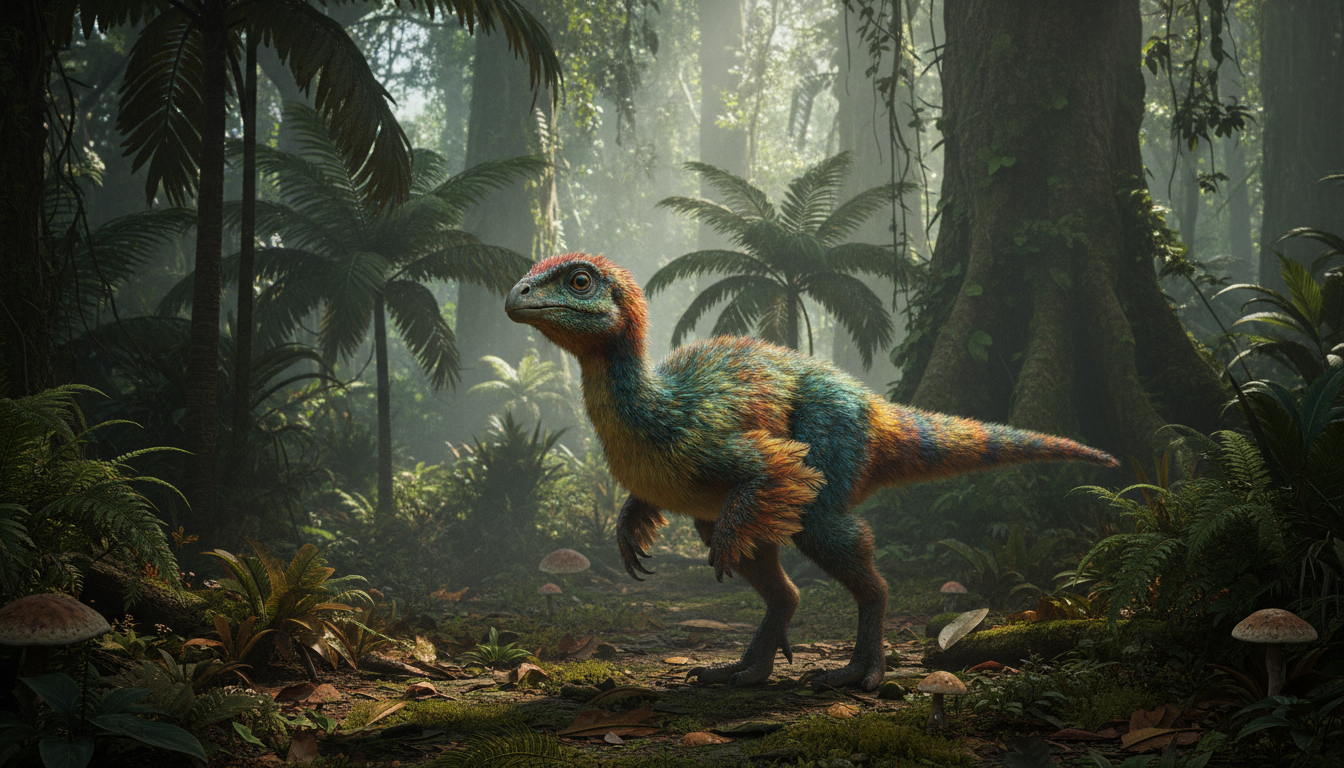

About the size of a turkey, with soft down and stones in its stomach, the Doolysaurus is the first new dinosaur species found in South Korea in 15 years — and it was named after a cartoon character
When researcher Hyemin Jo found a block of rock on Aphae Island in South Korea in 2023, she saw only a few leg bones and vertebrae on the surface. No one expected what was hidden inside.
Months later, at the laboratory of the University of Texas at Austin, micro-CT scanning revealed fragments of skull, gastroliths (stomach stones), and growth marks on the femur. It was a baby dinosaur of a completely new species.
The scientists named the creature Doolysaurus huhmini — the first name is a tribute to Dooly, an iconic character from 1980s Korean cartoons. The second honors the paleontologist Min Huh, founder of the Korean Dinosaur Research Center.
-
In 2005, a 21-year-old British student raised over a million dollars by selling a million pixels on a webpage for one dollar each.

-
Adopted Cat’s Unusual Paws Tie Guinness World Record Unbroken Since 2002

-
Philosophy Professor’s DIY Phone Grip Solution Becomes Multi-Million Selling Product and Company

-
California Student Develops AI-Powered System to Detect Elderly Falls at Home, Even in the Dark, Earning Title of America’s Top Young Scientist


The study was published on March 19, 2026, in the scientific journal Fossil Record.

A baby dinosaur the size of a turkey that had down and ate insects
The Doolysaurus was small. About 2 years old when it died, the baby measured approximately the size of a turkey. Adults of the species would reach double that size.
The body was covered with soft filament-like down — not full feathers, but a fluffy covering that likely helped with thermal regulation.
The gastroliths found in the fossil indicate a mixed diet. The dinosaur swallowed small stones to help grind food in its stomach — a behavior common in modern birds.
In addition to plants, the Doolysaurus likely hunted insects and small animals. It was bipedal and belonged to the therizinosaur family, a group common in East Asia and North America during the Mid-Cretaceous, between 113 and 94 million years ago.
The surprise inside the rock: micro-CT revealed a skull that no one expected to find
“When we found the specimen, we saw some preserved leg bones and a few vertebrae. We didn’t expect skull parts and so many other bones,” said researcher Jongyun Jung.
“There was considerable excitement when we saw what was hidden inside the block,” Jung added.
The micro-computed tomography (micro-CT) technology from the UTCT facility at the University of Texas — available to the academic community for nearly 30 years — allowed visualization of the internal structures of the fossil without destroying it.
The preserved skull is extraordinarily rare. It is the first dinosaur fossil found in South Korea with cranial fragments.
In Brazil, similar discoveries are surprising. The Dasosaurus tocantinensis, a 20-meter dinosaur found in Maranhão, was also revealed by workers during construction — connecting Brazil to Spain 120 million years ago.

First new species in 15 years: why South Korea is so rare in dinosaurs
The Doolysaurus is the first new dinosaur species identified in South Korea in 15 years. The contrast with neighboring countries like China and Mongolia — which frequently discover new species — is striking.
The reason lies in geology. South Korea has relatively few exposed Cretaceous sedimentary outcrops, and those that exist are on difficult-to-access coastal islands.
However, Aphae Island may change this scenario. “We hope that new dinosaur fossils or eggs will come from Aphae and other small islands,” said Jongyun Jung.
The fact that the Doolysaurus is a therizinosaur reinforces faunal connections between East Asia and North America. Close relatives of the species lived in Montana, USA, indicating that the continents were connected by the supercontinent Laurasia.
Findings like the 290-million-year-old fossilized vomit in Germany show that even the most unlikely remnants can rewrite the history of life on Earth.

Why scientists named a dinosaur after a cartoon character
The name Doolysaurus is not random. Dooly is one of the most beloved animation characters in South Korea, created in the 1980s. He is a small green dinosaur with a charming personality who has won over generations of Koreans.
The tribute serves a purpose beyond nostalgia. Linking a scientific discovery to a cultural icon increases public engagement with paleontology.
The second name, huhmini, honors paleontologist Min Huh, who has dedicated over 30 years to researching Korean dinosaurs. Huh founded the Korean Dinosaur Research Center and collaborated with UNESCO in preserving fossil sites.
The research involved international collaboration between the Korean Dinosaur Research Center and the Jackson School of Geosciences at the University of Texas.
Partial fossil and estimates — what we still don’t know about the Doolysaurus
On the other hand, it is important to note that the fossil is partial. Estimates of adult size and the presence of down are inferences based on comparative anatomy with related species — not confirmed by adult specimens.
Additionally, there is no data on the research costs or the exact date of the micro-CT scanning.
The discovery occurred during paleontological research on Aphae Island, not at a construction site as sometimes inaccurately reported.
Still, the Doolysaurus opens a window to a little-explored period of Korean prehistory. If more fossils emerge from the coastal islands, as researchers hope, South Korea may establish itself as a new paleontological hub in Asia.