






 Portuguese
  Spanish
  5 min of reading
  0 comments


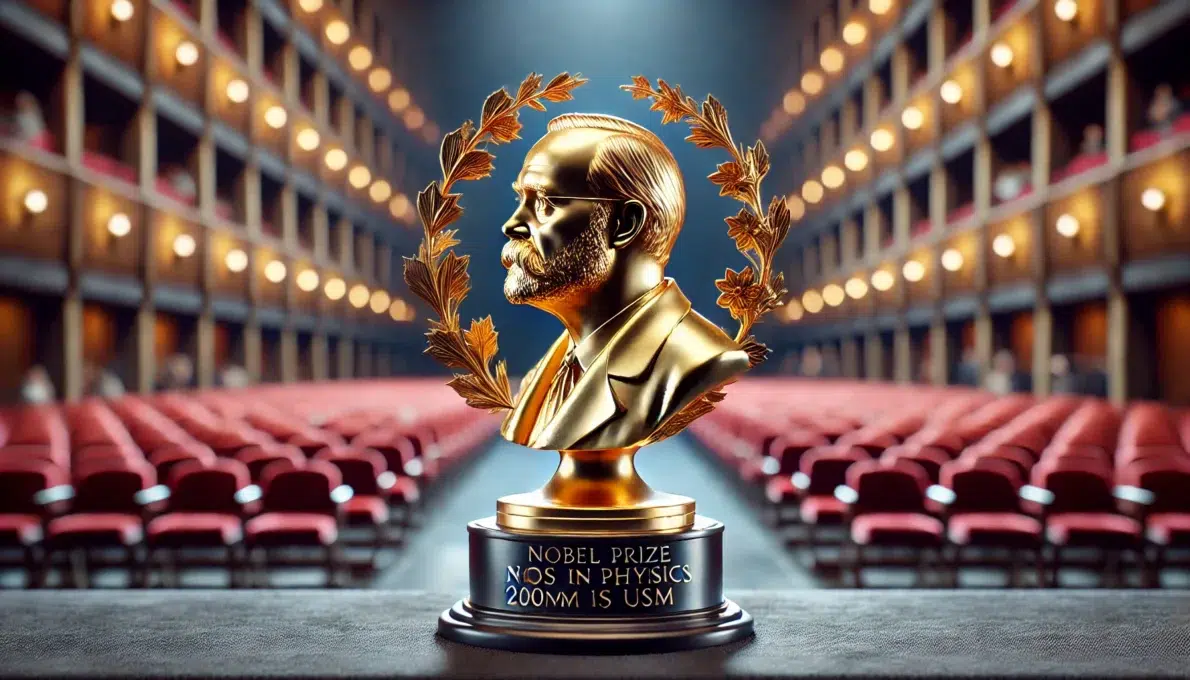
Pioneering Scientists Geoffrey Hinton and John Hopfield Awarded the 2024 Nobel Prize in Physics for Their Revolutionary Discoveries That Shaped the Future of Artificial Intelligence with Machine Learning.
On Monday, October 8, 2024, the Royal Swedish Academy of Sciences announced the winners of the Nobel Prize in Physics, one of the most prestigious awards in the scientific world. Geoffrey Hinton, one of the pioneers of Artificial Intelligence, and John Hopfield, known for his neural network model inspired by the functioning of the human brain, were this year’s laureates.
The honor, with a cash prize of 11 million Swedish kronor (around R$ 5,170,000.00), was divided between the two scientists for their decisive contributions in the field of artificial neural networks and machine learning (machine learning).
Hinton and Hopfield are two of the greatest names when it comes to artificial intelligence and data science. The innovations they developed form the basis of many technologies we use today, such as speech recognition, image classification, and machine automatic learning. Their work sparked great advances in the field, enabling what we now know as machine learning (machine learning), one of the biggest technological trends of the 21st century.
-
Helicopter Drops 180 Tons of Sand and Gravel on Swedish River to Revive Ecosystem Damaged by Decades of Exploitation

-
Brazilian Company Launches Retro Smartphone with 48 MP Camera, T9 Keyboard, and Privacy Features for Social Media-Free Use

-
Self-Taught Chinese Farmer Builds 5-Ton Submarine from Scrap, Launches It in Anhui River
-
Invisible Induction Technology Enables Wireless Power for Blenders, Coffee Makers, and Air Fryers, Reducing Countertop Cables






The Legacy of Geoffrey Hinton: Father of Machine Learning
Born on December 6, 1947, in London, United Kingdom, Geoffrey Hinton is one of the most influential figures in artificial intelligence research. He began his academic career focusing on the study of neural networks, a technology that simulates how the human brain processes information. These networks are the foundation of what we now call machine learning, an area that has exploded in importance in recent years, especially with the emergence of artificial intelligence applications across various sectors of the economy.
Hinton is currently affiliated with the University of Toronto in Canada, where he conducts research in artificial intelligence and neural networks. He also worked as a consultant at Google, helping the company develop its AI algorithms. In 2023, however, he resigned from Google, citing concerns about the risks that AI could pose to humanity. His contributions have been recognized internationally, culminating in receiving the Turing Award, considered the “Nobel Prize of Computing,” for his extraordinary contribution to computer science.
The Main Contributions of Geoffrey Hinton to Machine Learning:
- Pioneering the use of deep neural networks
- Contributions to the development of deep learning (deep learning) algorithms
- Participation in advancing speech recognition and image classification
- Consulting at Google to improve AI algorithms
Hinton, along with his students and colleagues, played a crucial role in creating deep neural networks, the backbone of modern AI technologies, such as chatbots and recommendation systems that we use every day.
John Hopfield: Connecting Physics and Artificial Intelligence
John Hopfield, born on July 15, 1933, in Chicago, United States, is widely known for his contributions in both neurobiology and theoretical physics. Emeritus professor at Princeton University in New Jersey, Hopfield was responsible for developing the famous Hopfield neural network model, which imitates the functioning of the human brain, simulating how memories are stored and processed.
The Hopfield neural networks were pioneering and helped establish the foundations for the development of modern neural networks, contributing to the advancement of artificial intelligence and machine learning. His research was based on concepts from physics to explain how information can be stored in biological systems and, from that, develop computational models.
The Main Achievements of John Hopfield:
- Development of the Hopfield neural network model, which simulates the functioning of the human brain
- Pioneering the interface between theoretical physics and neurobiology
- Significant contributions to understanding how biological systems process information
- Awards such as the Dirac Medal and the Albert Einstein Award
Hopfield’s discoveries are widely used in applications ranging from computational neuroscience to artificial intelligence systems. His work was crucial in understanding how the human brain can be simulated in artificial neural networks, a central concept for the advancement of modern machine learning.
Global Impact of the 2024 Nobel Prize in Physics
The recognition of Hinton and Hopfield’s work with the Nobel Prize in Physics underscores the growing importance of artificial intelligence and machine learning in our daily lives. The neural networks developed by these scientists have direct applications in numerous industries, such as:
- Health: diagnostic systems based on AI that help doctors accurately identify diseases;
- Technology: image recognition algorithms used in mobile devices and social networks;
- Economy: predictive analytics tools that help companies make more informed and strategic decisions;
- Education: personalized learning platforms that use AI to adapt content to the user’s learning style.
Through their research, Hinton and Hopfield laid the groundwork for a future where artificial intelligence will be even more integrated into all aspects of society, improving people’s lives and transforming how we interact with technology. The award also raises important discussions about the ethical and safe development of these technologies, issues that Hinton, in particular, has recently brought to the forefront.
The Future of Machine Learning and Artificial Intelligence
The 2024 Nobel Prize reflects the ongoing advancement of machine learning and its growing relevance in science and technology. As more AI applications emerge, the legacy of Geoffrey Hinton and John Hopfield will continue to influence generations of scientists and engineers, ensuring that the field of machine learning continues to evolve.
Whether through increasingly sophisticated neural networks or the use of AI algorithms in virtually every sector of the economy, the impact of the work of these two scientists will be felt for many years to come.
With the recognition of the Nobel Prize in Physics, Hinton and Hopfield solidify their place in the history of science as visionaries who paved the way for the revolution of artificial intelligence and machine learning, two of the greatest pillars of technological innovation of our time.
Geoffrey Hinton and John Hopfield are two names that will forever be marked in the history of science. Their work in artificial intelligence, neural networks, and machine learning paved the way for the technological revolution we are experiencing today. The 2024 Nobel Prize in Physics is a fitting tribute to these visionaries who, with their discoveries, shaped the future of technology.





Be the first to react!