Portuguese
  Spanish



A New Innovative Reactor Can Convert Wastewater into Drinking Water and at the Same Time Produce One of the Most Sought-After Chemical Products Globally. Discover This Technology Revolution
Nitrates, present in agricultural fertilizers, can cause significant environmental problems when carried by the rain into rivers and streams. This runoff process harms aquatic ecosystems, negatively affecting the fauna and flora that depend on these waters. Furthermore, elevated levels of nitrate in drinking water can pose serious health risks, necessitating treatment to remove these compounds. For this reason, scientists are developing a reactor that will change this scenario.
Currently, conventional methods for removing nitrates from water use bacteria to convert them directly into nitrogen. However, this process has considerable drawbacks: it is expensive and also generates nitrous oxide, an extremely potent greenhouse gas that can exacerbate global warming on a much larger scale than carbon dioxide.
Nitrous oxide is 265 times more potent than carbon dioxide, making the process unsustainable in climatic terms. As a result of the study, scientists are working to develop cleaner technologies, and one of the alternatives involves using electricity to convert nitrates into ammonia. However, this approach still faces challenges, mainly the occurrence of unwanted reactions that hinder the efficiency of the process.
-
Scientists Convert Food Waste into Aviation Fuel, Successfully Test 50% Blend with Conventional Kerosene to Cut Emissions and Promote Sustainable Flights

-
OnePlus N6 Smartphone to Launch in India with 8,000mAh Battery and 45W SuperVOOC Charging, Lasting Up to Three Days
-
Scientists Plan to Release Air Bubbles Underwater to Protect Antarctica’s “Doomsday Glacier” from Melting

-
Chinese R6000 Drone Combines Airplane and Helicopter Features, Carries Up to 12 People for Multiple Missions



The New Solution: Three-Chamber Reactors
In electric-powered reactors, there is a positive terminal and a negative one that create a charge difference. At the negative terminal, water is split into oxygen gas and hydrogen ions, while at the positive terminal, nitrates are converted into ammonia and hydroxide ions (OH-).
However, a problem arises when hydrogen ions migrate to the other terminal, forming hydrogen and reducing the efficiency of nitrate to ammonia conversion.
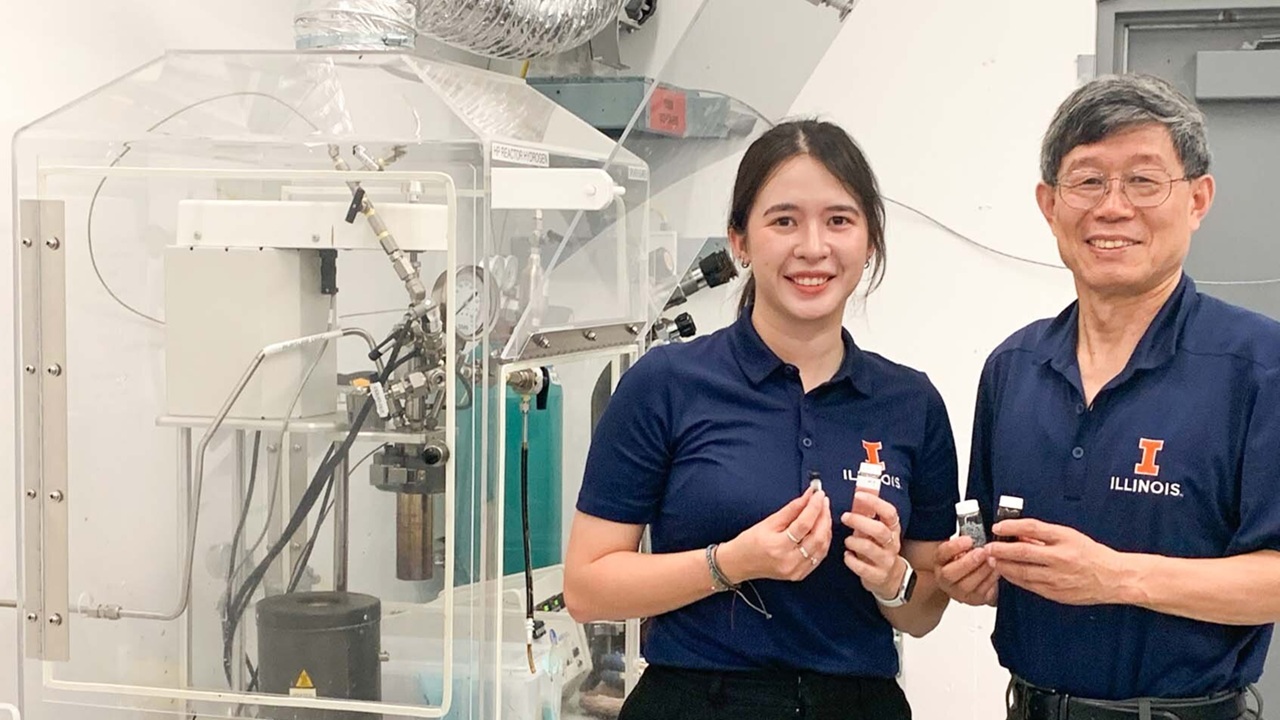
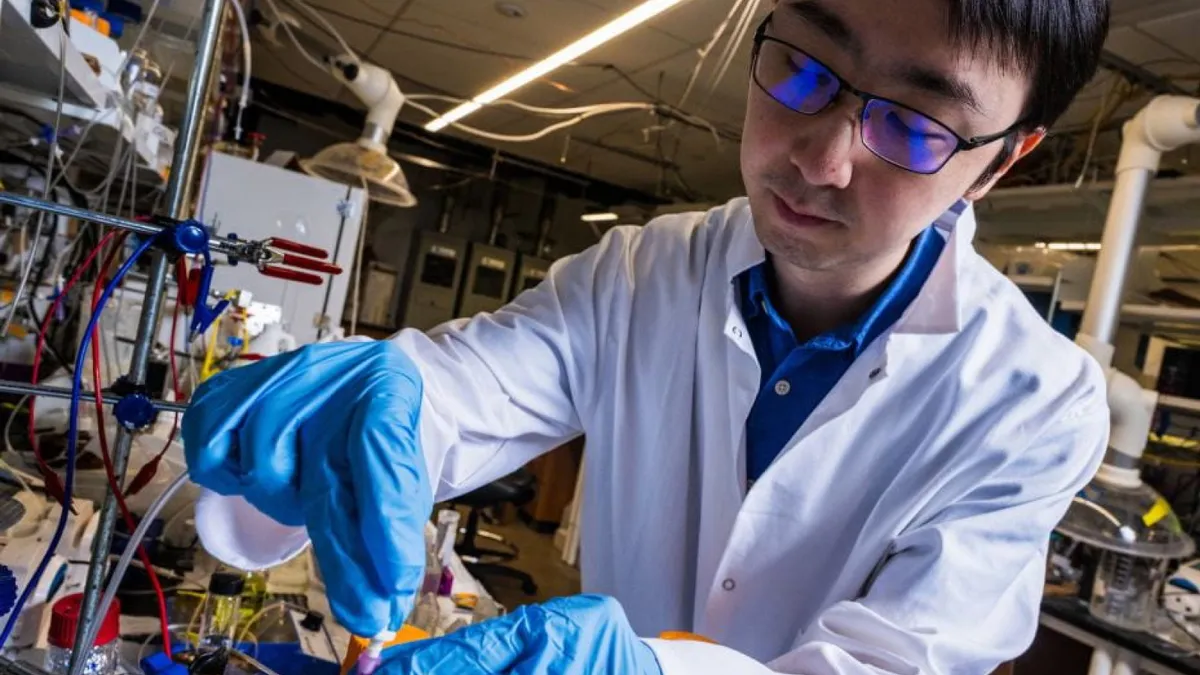
To overcome this issue, researchers from Rice University, led by Feng-Yang Chen, developed a three-chamber reactor. This innovation allows for a more effective separation of chemical reactions, preventing the interference of hydrogen ions in the conversion of nitrates. The reactor works as follows: in the first chamber, nitrates are converted into ammonia gas and hydroxide ions, which, in turn, react with the sodium present in the water to form sodium hydroxide.
In the second chamber, the newly formed ammonia gas is extracted, while the hydrogen ions, coming from the water splitting in the third chamber, react with hydroxide ions to form water. Sodium ions return to the first chamber to restart the cycle.
This design ensures that the interference from hydrogen ions is eliminated, allowing for more efficient conversion of nitrates into ammonia.
In tests conducted over 10 days, the reactor managed to direct more than 90% of the electric current towards ammonia production, a significant improvement compared to the 20% achieved in previous systems.
Although the reactor is still in the experimental phase, these results are promising, and the technology has the potential to be a sustainable and efficient alternative for water treatment.
Some Challenges of the Process
Researchers still face challenges before this technology can be widely adopted, such as ensuring that the system operates effectively even in the presence of common impurities in water, such as magnesium and calcium ions.
However, with ongoing advancements, this new reactor offers significant hope for the future of water treatment, helping to reduce the environmental impact of nitrates and contributing to the safety of drinking water.