Portuguese
  Spanish



From Vehicle Factories to Pharmaceutical Laboratories, Quantum Applications Are Already in Use and Reducing Work Hours to a Few Minutes
The future has arrived faster than expected, and with it, the power of quantum computing begins to transform different sectors of the global economy. According to the portal Interesting Engineering, D-Wave Quantum Inc. has been leading practical implementations of the technology to solve real production and research challenges. Major names like the automaker Ford Otosan and the pharmaceutical company Japan Tobacco are already reaping the benefits of quantum computing, with significant gains in efficiency and response time.
How Ford Uses Quantum Computing to Improve Its Production Line
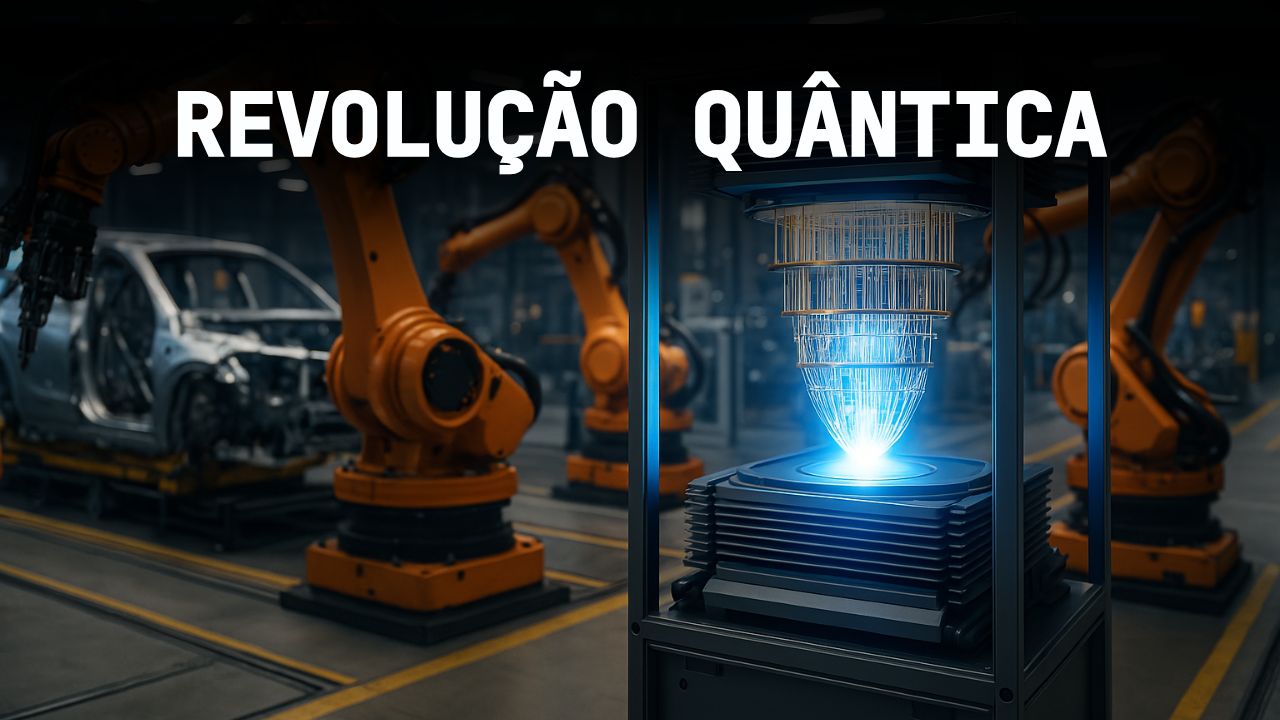
Ford Otosan, Ford’s arm in Turkey, faced a classic problem in the automotive industry: how to optimally sequence the assembly of 1,000 vehicles with variations in models and configurations. The task, which typically took around 30 minutes to solve using conventional algorithms, was executed in less than five minutes with the hybrid application developed by D-Wave. According to a statement from the company itself, quantum computer technology was directly incorporated into the production environment, showing that its practical use is already a reality in the automotive industry.
Technology Also Accelerates Drug Discovery
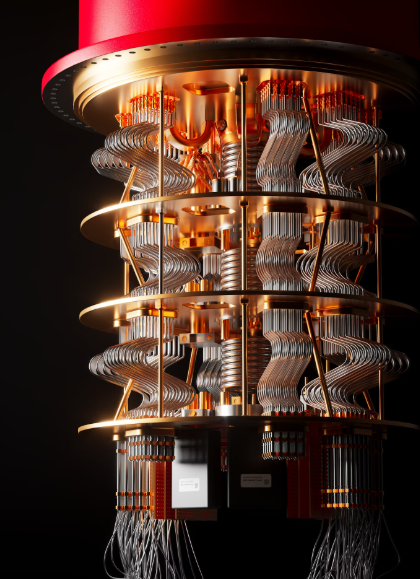
In addition to the automotive sector, D-Wave has also partnered with Japan Tobacco to apply quantum computing in the discovery of new drugs. The collaboration involved the use of artificial intelligence models and quantum optimization to generate promising molecular structures, significantly reducing research time and costs. This application shows how versatile the technology is: by simulating complex interactions between molecules, the quantum computer can predict chemical behaviors with much greater accuracy than traditional methods.
-
The industrial waste that even recyclers didn’t want has gained value in the interior of Bahia: two entrepreneurs invested R$ 2.8 million to transform 350 tons per year of foam, rubber, and plastic into boards that can replace wood and MDF.

-
What is a red flashlight used for, after all? See why it is so commonly used at night.

-
He has never read a line of code, but he already knows how to work: the French company UMA presented in Paris the Northstar, its first AI-powered humanoid robot designed for factories and warehouses, capable of copying tasks just by observing an employee in action.

-
A young Kenyan engineer collects plastic waste from the streets and transforms it into robots that translate physics lessons into sign language in real-time, a machine made with old bottles that teaches what was missing to deaf children left out of science.



Quantum Computing in Practice: It Is No Longer Just Theory
For many years, quantum computing was considered something distant, limited to laboratories and prototypes. But the projects conducted by D-Wave, both with Ford and Japan Tobacco, show that this is changing rapidly. The portal BusinessWire highlighted that these examples are just the beginning of a greater transformation that could impact areas such as logistics, finance, energy, and cybersecurity. The differential lies in the ability to solve problems with multiple variables in seconds, something practically impossible for traditional computers.
What Is a Quantum Computer and Why Is It So Powerful
Unlike common computers, which operate with bits (0 and 1), the quantum computer uses qubits, which can represent multiple states at the same time. This property allows it to execute a huge number of combinations simultaneously, making it ideal for optimization problems and complex simulation. According to the portal Interesting Engineering, this technology is especially useful for tasks involving thousands of variables and possible paths, such as production sequencing in the industry or the design of new drugs.
The Impact of Quantum Technology in the Coming Decades
What is currently used to optimize production or accelerate research may soon completely change the way companies develop solutions. Experts point out that quantum computing will be one of the greatest technological revolutions of the century, with the potential to restructure production chains, shorten delivery times, reduce operational failures, and create smarter products. Companies that position themselves at the forefront of this innovation, such as Ford and Japan Tobacco, will gain an edge in global competitiveness.