






 Portuguese
  Spanish
  6 min of reading
  1 comment


According to APNEWS, Researchers at the Woods Hole Oceanographic Institution in Massachusetts (USA) have developed seaweed varieties that produce up to three times more biomass than conventional strains and can be transformed into biofuel for ships and aircraft through hydrothermal liquefaction, a process that uses heat and pressure without petroleum. The problem is that the energy sector does not invest without proven demand, and producers do not scale up production without a buyer, creating a circular impasse that has hindered the sector’s development for decades.
Scientists at the Woods Hole Oceanographic Institution are already cultivating marine algae that produce three times more biomass than conventional strains and can be transformed into fuel for ships and airplanes without a drop of petroleum. The biofuel refined from these algae uses a process called hydrothermal liquefaction, which applies heat and pressure to organic material to produce liquid fuel capable of powering vessels and aircraft that currently rely exclusively on fossil derivatives.
The problem isn’t technology: it’s the market. Scott Lindell, a marine scientist at Woods Hole who led six years of research funded by the U.S. Department of Energy, summarizes the impasse: energy companies do not invest in large-scale aquaculture projects without proven demand, and algae producers do not expand production without a guaranteed buyer. The result is a cycle that has hindered the development of a renewable source that could replace aviation kerosene and marine fuel oil for decades.
What Woods Hole algae can do and why no one else does it

Electricity generated by solar and wind can power cars, but ships and airplanes primarily run on liquid fuels derived from petroleum. When burned, these fuels emit CO₂, and aviation and maritime transport account for a growing share of global greenhouse gas emissions. Marine algae biofuel is one of the few alternatives that can replace petroleum in these sectors without requiring a complete redesign of engines.
-
Helicopter Drops 180 Tons of Sand and Gravel on Swedish River to Revive Ecosystem Damaged by Decades of Exploitation

-
Brazilian Company Launches Retro Smartphone with 48 MP Camera, T9 Keyboard, and Privacy Features for Social Media-Free Use

-
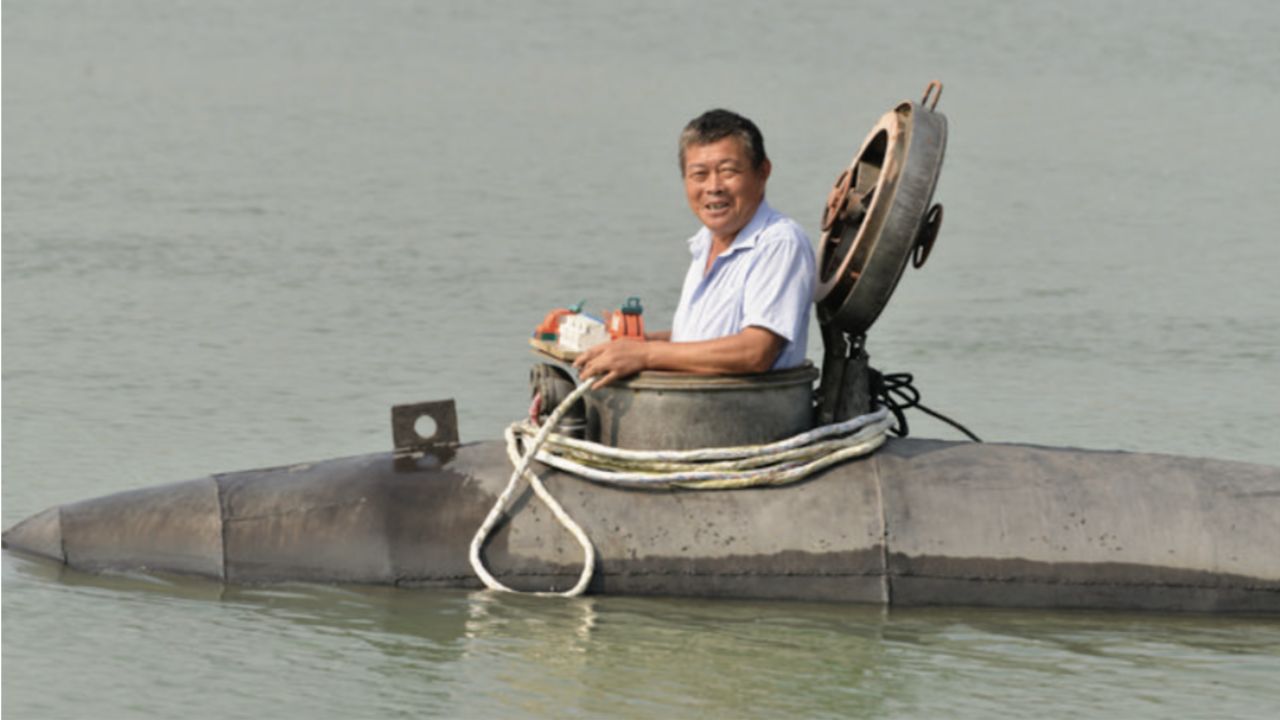
Self-Taught Chinese Farmer Builds 5-Ton Submarine from Scrap, Launches It in Anhui River
-
Invisible Induction Technology Enables Wireless Power for Blenders, Coffee Makers, and Air Fryers, Reducing Countertop Cables




Unlike corn ethanol, which requires agricultural land, fresh water, and pesticides, marine algae can be cultivated in the ocean with minimal resources. Lindell’s laboratory at Woods Hole developed varieties with specific qualities for biofuel production, including strains incapable of reproducing with wild algae, a characteristic that prevents genetic contamination in case of large-scale cultivation in the open sea. More than 2,600 varieties have been collected throughout New England and maintained under controlled light and temperature conditions.
The MARINER program and the six years of research that ended

Lindell’s work was funded by the MARINER (Macroalgae Research Inspiring Novel Energy Resources) program, a U.S. Department of Energy initiative launched in 2016 to develop tools for marine algae-based biofuel production. The program funded projects ranging from the development of heat-resistant strains to genome studies, and the researchers involved claim to have made concrete advances, such as up to a threefold increase in biomass productivity.
Lindell’s project funding lasted six years and ended in 2024. Since then, federal funding opportunities for research have been scarcer and delayed, a scenario that reflects a historical pattern: the U.S. government’s interest in biofuels fluctuates with the price of oil. A similar initiative in the 1970s was quickly shut down when oil prices stabilized. Lindell notes that “I don’t think things have changed since the first oil crisis.”
The Circular Impasse That Has Stalled the Sector for Decades
The core problem is not scientific: it’s economic. Energy companies hesitate to invest in large-scale aquaculture projects without proven biofuel demand, and seaweed producers do not scale up production without a guaranteed buyer. Bren Smith, co-founder of GreenWave (a non-profit organization that supports seaweed producers), argues that the question is where cultivation makes economic sense: today, seaweed is more viable in cosmetics, food, and fertilizers than in fuel.
Smith is direct about the risk of repeating past mistakes: investing billions in seaweed research focused exclusively on fuel when dozens of other more profitable uses exist in the short term. “Competing with the most technologically advanced and subsidized industry on the planet, the fossil fuel industry,” is a challenge no artisanal seaweed producer can overcome alone. Without consistent government subsidies or regulation that forces the adoption of biofuels in aviation and maritime transport, the market will not form.
The Producers That Exist Today and Why They Can’t Grow
Oliver Dixon cultivates seaweed in Point Judith, Rhode Island, to supplement his oyster business during the winter. His 3.6-hectare farm produces about 4,500 kilograms per harvest, sold mainly to local restaurants and seafood markets. The scale is hundreds of times smaller than what is needed for biofuel production, and without demand from the energy sector, Dixon has no plans for expansion.
Bureaucracy exacerbates the problem. In the United States, coastal waters are prioritized for recreation, fishing, and conservation, and obtaining permits for large aquaculture projects is a lengthy and uncertain process. Dixon cannot even keep his farm’s infrastructure in the water year-round: he is forced to remove lines and anchors in the spring and reinstall them in the fall. In contrast, Asian countries prioritize extensive seaweed farms that cover entire bays, a model that produces sufficient volume to supply multiple industries.
What’s Missing for Seaweed to Become a Real Fuel
Hauke Kite-Powell, an engineer and economic analyst at Woods Hole, identifies three conditions that need to align for seaweed biofuel to become viable: continuous (non-oscillating) government support, private sector investment in production infrastructure, and regulation that creates mandatory demand for sustainable fuels in aviation and maritime transport. Without all three simultaneously, the sector remains at the research stage.
Moving farms to deeper waters further offshore could allow for larger operations but introduces engineering and environmental challenges. Kite-Powell warns that “we still don’t have a complete understanding of all the possible ecological side effects of large-scale ocean aquaculture,” including the risk of marine animal entanglement and competition for nutrients with other life forms. The potential exists, but scientific prudence prevents the acceleration that the market cannot sustain.
Why Lindell Believes Oil Will Run Out Before the Solution Arrives
Despite the impasse, Lindell maintains long-term optimism. Around his laboratory, more than 2,600 varieties of seaweed collected throughout New England continue to be studied and selectively cultivated, in the hope that the energy industry will transition to renewable sources before oil becomes unviable. For him, the volatility of fuel prices and the finite nature of fossil resources point to an inevitable change.
Lindell stated that “we will come to the conclusion that things have changed in the market and we won’t be able to extract more oil from the earth in 30 years.” The question is whether seaweed research will survive political and budgetary fluctuations until that moment arrives — or if the technology will be reinvented from scratch for the third time, as happened in the 1970s, the 2010s, and could happen again.
Do you believe that seaweed can replace oil in ships and airplanes, or do you think this technology will remain in the laboratory forever? Tell us in the comments what you think about biofuels and if Brazil, with its 8,500 km coastline, should invest in seaweed cultivation for energy.





Some info about quantities, extraction percentage would be interesting to know.