






 Portuguese
  Spanish


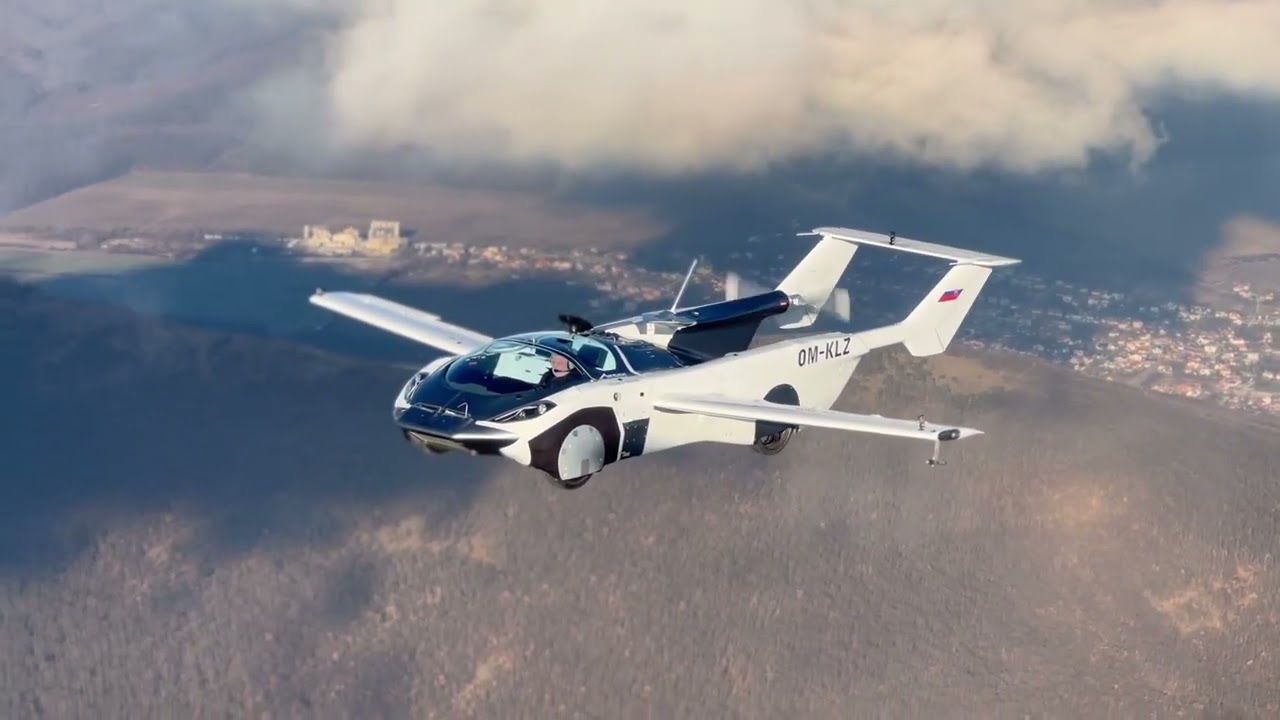


Slovakia’s AirCar accumulates over 170 flight hours, transforms car into plane in less than 2 minutes, and targets global market.
After 35 years of development and several generations of prototypes, Slovak engineer Stefan Klein, founder of Klein Vision, presented a new version of the AirCar in Beverly Hills in 2025, a hybrid vehicle that aims to bring the old promise of “flying cars” closer to commercial production. According to a statement from Klein Vision itself, released on May 8, 2025, the model has already accumulated over 170 flight hours, completed 500 takeoffs and landings, and can automatically switch between car and aircraft in less than two minutes.
The project had already obtained, on January 19, 2022, the Certificate of Airworthiness from the Slovak Transport Authority, after 70 hours of tests compatible with EASA standards and over 200 takeoffs and landings, according to Klein Vision.
The latest version was presented with a 280-horsepower engine, composite structure, and a proposal to enter the market as a luxury product, although Popular Science highlighted on May 8, 2025, that the new model will still require its own certification and that the estimated price reported to the press varies between US$ 800,000 and US$ 1 million.
-
China Develops Custom 140-Ton Electric Mining Truck with 770 kWh Swappable Battery, Deploys 290 Units in Xinjiang’s Largest Zinc Mine

-
Meta to Launch Arena, a New Prediction App Targeting 3.56 Billion Users, Competing with Polymarket and Kalshi

-
Scientist Challenges Famous Human Evolution Theory, Argues Homo Sapiens Evolved Gradually Over Thousands of Years
-
15-Year-Old American Builds Ocean Generator with PVC Pipe and 3D-Printed Propeller for $12, Wins National Prize, Presents at White House, and Makes Forbes 30 Under 30 List




AirCar took about 30 years to go from concept to functional aircraft
The AirCar project began to be developed by Slovak engineer and designer Stefan Klein back in the 1990s. For years, the concept went through different formats and prototypes until it reached the current model presented by Klein Vision. The idea was always to create a vehicle capable of driving on common roads and also functioning as a manned fixed-wing aircraft.
Unlike many futuristic projects that remained only as digital renderings, the AirCar effectively reached real flight tests. The vehicle accumulated hundreds of takeoffs and landings over the past few years while undergoing structural, aerodynamic, and mechanical refinements. The goal was to transform a concept historically associated with science fiction into a functional operating system.
Nearly three decades of development show the complexity involved in uniting an automobile and an aircraft within the same structure, especially in areas such as flight stability, safety, weight, and mechanical transformation between the two modes of operation. (popsci.com)
Flying car transforms structure into plane in less than two minutes
One of the most impressive elements of the AirCar is its transformation mechanism. Upon reaching a runway, the vehicle automatically activates a system that extends the side wings and reorganizes parts of the rear structure for flight configuration. According to Klein Vision, the entire process can be completed in less than two minutes.

After the transformation, the AirCar operates as a conventional fixed-wing aircraft. The driver assumes functions similar to those of a pilot and uses a traditional runway for takeoff. After landing, the system retracts the wings again, allowing the vehicle to return to circulating on the streets as a common automobile.
The mechanism attempts to solve one of the greatest historical challenges of flying cars: creating a practical transition between road and flight without requiring complex manual disassembly or special infrastructure.
280-horsepower engine propels vehicle on ground and in air
The new generation of AirCar was presented with an engine of approximately 280 horsepower. According to the company, the powertrain was designed to provide sufficient performance for both ground travel and aerial operations.
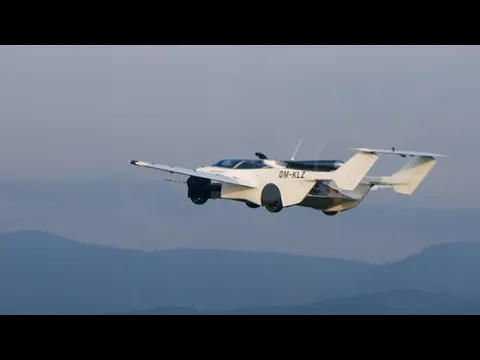

During testing, previous versions of the vehicle had already carried out real intercity flights in Slovakia.
In one of the most publicized cases, the AirCar traveled approximately 75 kilometers between Nitra and Bratislava airports in about 35 minutes of flight. After landing, the vehicle returned to circulating on the streets normally.
The performance attracted attention because the AirCar does not function like a giant drone or an electric vertical take-off aircraft. It operates as a traditional airplane adapted to also drive on roads, something much closer to the classic concept of a “flying car” imagined decades ago by popular culture.
Airworthiness certification elevated the project to another level
Most flying car projects never reach the regulatory phase. The AirCar attracted attention precisely because it managed to advance at this point.
In 2022, the Slovak Transport Authority granted the vehicle an airworthiness certificate after thousands of hours of testing and technical evaluations.
According to the company, more than 70 technical tests were carried out involving stability, maneuverability, structural safety, and flight performance. The certification allowed the AirCar to no longer be treated merely as an experimental prototype and to occupy a position closer to a regulated functional aircraft.

This regulatory advance is considered one of the greatest milestones ever achieved by a fixed-wing flying car, because it demonstrates that the project managed to meet some of the standards required for real aerial operation.
Flying cars face enormous infrastructure and legislation challenges
Despite the technical advancement, specialists point out that vehicles of this type still face enormous regulatory and operational barriers. The AirCar still needs conventional runways for takeoff and landing, in addition to a pilot’s license for aerial operation.
Issues related to urban airspace, safety, insurance, maintenance, and international certification still represent significant obstacles to the popularization of this type of vehicle. Furthermore, high costs severely limit general public access.
Even so, companies from different countries continue to invest billions in advanced air mobility projects. The AirCar appears as one of the most concrete examples of a real attempt to unite automobile and aviation within a single functional vehicle.
Project symbolizes a new global race for personal air mobility
In recent years, dozens of startups have begun to compete in the market for personal aircraft, eVTOLs, and flying cars. Companies from the United States, China, Japan, Germany, and Brazil have started to develop vehicles capable of operating between streets and urban airspace.
Most of these initiatives bet on electric vertical take-off systems similar to giant drones. The AirCar follows a different path by using retractable wings and conventional airplane operation. This makes the project seem closer to the classic flying cars imagined in futuristic films and magazines of the 20th century.
After almost 30 years of development, the AirCar has become one of the most advanced examples of how the old idea of the flying car has finally begun to move from science fiction into the real world.
Given the advancement of these projects, do you believe that flying cars could become common in the coming decades, or will they remain restricted to extremely expensive niches of private aviation?







