Portuguese
  Spanish


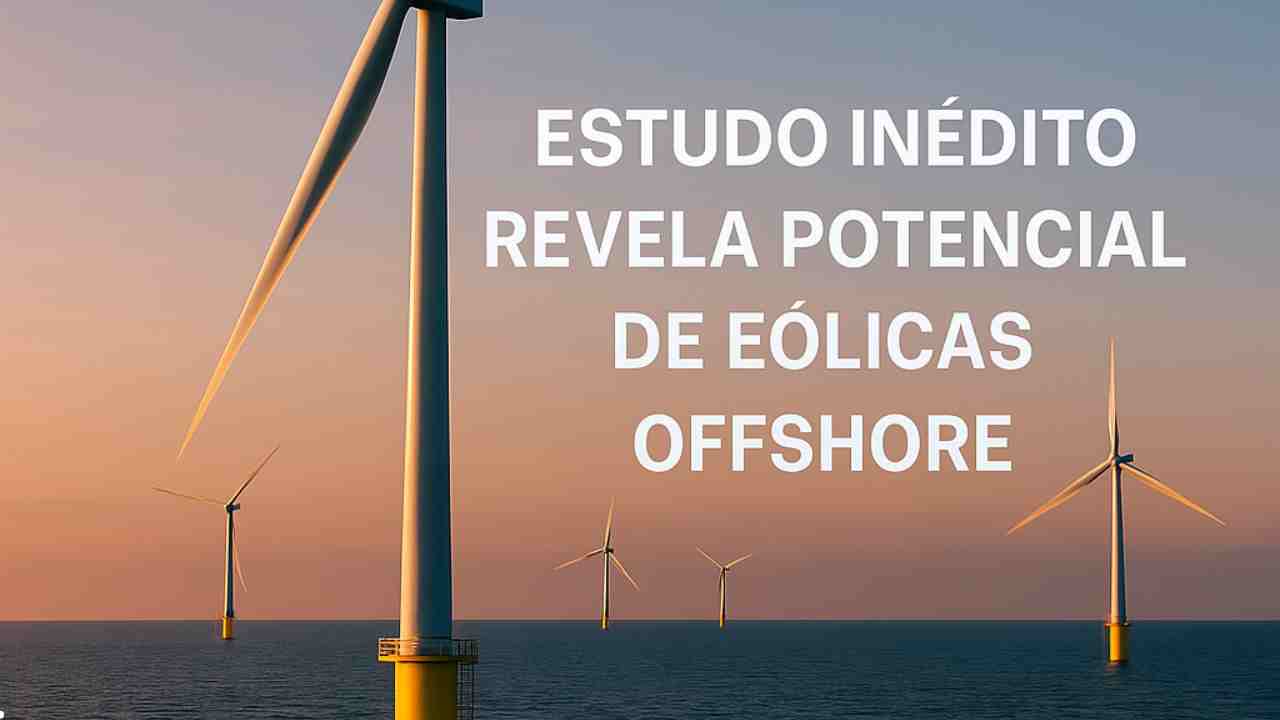

Survey Presented at Wind of Change 2025 Reveals Strategic Areas for the Installation of Offshore Wind Farms in RS, Reinforcing the State’s Protagonism in the Energy Transition.
If the wind blows in favor, Rio Grande do Sul is about to become a true clean energy powerhouse. And it’s not just a figure of speech — a groundbreaking study presented this Thursday (3), during the second edition of Wind of Change, revealed that the state has vast and extremely favorable areas for the installation of offshore wind farms, those turbines that convert wind into electricity in the middle of the sea.
And we are not talking about small tests: the survey indicates regions with over 40,000 km² of energy potential. Can you imagine what that means? Basically, RS could stop being just a consumer and become one of the largest exporters of clean energy in the country, leading the energy transition in Brazil.
What the Study Says About the Potential of Offshore Wind Farms in RS
The report was conducted by oceanographer and PhD in Geosciences, Clarissa Araujo, from WSP Brasil, with technical support from Sindienergia RS, Portos RS, and a group of private companies. It not only maps ideal areas for wind farms but also takes into account socio-environmental and infrastructure criteria.
-
Brazilian scientists are simultaneously advancing two research projects on clean hydrogen and driving solutions that could transform the energy matrix, enhance industrial competitiveness, and accelerate large-scale emission reduction targets.

-
Advancement in renewable energy: A R$ 150 million project launched by Petrobras and Finep aims to create state-of-the-art electrolyzers for green hydrogen, strengthening national research and preparing Brazil to compete in a billion-dollar energy market.
-
Illiterate or semi-literate grandmothers were trained to repair solar systems, open rural workshops, and light up homes that still depended on kerosene.
-
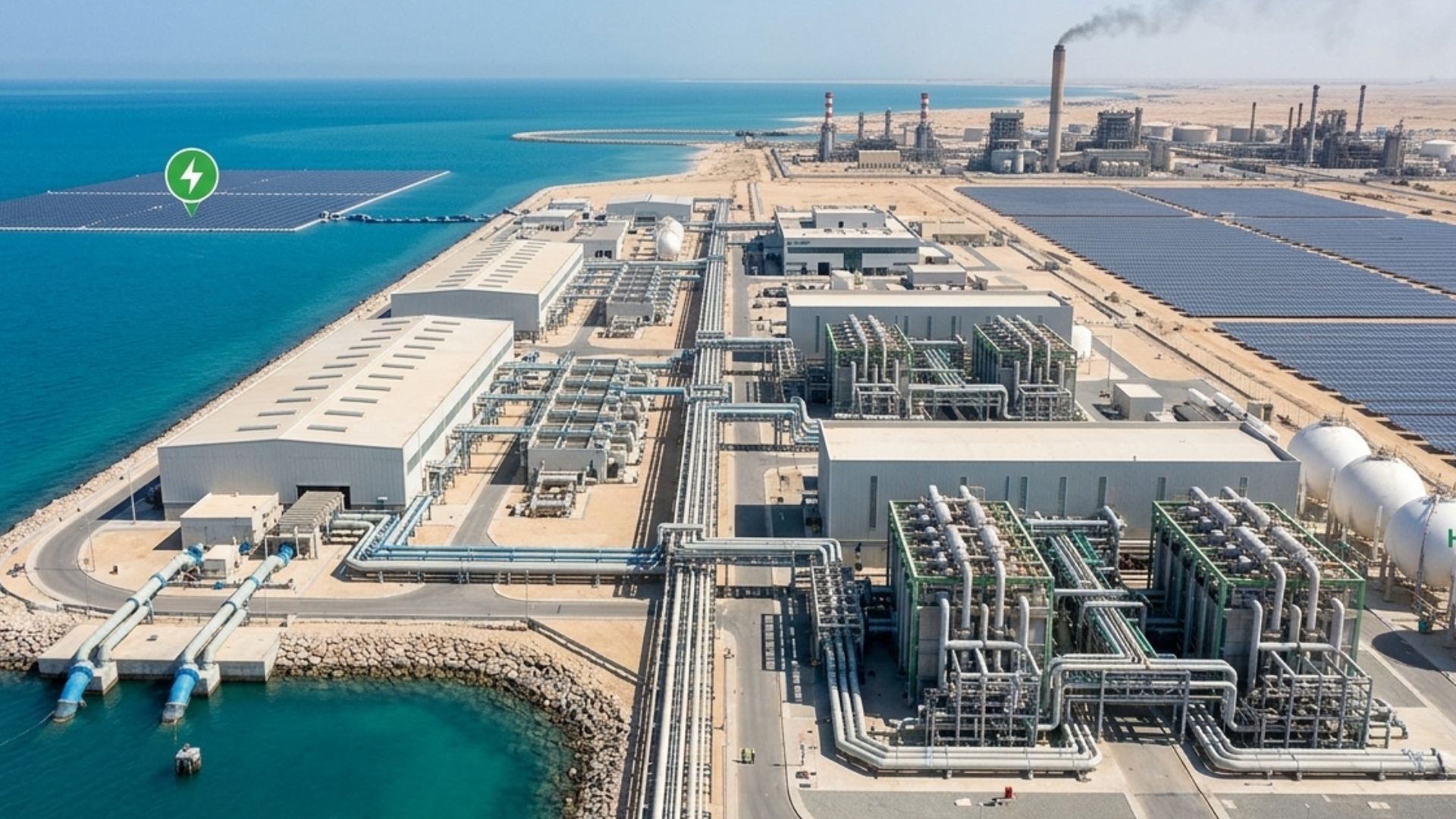
The world has bet on green hydrogen as the fuel of the future, but now faces the side effect: producing 1 kilogram requires about 9 liters of ultrapure water, and the largest projects on the planet are precisely in the driest regions of the Earth, where water is already scarce for people.


According to the study, three scenarios were defined to assess the feasibility of installing offshore wind farms in RS: free development, conservative, and an intermediate management approach. The idea was to cross-reference technical data with environmental and social sensitivity, creating a robust and strategic analysis.
The results indicate that, even in the most conservative scenario, Rio Grande do Sul already has areas with excellent viability. And the best part: this clean energy could be produced sustainably, with minimal environmental impact and maximum efficiency.
Three Scenarios and One Certainty: RS is Ready to Lead
In the scenario called free development, the identified areas reach 44,106 km² — practically the size of the state of Espírito Santo. The management approach, which is more controlled and balanced, maps 33,840 km². Even the most cautious model, the conservative scenario, reveals two broad and favorable regions: one in the north with 2,935 km² and another in the south with 4,372 km².
These areas were chosen based on variables such as wind speed, sea depth, proximity to ports, and environmental impacts. This shows that, more than promising, these zones are strategic for the country. It is no wonder that RS leads the national ranking of offshore wind projects under analysis at Ibama.
Currently, the state has 30 ongoing processes at the federal agency for installing wind farms at sea. This volume places Rio Grande do Sul at the center of discussions about the future of clean energy in Brazil — and, why not, in Latin America.
Connection with the Electric System is the Next Challenge
But it is no use having all this wind potential without ensuring that the energy reaches where it is needed. As the study’s author, Clarissa Araujo, pointed out, the next step will be to evaluate the infrastructure for land-based electrical transmission. “It’s not enough to have potential; it is essential to ensure efficient connection and distribution of the generated energy,” she warned.
This is the part of the process that involves substations, transmission lines, and technical planning to avoid wasting energy produced offshore. After all, generating clean energy is one thing; delivering it efficiently to industries, homes, and sectors that need it most is another.
The study will also support government decisions on investments in infrastructure and public-private partnerships. Brazil already has a recent regulatory framework for offshore wind farms, which facilitates the progression of the next phases.
The Gaúcho Protagonism in the National Scenario
Besides leading in the number of projects at Ibama, RS stands out for its diversity of renewable sources. The president of Sindienergia RS, Daniela Cardeal, emphasized that the state combines land-based wind energy, solar, bioenergy, and hydropower. This mix, according to her, increases the competitiveness of the state and reinforces its importance in the energy security of the country.
“Rio Grande do Sul has significant advantages to contribute to Brazil’s development in terms of national energy security,” Daniela stated. For her, clean energies are key for sectors such as agriculture, health, and industry, and are essential to maintain the competitiveness of the Brazilian economy globally.
This advancement of offshore wind farms in RS is not just a local victory. It is a decisive step in Brazil’s environmental commitment, which seeks to cement itself as a world leader in renewable energy generation.
An Event that Reflects the Spirit of the Energy Transition: Offshore Wind Farms
Wind of Change 2025 concludes its second edition as a true catalyst for change. The event, promoted by Sindienergia RS and Viex, brought together specialists, investors, and public sector representatives to discuss solutions and partnerships for a cleaner and more resilient energy matrix.
This year’s edition showed that the sector is no longer just a realm of promises. Offshore wind farms are becoming a tangible reality, with technical studies, legal milestones, and, primarily, the engagement of the involved parties. Events like this not only disseminate knowledge but help transform projects into action.
The study presented at Wind of Change 2025 made it clear: the wind is blowing strongly in favor of RS — and now is the time to take advantage. With vast and strategically positioned areas, the state has everything to lead the generation of clean energy in Brazil through offshore wind farms.
Now, the challenge is to structure the transmission system and attract the right investments to turn this potential into reality. Because, when it comes to winds in RS, the future has already begun.
Source: amanha.com.br