





 Portuguese
  English
  Spanish
  2 min of reading


Risk of Default in Maritime Support Due to Lack of Contract Renewal by Petrobras
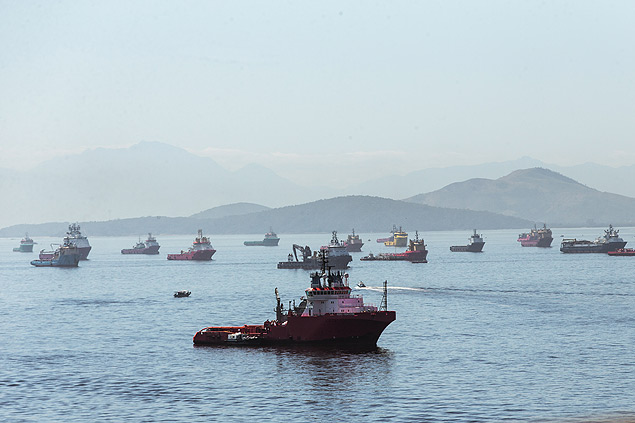
The risk of default in financing newly built vessels that are currently without operating contracts looms over maritime support companies. These vessels were ordered under Petrobras’ Maritime Support Fleet Renewal Program (Prorefam). The charter contracts for the vessels, originally up to eight years and extendable for the same period, have stagnated and have not been renewed, according to information from Abeam, the Brazilian Association of Maritime Support Companies.
Sector Crisis
New vessels fear being in this situation due to the impact of the oil and gas sector crisis in recent years. “If there is no immediate and effective action by Petrobras and financial agents, supported by the FMM [Merchant Marine Fund], we foresee a real risk of default in the payments of the financing for these vessels,” informs Abeam president Ronaldo Lima.
-
Man built a 5-acre lake to raise bass, but after 1,000 days the project turned into a wildlife sanctuary with eagles, deer, ducks, owls, and live cameras that transformed the farm into a biodiversity laboratory.
-
Man built a 5-acre lake to raise bass, but after 1,000 days the project turned into a wildlife sanctuary with eagles, deer, ducks, owls, and live cameras that transformed the farm into a biodiversity laboratory.
-
Man built a 5-acre lake to raise bass, but after 1,000 days the project turned into a wildlife sanctuary with eagles, deer, ducks, owls, and live cameras that transformed the farm into a biodiversity laboratory.
-
Water hyacinth that blocks boats, oxygen, and channels gains a new function as a lightweight construction panel, creating a sustainable alternative, reducing waste, and offering efficient thermal insulation.


“Flagged” Vessels
Vessels that were not built in Brazil but received a Brazilian flag enjoy the same privileges as those built in national shipyards, where Edison Chouest Offshore director Ricardo Chagas considers it unfair for the sector to have more than 30 vessels built in Brazil without contracts. “Authorities should be sensitive and prioritize the hiring of these vessels, rather than treating the issue equally. After all, Brazilian shipping companies still have to pay for financing obtained from financial agents approved by the FMM, while these vessels in the REB [Brazilian Special Registry] enjoy benefits provided by other countries,” points out Chagas.
New Vessels
Starting in 2021, orders for the construction of new vessels are expected, predicts Abeam. If the investments planned by Petrobras and foreign operators in exploration and production are confirmed, this demand will become real. Thus, there will be an increase in the number of drilling rigs and production units in operation, primarily requiring AHTS (Anchor Handling Tug Supply) and PSV (Platform Supply Vessel).
All this forecast is based on the results of the latest auctions by the National Agency of Petroleum, Natural Gas and Biofuels (ANP) and on Petrobras’ business and management plan (2018-2022). “It should also be considered that the portion of the Brazilian fleet that is currently idle, awaiting contracts, is expected to return to operation, which may impact the number of marine support vessel constructions,” highlights Lima.
Also, check these Related Links:
- Job Interview – The 8 Most Frequently Asked Questions
- Falsifying Your Resume Can Lead to Dismissal for Just Cause
- DISMISSAL – Depression Vs Attitude – Taking Action Opens Opportunities








Be the first to react!