





 Portuguese
  English
  Spanish
 3 min of reading
  0 comments


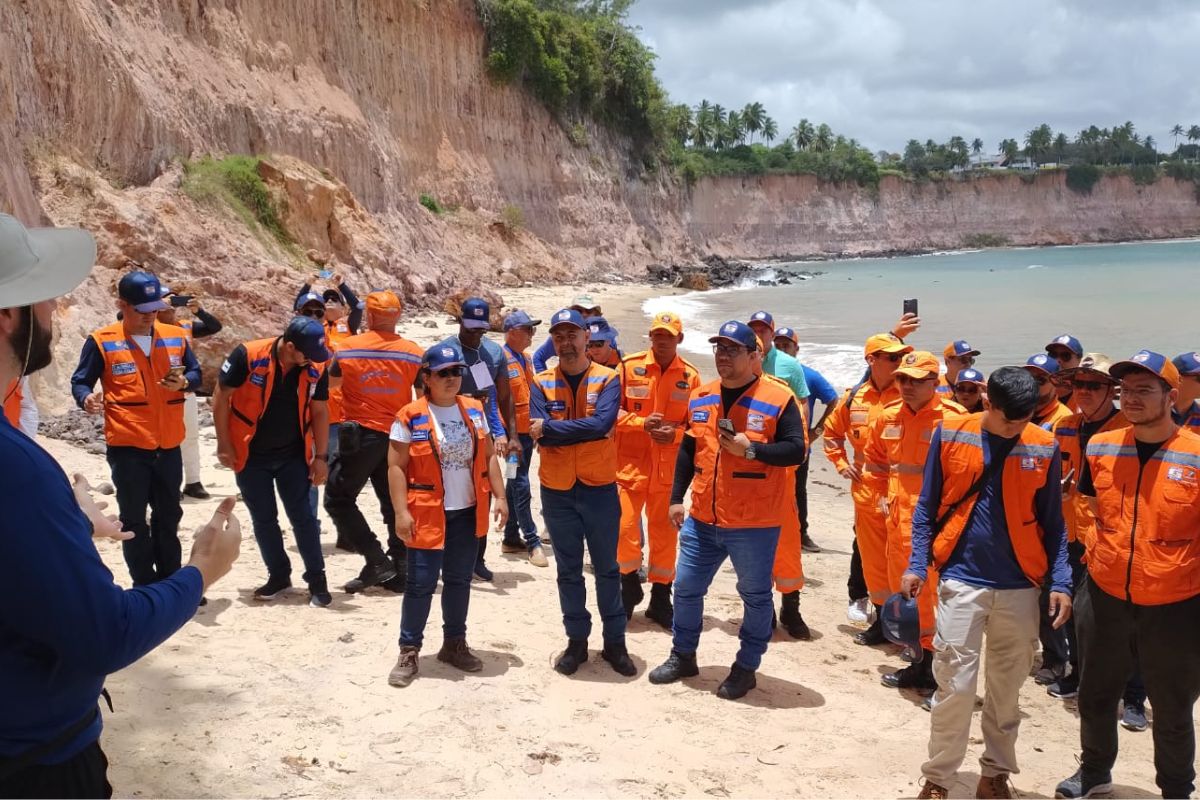
The Geological Service of Brazil (SGB) Held Strategic Training on Geological and Hydrological Risk in Rio Grande do Norte, Expanding Joint Action with Civil Defense in Disaster Prevention
The geological and hydrological risk in Rio Grande do Norte has been receiving increasing attention due to the rise of extreme climatic events affecting municipalities in the state, according to a report published.
With the aim of improving response and prevention capacity, the Geological Service of Brazil (SGB) held, from October 13 to 17, in Natal, training aimed at 60 municipal coordinators of Civil Defense and Protection in the State.
The meeting reinforced the technical and scientific role of the SGB and enhanced the integration between local and regional governments.
-
Iran declared that the security of the Persian Gulf will be for everyone or for no one — and threatened to attack ports of neighboring countries after the U.S. blockade in the Strait of Hormuz.
-
A neighboring country of Brazil starts to profit billions from oil after the war in Iran, sees its economy grow at an unusual pace, and enters a silent dilemma that few countries can resolve without a crisis.

-
Considered Trump’s last ally in Europe, Giorgia Meloni has just suspended a military agreement of over 20 years with Israel and rejected Italy’s entry into the blockade of Hormuz.
-
Through a narrow strait of just 33 km, 20% of the world’s oil passes — the USA has just closed it, the barrel has risen to over $100, and the price at the pump in Brazil has already increased.

The action also included representatives from the Civil Defense of Paraíba, highlighting the importance of interstate cooperation in public safety and territorial sustainability policies.
Technical Training and Integrated Management of Risk Areas
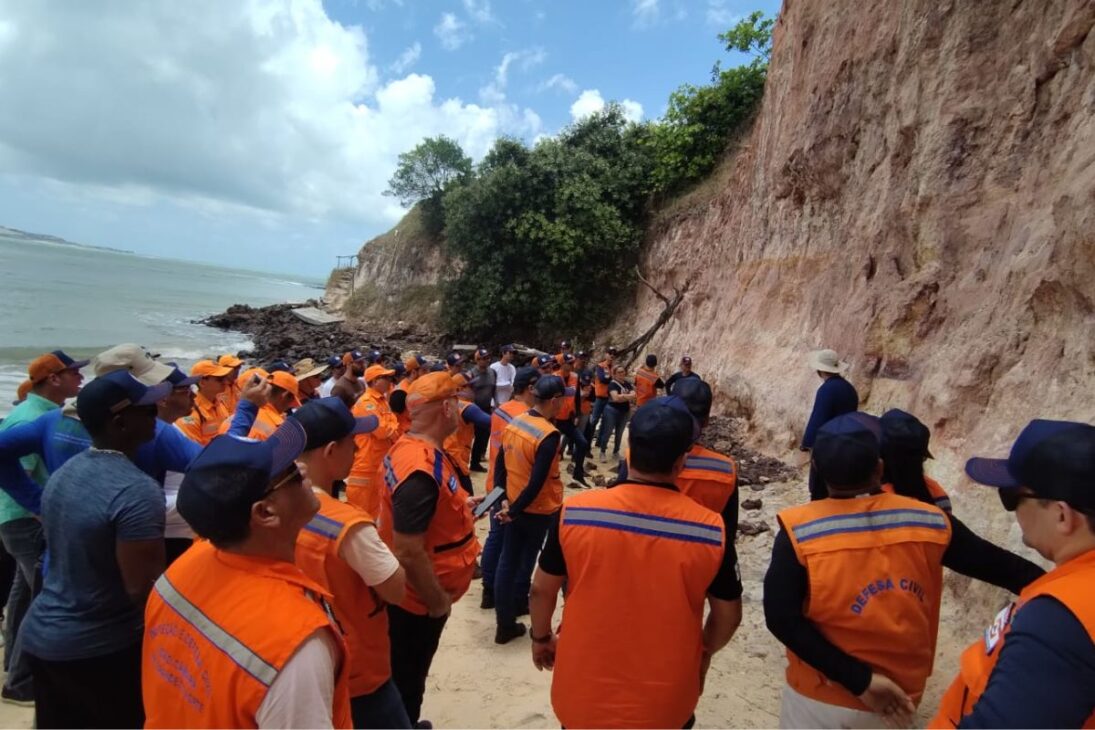
During five days of programming, participants were guided by SGB geologist Anselmo Pedrazzi, who led theoretical and practical classes on mapping areas of geological and hydrological risk in Rio Grande do Norte.
The training included updated methodologies for identifying zones vulnerable to landslides, erosion, and flooding.
One of the most significant activities was the technical visit to cliff regions, where professionals applied field techniques for geodynamic analysis presented.
According to the SGB, this practical experience is essential to ensure more accurate diagnoses and swift actions in emergency situations.
The event consolidated the alignment between technical training and the implementation of municipal contingency plans.
Cooperation Between Institutions and Strengthening Civil Defense
The training also emphasized the importance of cooperation among public agencies. By bringing together representatives of municipal and state civil defenses, the SGB strengthened the coordination of teams responsible for disaster response.
The geological and hydrological risk in Rio Grande do Norte requires joint approaches, and the event highlighted how the union of efforts enhances the efficiency of prevention policies.
The exchange of experiences among neighboring municipalities and the presence of Paraíba’s Civil Defense demonstrated the value of regional strategies to reduce vulnerabilities and optimize public resources.
Strengthening the technical network of trained professionals is an essential step toward creating safer and more resilient territories.
Advances in Public Policies and Climate Resilience
The SGB training represented more than just basic qualification: it was an advance in public policies aimed at reducing geological and hydrological risk in Rio Grande do Norte.
The discussions addressed the need to integrate scientific knowledge into public management, allowing municipalities to develop action plans aligned with climate change and the local socio-environmental reality.
This preventive vision strengthens the national commitment to sustainability, public safety, and rational land use.
By disseminating mapping practices and risk perception of geological and hydrological risk in Rio Grande do Norte, the SGB reaffirms its strategic role in the development of cities prepared to face the environmental challenges of the 21st century.






Seja o primeiro a reagir!