






 Portuguese
  Spanish


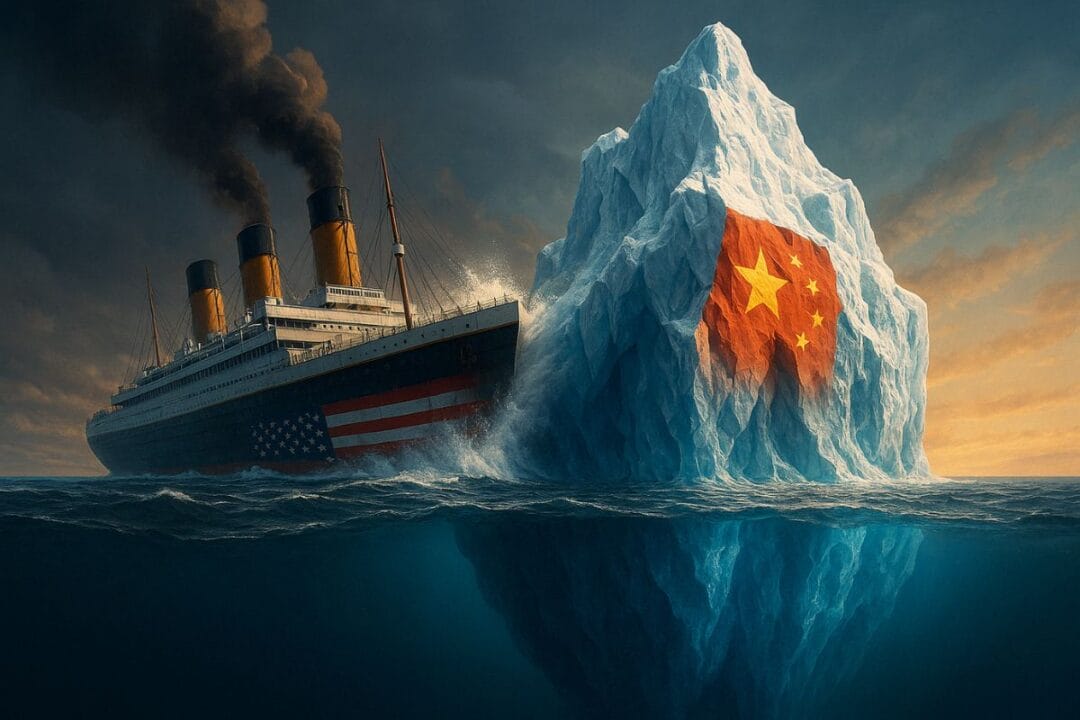

Report Shows That China Has Already Surpassed the US in Various Productive and Technological Sectors, While Americans Bet on the Strength of Alliances to Contain Asian Advancements
The dispute between China and the United States is no longer limited to geopolitics. The new phase of rivalry is based on scale, productive capacity, and technological dominance, according to a recent article by Rush Doshi and Kurt Campbell, published in Foreign Affairs Magazine.
The analysis indicates that China has already surpassed the US in several strategic sectors, with massive production and advancements in areas such as energy, artificial intelligence, robotics, quantum communication, armaments, and semiconductors. The warning is clear: the economic challenges faced by Beijing should not be confused with strategic fragility.
China Has Already Surpassed the US in Various Industrial Sectors
China currently produces:
-
Brazil’s 2026 Tax Refund: Record 9.58 Million Filers in Largest Payout Ever, But a Key Detail on Priority Recipients Draws Nationwide Attention

-
Itaú Alters Hybrid Work Model, Increasing Office Days from 2028, Prompting Employees to Adjust to New Routine
-
Facing Labor Shortage, Japan Plans to Invest $34 Million to Attract Foreign Workers in Construction, Healthcare, Industry, and Commerce

-
Brazilian City Makes Remarkable Leap, Becomes 4th Wealthiest in the Country with GDP of R$ 134.1 Billion




- 2× more than the US in power generation
- 3× more automobiles
- 13× more steel
- 20× more cement
- 200× more ships
- 80% of global drones
- 90% of solar panels and rare earth elements
The Chinese leadership extends to future technologies: 50% of industrial robots, dozens of planned nuclear reactors, and prominence in hypersonic and quantum communication. In military production, China is building about 100 fourth-generation fighters per year and is expected to reach 435 warships by 2030, surpassing the approximately 300 of the American fleet.
China and the United States Compete for Influence with Distinct Global Blocs
Despite China’s advancements, the United States still leads when aggregating the resources of its allies. The so-called “Western bloc” formed by the US, European Union, Japan, South Korea, India, Australia, Canada, Mexico, and New Zealand surpasses China in:
- 3× nominal GDP
- 2× defense spending
- More patents and scientific publications
- Presence as the main trading partner of most countries
The challenge, according to Doshi and Campbell, is to turn this theoretical advantage into concrete actions. This includes integrated ship production, sharing chips and military technology, and coordinated trade barriers against China’s industrial overcapacity.
China and the United States Enter a Scale War – and There Is No Room for Neutrality
For analysts, the American strategy needs to change: diplomatic alliances alone are not enough. It is necessary to build integrated production platforms, shielded against unfair Chinese competition, and accelerate innovation in key sectors.
China and the United States are in a race where quantity has turned into quality, and whoever controls productive and technological scale will have real power over the direction of the global economy.








