





 Portuguese
  English
  Spanish
  2 min of reading
  0 comments


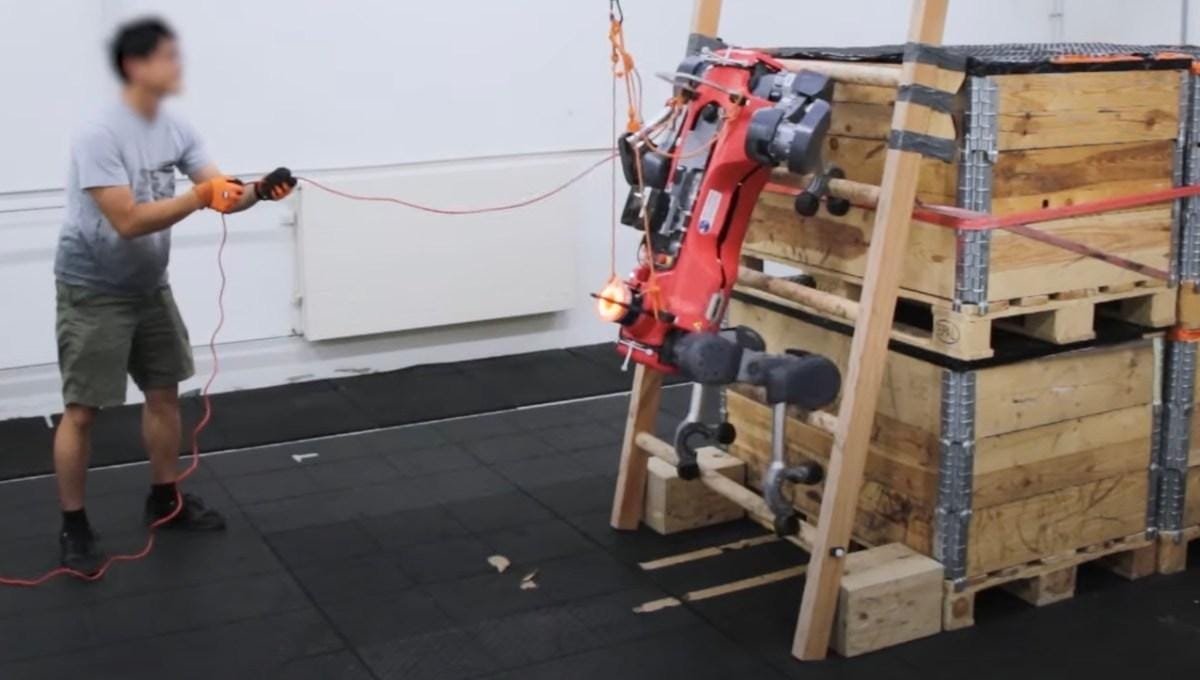
Four-Legged Robot That Climbs Stairs Challenges Limits!
Imagine a robot that not only walks but also climbs stairs with the dexterity of an animal. This technological innovation is challenging the limits of what we believed was possible in robotics. Let’s explore how this engineering marvel is redefining the future.
The Technological Advancement
Four-legged robots, inspired by the anatomy of animals, are becoming increasingly sophisticated. Recently, engineers developed a robot capable of climbing stairs, a task that requires complex balance and coordination. This advancement represents a significant milestone in robotics, expanding mobility capabilities in challenging terrains.
How Does It Work?
Equipped with advanced sensors and artificial intelligence algorithms, the robot analyzes the environment in real-time. It adjusts its legs to ensure stability and traction when ascending steps. This technology allows the robot to adapt to different types of stairs, from the steepest to the narrowest, demonstrating impressive versatility.
-
Yeast used in bread, beer, and pizza becomes biomaterial for architecture and surprises by forming lightweight pieces, molded in 3D printers and dried without high energy consumption heating.

-
A simple yet impactful innovation can change the global beverage sector: the aluminum can from ReLid USA that opens and closes bets on the circular economy, reduces waste, and offers a sustainable alternative to conventional plastic packaging.

-
Surprising the global technology market, SpaceX closes a $30 billion deal with Google in June 2026 and strengthens the race for advanced digital infrastructure, expanding the integration between space connectivity, artificial intelligence, and strategic services.
-
China tests a 10-megawatt nuclear reactor that fits in a truck and can provide energy for decades to islands, military bases, remote areas, and even artificial intelligence data centers.





Practical Applications
The applications for a robot with these capabilities are vast. From rescue missions in hard-to-reach areas to inspections in hazardous locations, such as nuclear power plants, this robot can play crucial roles. Furthermore, it can be used in urban environments, assisting in tasks that require mobility on uneven terrain.
Challenges and Future
Despite the advancements, there are still challenges to overcome. Energy autonomy and resistance to adverse weather conditions are areas that require improvement. However, with the rapid pace of innovation, it is only a matter of time before these obstacles are overcome, paving the way for even more capable robots.
Final Reflection
The development of a four-legged robot that climbs stairs is a testament to the limitless potential of robotics. As we continue to explore and expand these frontiers, we can expect a future where robots play increasingly integrated roles in our daily lives. This is just the beginning of a new era of possibilities.





Be the first to react!