Portuguese
  Spanish


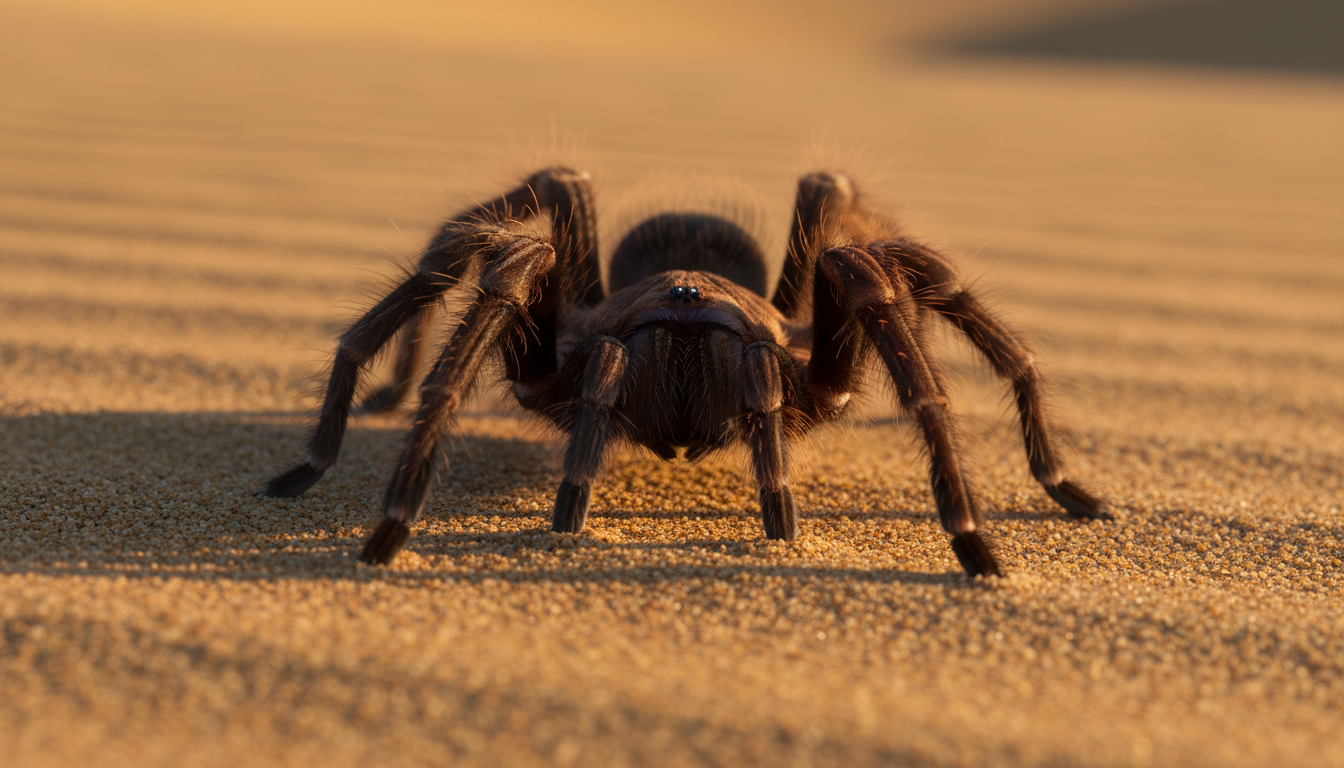


So different from any known spider that scientists had to invent an entire genus to classify it — the Satyrex tarantula has the largest proportional genitalia among all tarantulas in the world
When researcher Alireza Zamani, from the University of Turku in Finland, began examining old records of tarantula sightings in 2024, he noticed something unusual.
“Scientific records, the citizen science platform iNaturalist, and even social media were full of reports of tarantulas with enormous sexual organs in the Arabian Peninsula and the Horn of Africa region,” Zamani told National Geographic.
By studying the structure and DNA of these specimens, researchers reached a surprising conclusion. “Based on morphological and molecular data, they are so distinct from their closest relatives that we had to establish an entirely new genus to classify them, and we named it Satyrex,” Zamani explained.
-
Low-Cost Concrete Panel House Goes Viral: Investor Reveals Prefabricated Kit Structure for Around $1,500, Assembled in 30 Days, with Plans for Rental and Resale Income

-
South Korea Tows 18 Concrete Blocks Weighing Up to 48,000 Tons Over 36 km to Construct a 3.2 km Underwater Tunnel Between Busan and Geoje, Installed Nearly 50 Meters Deep

-
Chinese Tianwen-2 Mission Targets Near-Earth Asteroid After 1 Billion Kilometer Journey to Collect Ancient Samples, Aiming to Uncover Clues About Water, Organic Compounds, and Solar System Origins Before Heading to a Comet
-
Brazilian Lottery Winner Ordered by Court to Share $22 Million Jackpot with Ex-Partner, Sparking Major Legal Battle





The study, published in July 2025 in the journal ZooKeys, describes four new species within the genus.

5 cm palps on a 14 cm spider: the largest proportion among all known tarantulas
The most impressive species in the genus is Satyrex ferox — the largest of the four discoveries.
The spider has a leg span of approximately 14 cm. However, what shocked researchers are the male palps — the appendages used to transfer sperm during mating.
- Leg span: ~14 cm
- Palp length: up to 5 cm
- Proportion: almost half the animal’s total length
- Comparison: almost 4x longer than the front part of the body and as long as the longest legs
“The males of these spiders have the longest palps among all known tarantulas,” Zamani stated.
The name Satyrex combines two words: Satyr (a satyr from Greek mythology, known for prominent genitalia) and Rēx (Latin for “king”). The term ferox comes from Latin for “ferocious.”
Females so aggressive that males developed giant organs to survive sex
The evolutionary hypothesis behind the enormous palps is as fascinating as the anatomy itself.
Female Satyrex tarantulas are extremely aggressive. For many tarantulas, mating is literally a deadly duel.
“During these fights, males strive to inseminate and escape, while females fight to make a meal of their suitors,” Zamani describes.
Scientists speculate that the gigantic palps evolved as a defense mechanism — allowing males to maintain a safe distance from the female’s jaws during mating.
Although almost all tarantulas have hooks on their front legs to pin down female prey, Zamani suspects that “these small hooks probably do not protect members of the Satyrex species from their aggressive females” on their own.
Discoveries that challenge what we thought we knew are not rare in biology. The mesentery, an organ that doctors cut for centuries without knowing what it was, is another example of how science constantly revises its certainties.

Two regions, four species: where the world’s strangest tarantulas live
The genus Satyrex inhabits two main regions: the Arabian Peninsula and the Horn of Africa (Somalia, Ethiopia, Eritrea, and Djibouti).
All four species live underground, in burrows dug into sandy soil. They are described as “highly defensive and aggressive” — not just the females, but the entire genus.
The geographical distribution suggests that the species separated evolutionarily when the Arabian Plate moved away from Africa millions of years ago, isolating populations on both sides of the Red Sea.
The discovery of an entirely new genus in the 21st century — in a relatively accessible region like the Arabian Peninsula — reinforces that the planet’s biodiversity still hides surprises in every burrow, every treetop, and every square meter of soil.
Caveats: specimens collected before the study and without impact data
On the other hand, although the publication is from July 2025, the specimens may have been collected years earlier — a common practice in arachnological research.
There is no data on the economic or social impact of the discovery. It is primarily a relevant contribution to the scientific community of arachnology.
The hypothesis of palps as defense against aggressive females is a well-founded speculation, but not experimentally proven.
Still, Satyrex is proof that nature doesn’t care about the categories we invent. When no drawer fits, scientists do the right thing — they invent a new one.