Portuguese
  Spanish



Humanoid Robots Developed by Persona AI with NASA Technology Arrive at Shipyards Under Agreement with ABS to Transform Shipbuilding.
Humanoid robots are about to transform the way shipyards operate. The American Bureau of Shipping (ABS) has entered into an agreement with the robotics engineering company Persona AI, based in Houston, to initiate an unprecedented collaboration.
The goal is to adapt industrial-grade machines to perform tasks in shipyards and radically change shipbuilding operations.
Robots Designed for Human Environments
Shipyards have been designed to accommodate human workers, which limits the efficiency of traditional industrial robots. The humanoids from Persona AI are arriving to fill this gap.
-
North Korean Fiasco: Launch of the Largest Warship Ends in Sinking

-
While giant ships still burn heavy fuel and the maritime sector races against climate targets, Maersk and Vale are starting to bet on ethanol as a new route to reduce emissions at sea.

-
China begins construction of the world’s largest LNG ship, a 344-meter giant capable of supplying 4.7 million homes for a month, carrying 271,000 m³ of gas, and placing QatarEnergy in the largest naval order ever recorded in world history.
-
China is designing a container ship with a thorium nuclear reactor that will operate for 40 years without refueling, and the 25,000-container giant from Jiangnan Shipyard will cross oceans without emitting carbon in an industry that burns 300 million tons of fuel per year.



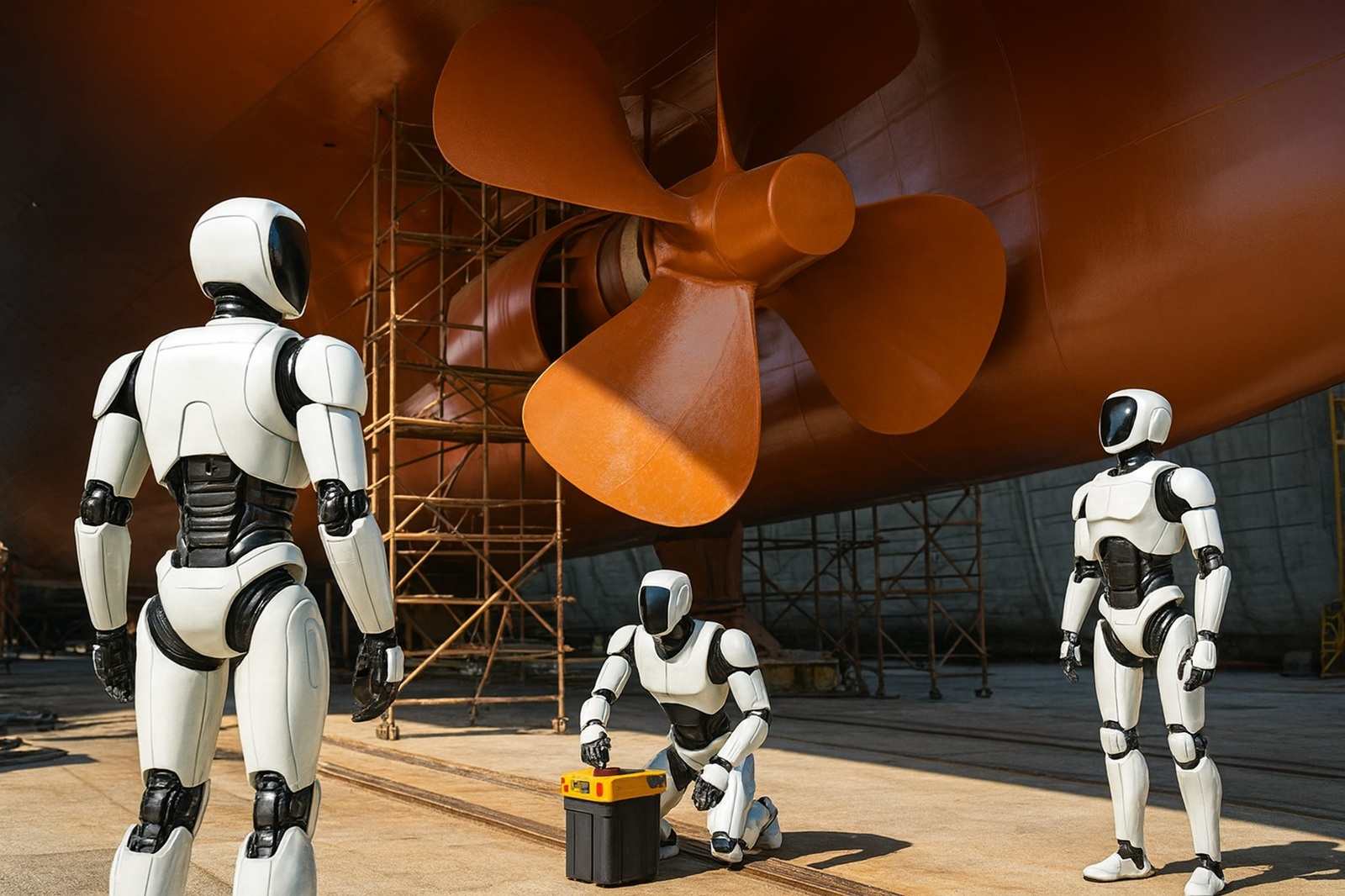
They offer flexibility, mobility, and can operate in confined, complex, or ergonomically challenging locations that are difficult for people.
John McDonald, president and chief operating officer of ABS, emphasized this innovative aspect. According to him, the partnership ensures the safe integration of emerging technologies in the maritime industry.
McDonald also highlighted that the project creates new safety standards and protocols, allowing humanoids to perform complex tasks reliably in environments demanding maximum precision.
A Turning Point for Shipbuilding
The memorandums signed between ABS and Persona AI go beyond the simple application of robots on construction sites. They aim to define new parameters regarding the type and quality of data these systems can collect. This standardization is essential to apply digital and remote techniques for ship surveying and certification.
Nic Radford, CEO and co-founder of Persona AI, described the initiative as a “turning point” for the sector. For him, the partnership indicates that humanoids have transitioned from a distant concept to a real resource, ready to transform shipbuilding. “It’s a pathway to certified reality,” he stated.
Humanoids as Team Mates
Persona AI insists on one point: their robots will not replace people. The company states that the mission is to alleviate human workers in challenging locations, acting as team mates. The idea is to protect and empower, not replace.
To achieve this, the company invests in industrial-grade robotic platforms equipped with technology that commercializes NASA’s robotic hand intellectual property. This solution ensures superior proficiency in skilled tasks and broadens the possibilities of performing critical tasks.
Response to High Turnover in Shipyards
One statistic stands out. Shipyards face turnover rates of 20% to 22% among average workers. In critical sectors, the rate can reach 30% or more. Additionally, up to 60% of new employees leave their jobs within the first year. This difficulty in retaining people compromises operational efficiency.
The humanoids from Persona AI emerge as a direct response to this challenge. Designed to withstand intense working conditions, they ensure proficiency and endurance in critical tasks. By taking on activities that require repetitive effort or prolonged exposure, they prevent workers from having to deal with these conditions.
A Smarter and Safer Future
ABS and Persona AI believe that the combination of advanced robotics with certification and safety expertise will shape a more efficient future for shipyards. The collaboration represents more than technological innovation: it signals a new way of thinking about shipbuilding, where humans and machines share the same space, each with their well-defined role.