





 Portuguese
  English
  Spanish
  3 min of reading
  0 comments



On The West Coast Of Scotland, Researchers From The University Of Southampton Analyzed 2,600 Layers Of Rock Formed 700 Million Years Ago To Understand The Snowball Earth, Revealing Rare Thaws That Challenge The Theory Of Total Freeze Of The Planet.
During the period known as Snowball Earth, around 700 million years ago, it was believed that the planet had entered an almost absolute freeze.
According to traditional theory, the Earth would have been completely covered by ice, with no seasonal variations. Spring, summer, autumn, and winter practically ceased to exist.
But a discovery made on the west coast of Scotland may change this historical view of the planet’s climate.
-
Scientists have discovered that the Earth recycles its own continents in the depths, dragging pieces of crust down during plate collisions and returning them later as magma, in a mechanism called relamination that has helped build the continents for billions of years.

-
New mathematical model indicates global population decline by 2064 in an extreme scenario of environmental crises, with humanity potentially halving if Earth’s sustainable capacity is reduced to 2 billion people.

-
Research led by the University of Zurich followed 12 crew members for ten months at the Concordia Station in Antarctica, where winter temperatures can drop to minus 80°C, and identified conflicts, distrust, perceived performance decline, and the formation of subgroups in an extreme environment.

-
Robot dives up to 500 meters into the dark depths of the sea to retrieve ghost nets that total more than 600,000 tons per year in the ocean and continue capturing animals for centuries.
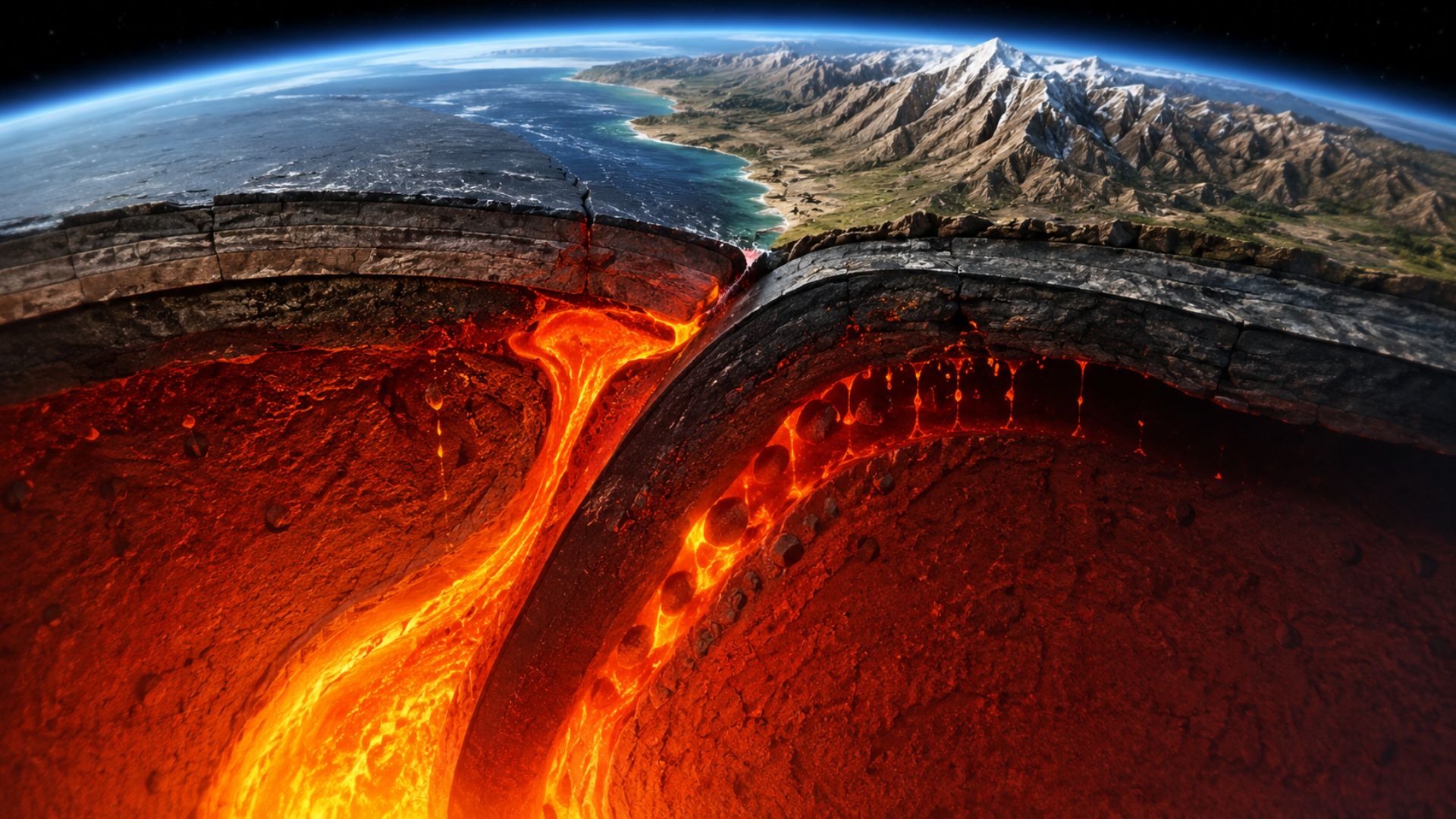



Rocks On The Garvellach Islands Reveal Surprising Details
Researchers from the University of Southampton, led by Thomas Gernon and Chloe Griffin, studied rock formations on the Garvellach Islands.
These rocks were deposited precisely during the Snowball Earth period.
By analyzing the material under a microscope, the team identified 2,600 extremely well-preserved layers.
Each of these layers represents a year of sedimentation, functioning as an annual climate record.

Layers Indicate Climate Cycles Even During Full Freeze
The variable thickness of the layers revealed something unexpected.
The scientists detected climate cycles similar to those observed today, such as solar cycles and oscillations associated with the El Niño phenomenon.
This indicates that, even during the period of extreme freezing, the climate system was not entirely inactive.
The discovery suggests that there were moments when the climate temporarily awakened.
Partial Thaw May Have Lasted Thousands Of Years
According to the study published in the journal Earth and Planetary Science Letters, the records point to a rare interval of partial thaw.
For several thousand years, a small fraction of the ocean would have thawed, creating a period considered milder within the phase of intense cold.
This interval is described as a moment when the planet temporarily emerged from deep freezing.
Although rare, this episode changes the classical interpretation that the Earth was completely frozen throughout the entire period.
Discovery Helps To Understand The Sensitivity Of The Earth’s Climate
The impact of the research goes beyond historical curiosity.
The evidence shows that the Earth’s climate system may be more sensitive and dynamic than previously thought.
Understanding how the planet reacted to extreme disturbances in the past may provide important clues about how it may respond to major climate changes in the future.
The analysis of the 2,600 layers on the Scottish islands challenges the idea of absolute freezing and reinforces that, even in extreme scenarios, the climate can exhibit unexpected variations.
Do You Think New Discoveries Like This Can Change The Way We Understand Current Climate Changes? Leave Your Opinion In The Comments.






Be the first to react!