Portuguese
  Spanish


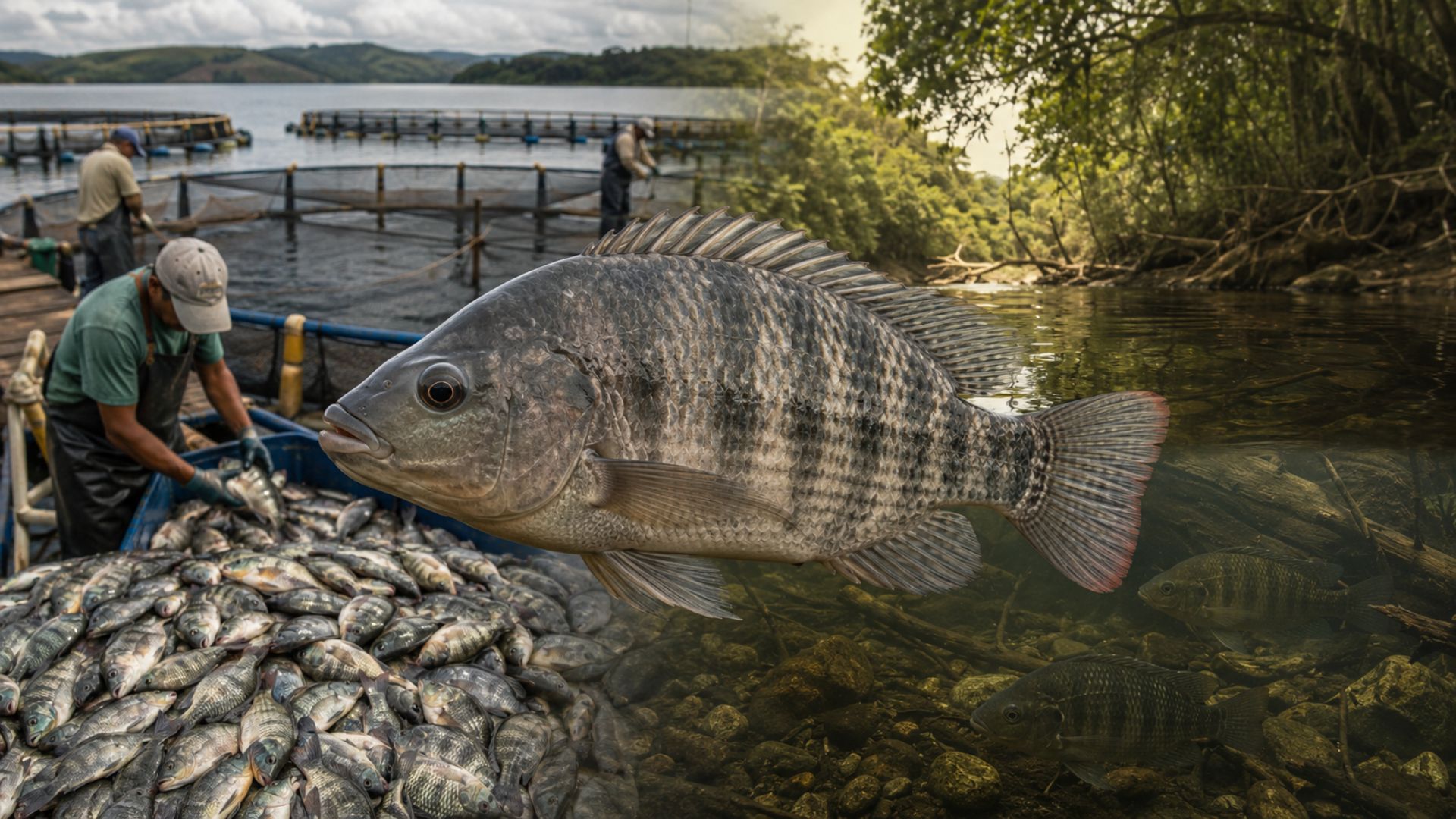

The confusion is so great that the Secretary of Biodiversity herself blames a wave of fake news for the idea that the fish would be banned. Tilapia is just one among 444 species on the list, alongside wild boar and sun coral. And the case has been dragging on since 2025, when the government suspended the analysis under sector pressure.
The most consumed fish in Brazil, tilapia, may enter the official list of invasive exotic species, in a proposal to be analyzed by the National Biodiversity Commission, Conabio, in Brasília. The topic has reignited a heated debate that divides the government itself, alarms the fish farming sector, and causes a flood of conflicting information, in a scenario where the Ministry of the Environment, MMA, insists that the measure does not mean, in any way, the prohibition of the fish.
First of all, it is essential to clarify the point that generated the most controversy. Despite headlines suggesting a possible ban on tilapia, the Ministry of the Environment itself categorically states that including the species on the list does not mean banning, eradicating, or preventing the cultivation of the fish. The National Secretary of Biodiversity, Rita Mesquita, even classified the fear of prohibition as a result of a wave of fake news that hit producers.
What is the invasive species list

The Official National List of Invasive Exotic Species includes about 444 species of various organisms, including insects, trees, fungi, mammals, and algae. Among the examples cited by the MMA itself are the wild boar, lionfish, and sun coral, showing that tilapia is just one item within a much broader document.
-
Researchers Turn Discarded Mango Pits into Hydrogel That Absorbs 400% of Its Weight in Water, Offering Agricultural Solution for Droughts and Waste Reuse

-
Flower strips in Brazilian farms become pest control strategy, attracting predator insects and reducing the need for chemical pesticides.

-
Yara acquires Texas ammonia plant for $1.3 billion, boosting global fertilizer competition with 1.3 million tons annual capacity
-
At 35, Lawyer Leaves Corporate Career to Turn 1-Hectare Farm into Organic Supplier for Schools in Southern Brazil


According to the Ministry of the Environment, the list has a technical and preventive nature. Its objective is to identify in advance organisms that have the potential to cause damage to native biodiversity, allowing for monitoring and a quick response in case of environmental problems. A curious example is the pirarucu, a fish native to the Amazon that, when introduced to other river basins where it does not naturally occur, can also be considered invasive and enter the list.
Why tilapia entered the debate

Being a generalist and quite resilient species, it has, according to MMA specialists, the potential to impact local ecosystems by competing with native fish, especially when it escapes from cultivation areas and establishes itself in natural rivers and lakes.
It is because of these characteristics that the species was nominated for the list. The executive secretary of the MMA, João Paulo Capobianco, emphasized that the measure is preventive, without any plan to eradicate tilapia in the national territory. The Ministry also assures that cultivation will continue to be licensed and monitored by Ibama, as it already happens today, and that inclusion on the list aims, in practice, to reinforce vigilance over the species.
The fear of the productive sector


The government’s optimism, however, is not shared by the aquaculture sector. Entities such as Peixe BR, the Brazilian Aquaculture Association, and the Agricultural Parliamentary Front, FPA, chaired by Deputy Pedro Lupion, strongly react to the proposal. The fear is that classification as invasive will open a legal loophole that, in the future, could lead to restrictions on fish farming.
The main argument of the sector is the conflict with existing regulations. The FPA cites Ibama’s Ordinance No. 145-N, of 1998, which prohibits the reintroduction of young forms of animal species intended for fattening when classified as invasive. For producers, the new list would be the first step towards an eventual prohibition. Peixe BR also points out an international image risk, with an estimated loss of over 38 million dollars if foreign markets impose barriers.
A divided government and a dragging process
A little-publicized aspect is that this is not a new issue, decided suddenly. The debate has been dragging on for months: in December 2025, the MMA itself temporarily suspended the analysis of the list after strong pressure from the productive sector, extending the deadline for public consultation to receive more contributions from society and companies. In other words, what is happening now is the resumption of an ongoing process.
Furthermore, the controversy exposed a division within the federal government itself. While the Ministry of the Environment advocates for the inclusion of tilapia, the Ministries of Agriculture and Fisheries and Aquaculture disagree and assess that the measure may increase costs or hinder production. The National Aquaculture Secretariat even stated that it is preparing a technical opinion to request Conabio to remove tilapia from the list, classifying it as disproportionate to place it alongside wild boar.
The economic strength of tilapia in numbers
The debate gains weight precisely because it occurs at a time of expanding activity. Brazil is currently the fourth largest producer of tilapia in the world, and the species has become the symbol of national aquaculture. In 2025, total production was about 707 thousand tons, a significant increase compared to the previous year, with tilapia accounting for a large part of all farmed fish production in the country.
Regional numbers reinforce the economic relevance of the fish. Paraná leads the national production ranking, followed by São Paulo and Minas Gerais, while the Southern Region concentrates a significant portion of the total. The production value jumped from around R$ 2.3 billion in 2020 to approximately R$ 4.8 billion in 2024, according to official data, which helps to understand the strong mobilization of the sector in the face of any perceived threat.
The political reaction to the deadlock
In response to the conflict, the Chamber of Deputies recently approved a bill that requires the approval of the Ministry of Agriculture or Fisheries before any environmental regulation that impacts productive activities. The text, which now goes to the Federal Senate for analysis, seeks to shield the sector from decisions considered unilateral regarding species cultivated in the country.
The episode illustrates the tension between two legitimate objectives: on one hand, the protection of native biodiversity against species that can cause environmental imbalances; on the other, the legal security of a productive chain that generates jobs and income throughout the country. While the deadlock remains unresolved, producers are asking for clear rules to continue investing, and the government is trying to balance the environmental agenda with the economic one.
The case of tilapia shows how a technical measure for environmental protection can turn into a national debate filled with noise and misinformation. Although inclusion on the list of invasive species does not mean, according to the government, a ban on the fish, the sector’s fear and the division within the Executive itself keep the issue open. More than a dispute over a single fish, the discussion reveals the challenge of reconciling nature conservation with the strength of one of the fastest-growing activities in Brazil.
And you, what do you think about this controversy over the most consumed fish in the country? Do you believe that classifying tilapia as an invasive species is a necessary environmental measure or a risk to national fish farming? Leave your comment, tell us if you consume tilapia frequently, and share the article with those interested in the environment, agribusiness, and food security.