Portuguese
  Spanish


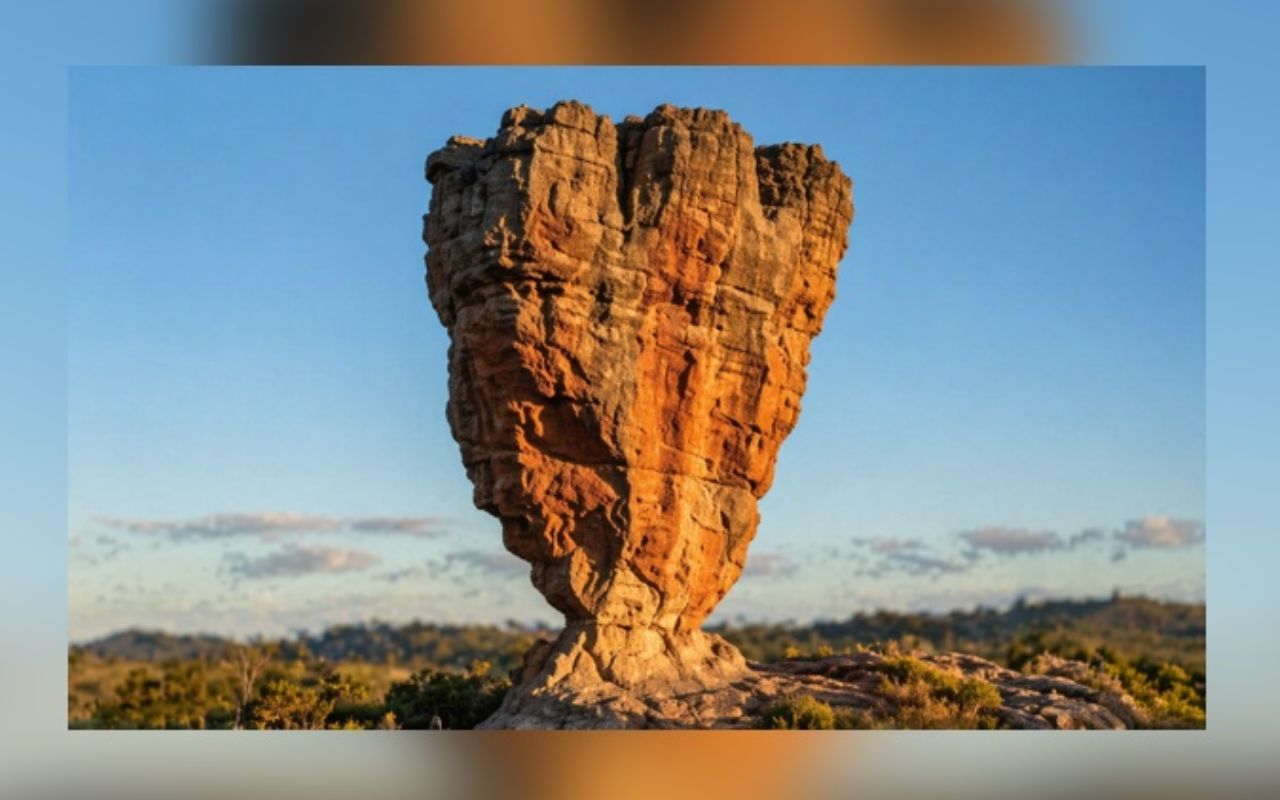

Rocks with 400 million years and the famous natural cup make the park in Paraná one of the most impressive geological scenarios in Brazil.
One of the oldest and most impressive natural scenarios in Brazil is located in Ponta Grossa, about 120 km from Curitiba. The Vila Velha State Park features rocks that are approximately 400 million years old, formed even before dinosaurs existed.
Established in 1953 and designated as a protected area in 1966, the park covers an area of over 3,000 hectares and houses unique formations, such as the famous natural cup. The site attracts thousands of visitors every year due to its scientific importance, beauty, and historical value.
400 Million-Year-Old Rocks Reveal the Park’s Origin
The rocks in the park date back to the Carboniferous period when the region was covered by an ancient sea. Subsequently, the advance of glaciers completely modified the environment.
-
Son of a truck driver who lost his income after a work accident, he grew up in a low-income family, was the first to attend college, took over a small chain of coffee shops, and transformed Starbucks into a global giant with over 38,000 stores in more than 80 countries.

-
He started with a moving van in New York, entered the real estate market in Miami, and acquired land in neighborhoods that later became targets for art, tourism, commerce, and construction.

-
Californian gives up on buying a house, purchases a roughly 1-hectare island for $31,000 in Finland, learns construction from scratch, and begins building a refuge without running water or electricity.
-
A 3-year-old deaf student received the first white belt in Jiu-Jitsu and understood the achievement because the teacher learned Libras to communicate with him, in a video that surpassed 7 million views and moved social media by showing inclusion happening on the mat.




Over time, sediments were deposited and compacted under pressure for millions of years. This process gave rise to the sandstones that now dominate the landscape.
Thus, the park holds records of geological transformations that occurred hundreds of millions of years ago.
The Cup is the most well-known formation among the rocks in the park. Its structure draws attention for appearing fragile, with a narrow base and a wider top.
This shape emerged due to differential erosion, where the more fragile parts of the rocks wear away more quickly. Wind and rain continuously acted in this process. In this way, the Cup became a symbol of the park and one of the most photographed spots in Brazil.
Rocks Reach Great Heights and Curious Shapes
The rock formations in the park can reach heights of up to 30 meters. Besides the Cup, there are other figures popularly known.
Among them are formations nicknamed Camel, Boot, and other curious silhouettes. These names arose from their visual resemblance to objects and animals. Therefore, the site combines science with a touch of popular imagination.
Another highlight of the park is the furnas, large natural craters formed by collapses. They impress with their size and depth.
According to the Water and Land Institute, some furnas can reach depths of up to 100 meters. Additionally, these cavities reach the water table, forming natural lakes inside.
Golden Lagoon Gains Highlight Due to the Light Effect
The Golden Lagoon is another point of interest within the park. Its name comes from the golden reflection caused by sunlight on the sandy bottom.
This effect is more visible in the late afternoon when the light incidence is lower. The phenomenon creates a unique scenario. Meanwhile, the lagoon also hosts aquatic life and contributes to the local ecosystem.
The Vila Velha State Park covers an area of over 3,000 hectares. This space houses natural fields and araucaria forests.
These environments are essential for the region’s biodiversity. Various species of animals and plants depend on this habitat. Thus, the preservation of the rocks is directly linked to environmental conservation.
Climate and altitude influence the rocks
The park is located at about 880 meters above sea level. The climate is humid subtropical, with well-defined seasons.
In summer, temperatures are higher and the vegetation becomes more intense. In winter, the drier climate further highlights the rocks. Thus, visitors can have different experiences throughout the year.

Modern infrastructure facilitates visitation
In recent years, the park has undergone structural improvements. Today, it offers guided trails and controlled activities. Additionally, there are options such as tree climbing and zip-lining. All of this is done with a focus on rock preservation. Thus, tourism occurs in an organized and safe manner.
At the end of the visit, the park reveals itself as a true natural museum. The rocks tell stories that span millions of years. Thus, the Vila Velha State Park consolidates itself as one of the most important geological destinations in Brazil.
Source: Terra Brasil Notícias