






 Portuguese
  Spanish
  3 min of reading
  0 comments


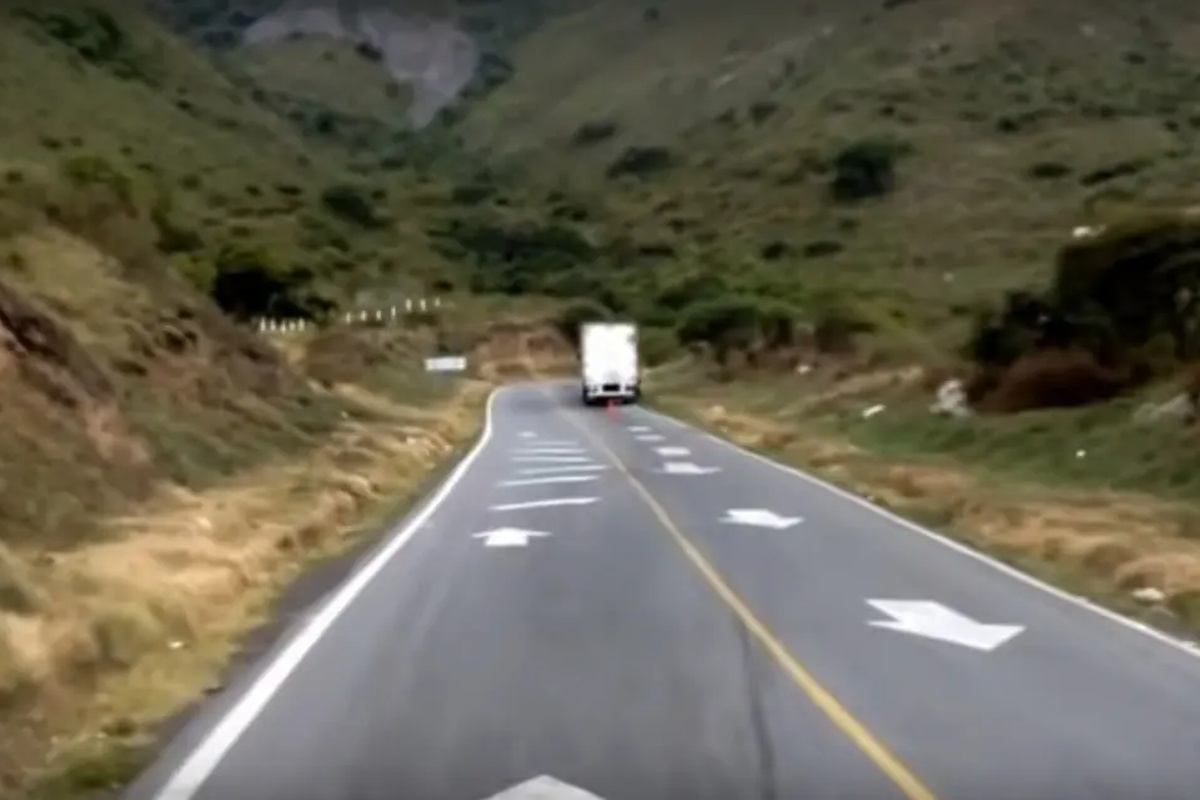
Unusual Road System Guides Drivers to Change Lanes Before Corners to Improve Visibility and Reduce Accident Risk on Mountain Roads
A curious feature of road engineering draws attention in the Acultzingo Mountain Range, in the state of Veracruz, Mexico.
At certain points on the road, drivers encounter signs that instruct them to temporarily drive against traffic.
Although the practice may seem contradictory at first glance, it was created precisely to increase safety in extremely tight curves with poor visibility.
-
Brazilian siblings aged 11 and 7 read 240 books in just one year and caught attention on social media: while many children spend hours on screens, they turned their family’s routine into an example of reading, discipline, and curiosity.
-
The legendary oak that, according to the story, hid Robin Hood from the Sheriff of Nottingham, died at the impressive age of 1,200 years in England, and the first chilling sign of its end was that no leaves sprouted on the tree this spring.

-
While the world looks at forests, the UN warns that the Earth is also threatened by the silent degradation of natural grasslands and savannas, ecosystems that cover half of the planet, support billions of people, and can exacerbate water, food, and climate crises.
-
The future of computers may change sooner than expected: Amazon bets on commercial quantum computing within seven years, while qubits, the Ocelot chip, AI, and scientific simulations take center stage in the new race among big techs.

This system functions as a controlled circulation strategy, allowing vehicles to take a wider path around the curves.
Thus, the maneuver improves the field of vision and reduces the likelihood of head-on collisions in critical sections of the highway.
Controlled Lane Change Guides Drivers
As they approach certain curves, drivers find signs and markings on the asphalt indicating the lane change.
First, the driver crosses over to the opposite lane before entering the curve.
Then, they navigate the curved section temporarily using the opposing lane.
Shortly after completing the curve, the vehicle returns to its original lane.
This process is organized since the entire maneuver is indicated by clear signage on the road.
When the instructions are followed, vehicles can traverse the mountainous section with greater predictability and safety.
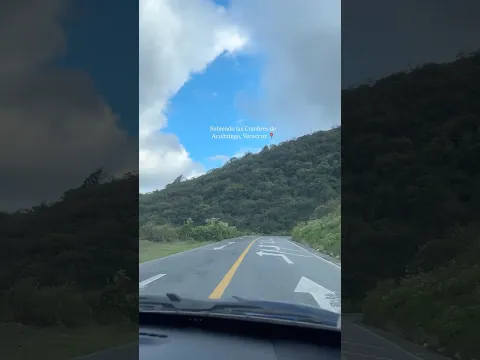

Mountainous Terrain Imposed a Different Solution
The necessity for this system arises primarily due to the geographical features of the region.
The road that crosses the Acultzingo Mountain Range traverses steep slopes and mountainous areas.
Therefore, various curves are extremely tight and present limited visibility for drivers.
Under conventional traffic conditions, these curves could increase the risk of collisions.
In light of this challenge, the solution found was to temporarily reorganize the flow of the highway.
In this way, the route allows vehicles to make the turn with a wider radius and better visibility of the road.
Curiosity of Road Engineering in Mexico
According to published reports, the section of road located in Veracruz has become known precisely for this unusual feature.
Drivers and tourists passing through the region often find it surprising to notice that driving against traffic is part of the route at certain points on the highway.
Despite the initial surprise, the system operates safely when the instructions are followed.
The signage clearly indicates where to initiate the lane change and where to return to the original lane.
Thus, traffic flows in an organized manner, even in a scenario that seems to contradict traditional traffic rules.
When Driving Against Traffic Is Part of Safety
Although it seems strange, the method demonstrates how road engineering can adapt to the limitations of the terrain.
In mountainous regions, conventional solutions are not always sufficient to ensure safety.
Thus, adjustments in circulation methods can be adopted to improve visibility and reduce risks in the most critical curves.
In this specific case, the temporary contraflow does not represent a driving error, but rather part of the road’s design.
The experience also ends up becoming a curiosity for those traveling through the mountainous region of Veracruz.
Would you feel comfortable driving on a road where, for a few meters, the contraflow is actually the safest route?




Be the first to react!