Portuguese
  Spanish


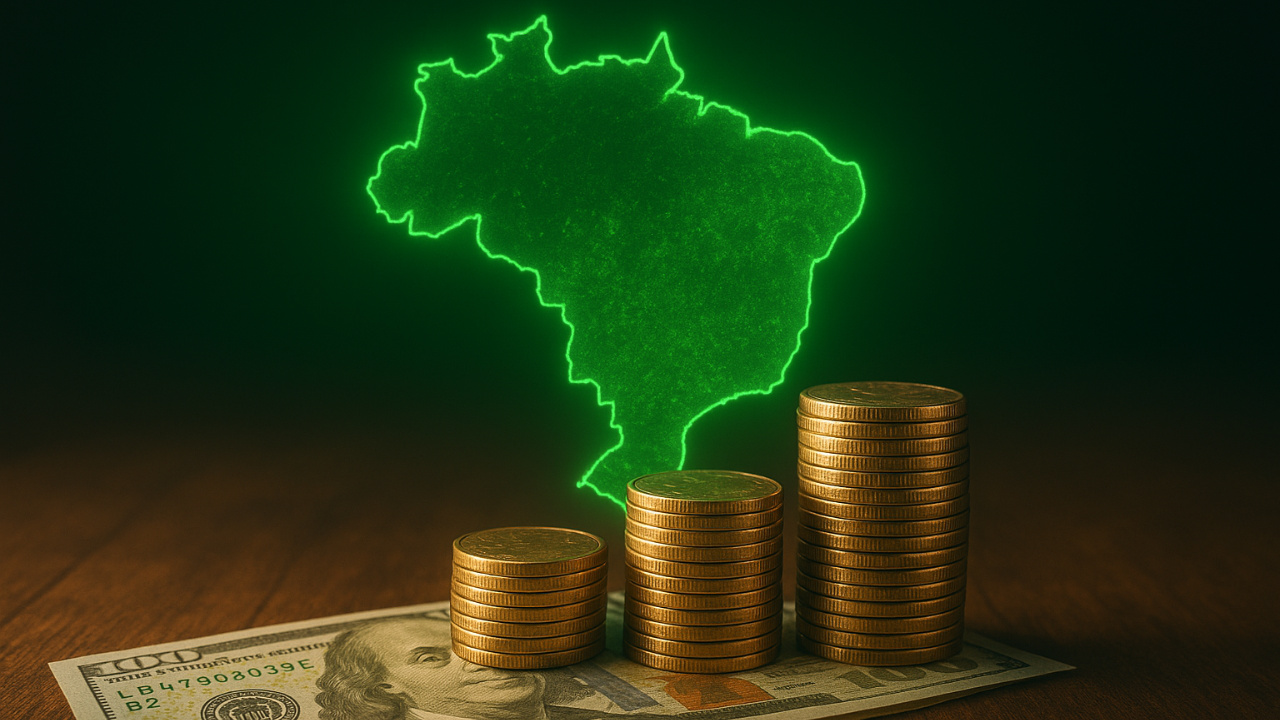

New Study from IPAM Proposes Creation of a US$ 20 Billion Green Royalties Fund to Financially Compensate States and Municipalities in the Amazon That Choose Not to Explore Oil. The Initiative Could Generate Up to US$ 2.2 Billion Annually for Environmental Conservation and Climate Security.
A new proposal from the Amazon Environmental Research Institute (IPAM) presents an unprecedented model of financial compensation that could redefine the relationship between the economy and the environment in Brazil. It involves Green Royalties, a strategy aimed at rewarding states and municipalities for not exploring oil, with a special focus on the Amazon River Delta region.
The study proposes the creation of a fund of approximately US$ 20 billion, whose annual returns would be allocated to environmental preservation. According to IPAM, this model could generate US$ 2.2 billion per year, an amount equivalent to what would be obtained from the exploration of fossil fuels — but without the environmental impact associated with burning oil.
The initiative arises at a crucial moment, as the world seeks alternatives to curb the advance of climate change. While several countries still heavily depend on oil, Brazil may become a global example by transforming the potential of the Amazon into a source of sustainable wealth.
-
Oil production grows in Rio, but reserve replacement raises a warning sign

-
Petrobras is expected to complete the drilling of the Morpho well in the Foz do Amazonas in August 2026, the first well in the Equatorial Margin, an oil frontier that the ANP estimates at more than 30 billion barrels and could redraw the map of Brazil.

-
Oil returns to the center of concerns with tension between the US and Iran

-
IEA reduces forecast for global oil demand in 2026 after impacts of the Middle East crisis



The Amazon River Delta and the Climate Risk of Oil Exploration
The environmental impacts of possible oil exploration in the Amazon River Delta are alarming. IPAM estimates that the consumption of existing oil in the region could emit between 4 and 13 billion tons of carbon dioxide (CO₂) — an amount up to 40 times greater than the emissions avoided by Brazil between 2022 and 2023 through reduced deforestation.
These numbers reinforce the need to rethink the growth logic based on fossil fuels. “It is fair that the states and municipalities of the Amazon have their economic and social development boosted, but there are few indications that oil exploration can guarantee that,” says André Guimarães, executive director of IPAM.
For him, Green Royalties represent “a more intelligent and sustainable long-term alternative,” as they generate a permanent flow of capital, unlike oil exploration, which tends to decline over time. Furthermore, the model “has the crucial advantage of not increasing emissions that could jeopardize the climate scenario in Brazil and the Amazon.”
US$ 20 Billion Fund to Encourage Sustainable Development
The Green Royalties fund, valued at US$ 19.9 billion, would serve as an investment base whose annual returns would be distributed among Amazonian states and municipalities. This compensation would carry the same financial weight as traditional oil royalties, but with one key difference: it would not diminish over the years.
The proposal, according to the researchers, is to create a sustainable economic cycle, where environmental preservation becomes a valued asset. In this way, the standing forest would no longer be seen as an obstacle to development and would instead represent financial and climate security.
Oil Is Not Synonymous with Social Development
Although oil remains one of the main sources of revenue for various Brazilian states, IPAM highlights that its gains do not ensure social improvement. In Rio de Janeiro, for example, where 80% of the country’s offshore reserves are located, ten cities concentrate 63% of the royalties received. Even so, only Maricá and Campos dos Goytacazes have shown improvements in the Human Development Index (HDI).
This scenario reinforces that the simple exploration of natural resources does not ensure lasting economic prosperity. On the contrary, it can widen inequalities and make local economies dependent on a volatile sector. Green Royalties, therefore, emerge as a more balanced alternative, capable of uniting financial stability and environmental responsibility.
The Global Climate Alert and the Urgency for New Policies
The need for energy transition and emission reduction is emphasized by international leaders. During an event marking the 75th anniversary of the World Meteorological Organization (WMO), UN Secretary-General António Guterres warned that the goal of limiting global warming to 1.5°C, established in the Paris Agreement, is at risk.
“This does not mean that we are doomed to live with 1.5 degrees lost. If there is a paradigm shift, and people seriously take on that we need to address the problem, it is possible to anticipate as much as possible to reach net zero [emissions],” said Guterres.
The speech reinforces the importance of structural measures that encourage a low-carbon economy, rather than insisting on models based on oil expansion.
The Challenge of Exploration in the Amazon River Delta and the Future of Energy Transition
The possibility of drilling wells in the Amazon River Delta raises various uncertainties. There is still no clarity on how many wells would be drilled, for how long, and whether the production would be intended for domestic or foreign consumption.
For researcher Felipe Barcelos from the Institute of Energy and Environment (IEMA) and SEEG, the risks are evident. “Probably the emissions from the oil found in the Amazon River Delta will occur after 2035, which is worrisome, since the ideal would be for the world to have minimal oil consumption by 2035 in order to meet the Paris Agreement and achieve net or even negative emissions in the coming decades,” he explains.
This observation is reinforced by the IPCC (Intergovernmental Panel on Climate Change) report, which indicates the need to reduce global oil consumption by between 19% and 54% by 2050 to keep the temperature increase below 1.5°C.
In light of these challenges, Green Royalties present themselves as a concrete alternative to reconcile economic development and environmental preservation. The model proposes to transform the Amazon rainforest into a driver of a new economy, based on sustainable profitability and the appreciation of ecosystem services.
The proposal from IPAM, therefore, is not just environmental — it is strategic. It suggests a repositioning of Brazil in the global scenario, showing that it is possible to generate wealth while preserving nature and ensuring stability for future generations.