Portuguese
  Spanish


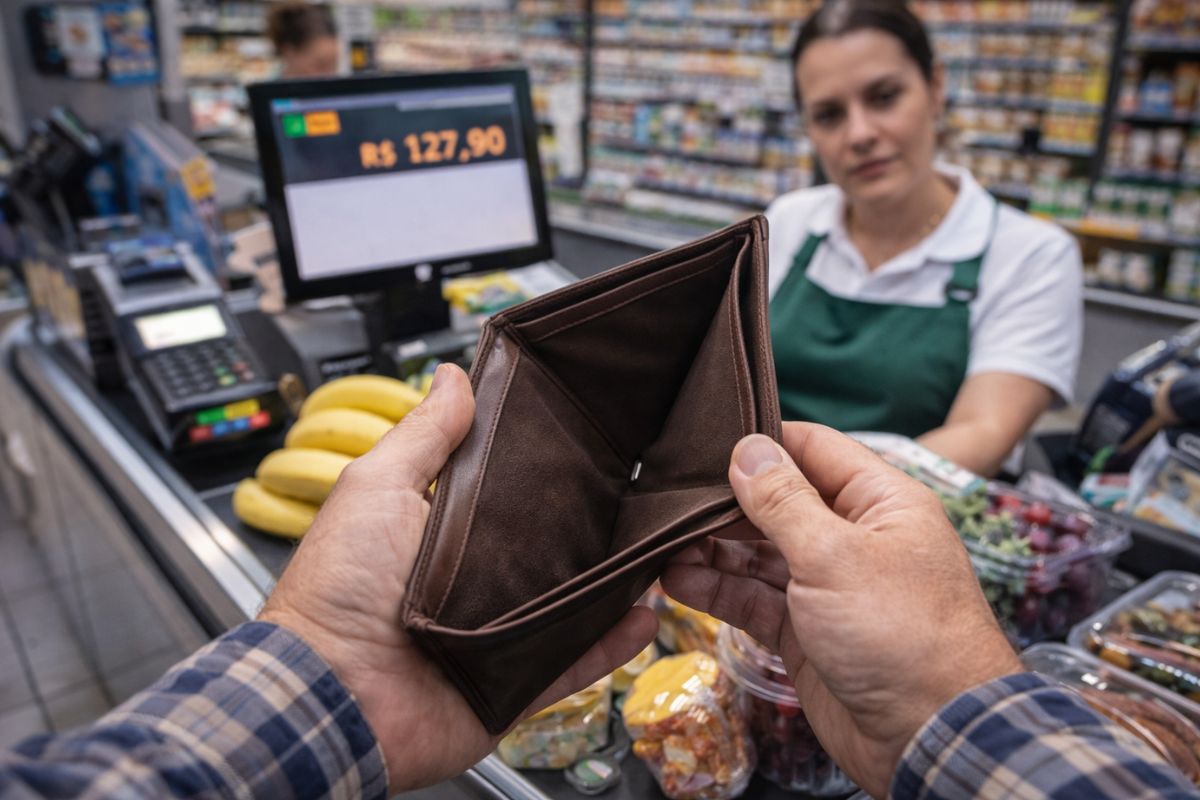


The food that increased the most in Brazil in March 2026 was not meat, nor coffee, nor egg. It was milk. According to data from IBGE released in the second week of April, the price of milk rose 11.74% in a single month, the highest increase among all food items at home. In wholesale in São Paulo, the increase was even greater: 19.3%, according to Cepea (Center for Advanced Studies in Applied Economics at Esalq/USP). And the reason behind this surge is as surprising as the number: milk was too cheap in 2025.
In 2025, a combination of record production and high imports generated an oversupply of milk in the Brazilian market. According to the Embrapa Dairy Intelligence Center, the price paid to producers fell 22.6% throughout 2025, reaching R$ 1.99 per liter in December. With such tight margins, thousands of producers cut investments, reduced herds, and decreased production. The result appeared in 2026: less milk available, prices skyrocketing on the shelves.
This cycle is known in the sector as the “perverse milk cycle”: when the price falls, the producer reduces production; when supply decreases, the price rises; when the price rises, the producer invests again, but the response takes months. In the meantime, the one who pays the bill is the consumer.
Who feels the impact the most and why does no one talk about it?

UHT milk and mozzarella cheese are among the most basic items in the Brazilian shopping basket.
-
12-year-old girl develops a virtual receptionist with artificial intelligence for small businesses and demonstrates how the combination of creativity, programming, and automation can boost productivity, reduce repetitive tasks, and expand access to digital transformation.

-
A rock weighing almost 500 tons seems to defy gravity for over 11,000 years in Finland and remains balanced on a tiny base without collapsing or moving.
-
At 76 years old, a retired man reveals a subterranean labyrinth he dug by hand for 30 years under his own garden, descending 6 meters into sand dunes, erecting 1.5-meter concrete walls with calculations from his mathematician wife, and transforming a “crazy” idea into a hidden cave with a bridge and waterfall.

-
Seen from space, an astronaut captures in Canada a geometric carpet of crops drawn over the backdrop of a ghost lake that disappeared 12,000 years ago, was once larger than all the Great Lakes combined, and left a scar of fertile mud that still sustains agriculture.



Low-income families spend proportionally more on dairy products than high-income families, which makes the 11.74% increase in one month a direct food security issue.
While news portals and television news focused on gasoline (+4.59%) and diesel (+13.90%) due to the crisis in Ormuz, milk rose almost three times more than gasoline and went unnoticed.
The IPCA for March closed at 0.88%, with the accumulated 12 months reaching 4.14%, dangerously close to the inflation target ceiling (4.5%).
The food and beverage group contributed 0.33 percentage points, driven precisely by milk and dairy products (+4.26% in the broad category) and by tubers, roots, and vegetables (+16.78%, seasonal increase). But milk is different: it is not seasonal, it is structural.
The problem is not a rain that ruined the harvest, it is an entire sector that stopped producing because the price did not cover the costs.
Brazil imported about 2.2 billion liters of milk in 2025, according to IBGE, and the trade balance deficit for dairy products reached 177 million equivalent liters just in February 2026.
With the rise of the dollar and the global geopolitical crisis increasing freight costs, imported milk also became more expensive, closing both supply doors at the same time.
Embrapa projects that the price of milk may continue to rise in April and May, with the approach of the off-season, a period when production naturally declines due to dry weather and lower pasture availability.
For consumers, the alternative is to compare prices between brands, take advantage of promotions, and consider powdered milk, which is usually cheaper per reconstituted liter.
The price of milk rose more than gasoline in March and almost no one noticed. Comment below: did you notice the difference at the supermarket?