Portuguese
  Spanish


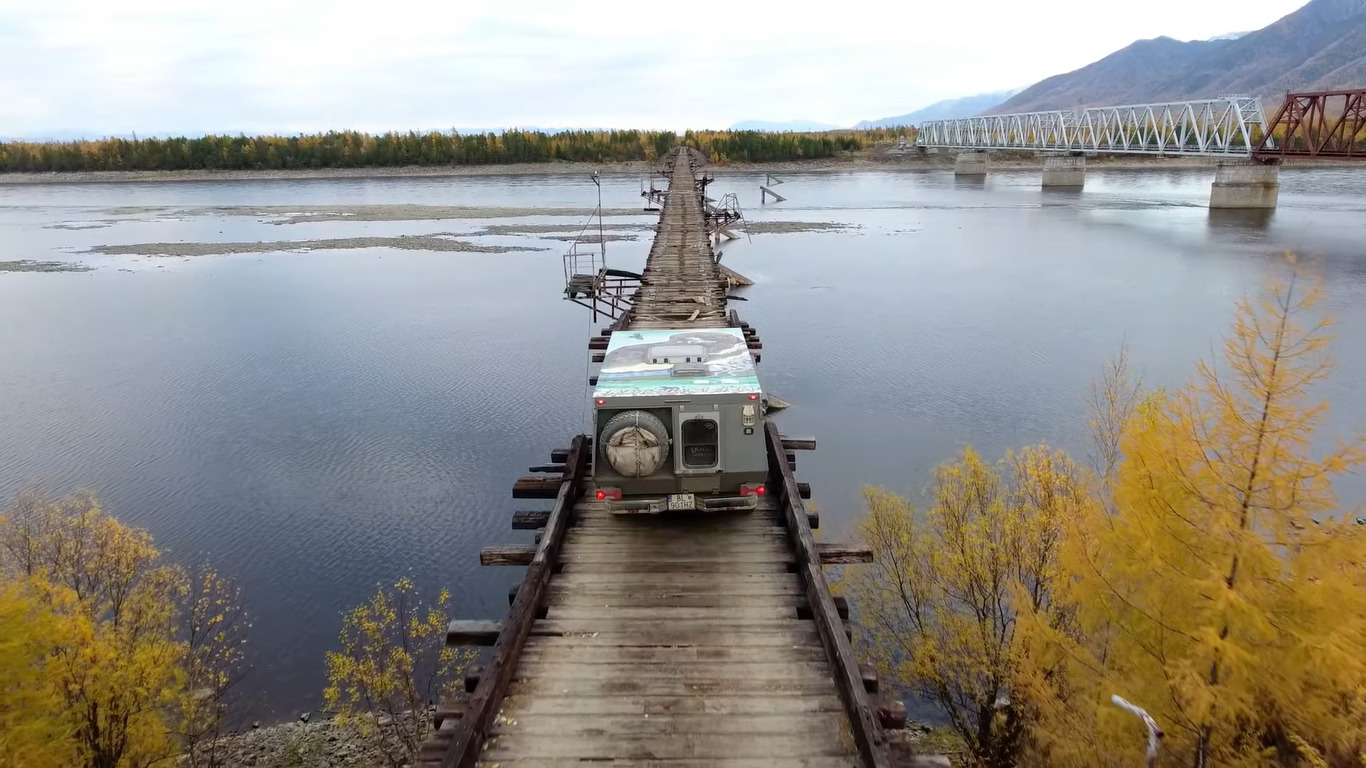


The Old Vitim River Bridge in Transbaikal Measures 570 Meters, Has Two Meters in Width, Has No Railings, Remains Frozen for a Large Part of the Year, and Connects Kuanda to the Outside
Hidden in Siberia, Russia, the Vitim River Bridge crosses the Vitim River and draws attention due to extreme risk, minimum width, and improvised use by residents of the Transbaikal region.
What Is the Vitim River Bridge
The Vitim River is an important tributary of the Lena River, and the bridge crosses its course with an old metal structure covered by deteriorated wooden planks.
The passage is only two meters wide, has no railings, and is narrow even for an ordinary car, requiring extreme precision from drivers.
-
$75 Million Bridge in Brazil Opens to Connect Cities, Create Jobs, and Cut Travel Time from 30 to 2 Minutes; Spanning 1.24 km, It’s Among the Country’s Largest and Ends Decades of Ferry Queues.

-
Brazilian Farmer Builds 8-Ton Tractor from Army Truck Engine, Plants Over 100 Hectares of Soybeans
-
11-Year-Old Entrepreneur Turns Fear of Bees into Honey Lemonade, Wins $60,000 on Shark Tank, Secures Whole Foods Deal, and Expands Brand Across U.S. Stores

-
9-Year-Old in Brazil Sells Homemade Sweets to Support Grandfather with Parkinson’s, Family Dreams of Buying Candy-Making Machine




To cross, it is necessary to follow a minimum lane suspended over frozen water, with no safety devices to prevent lateral falls.
The wooden surface often becomes slippery due to constant snow and ice, increasing the risk for most of the year.

Dimensions and Conditions of Crossing
The bridge is part of the challenging BAM road, considered one of the most difficult adventure routes on the planet, especially during the harsh Siberian winter.
Measuring 570 meters long and situated 15 meters above the water, the structure barely accommodates a vehicle and remains frozen for long periods.
The crossing takes about 3 minutes, even for an experienced driver, due to the need to maintain constant precise alignment.
Completing the journey is considered an achievement, to the point that 34 people have created a Facebook page dedicated solely to the extreme experience.
Origin and Construction of the Bridge
The bridge was built in the 1980s for rail use, which explains the total absence of lateral safety barriers.
The metal structure has railroad ties simply laid on it, with no connection between them, increasing instability during vehicle passage.
It is claimed that there have been no repairs in the four decades since its construction, leaving maintenance up to those who decide to cross.
Those who venture often have to replace damaged planks themselves before attempting to cross the frozen river.
Importance to the Village of Kuanda
The bridge connects the small village of Kuanda to the rest of the region, being the only direct ground link available to its residents.
The original project envisioned integration with the main Baikal-Amur railway, but it was never completed as planned.
As a result, the 1,500 inhabitants began using the old railway structure as their everyday access, despite the evident risks.
These backgrounds help explain why the bridge remains active, even in precarious conditions and without any structural modernization.
With information from Dangerousroads.