





 Portuguese
  English
  Spanish
  5 min of reading
  8 comments


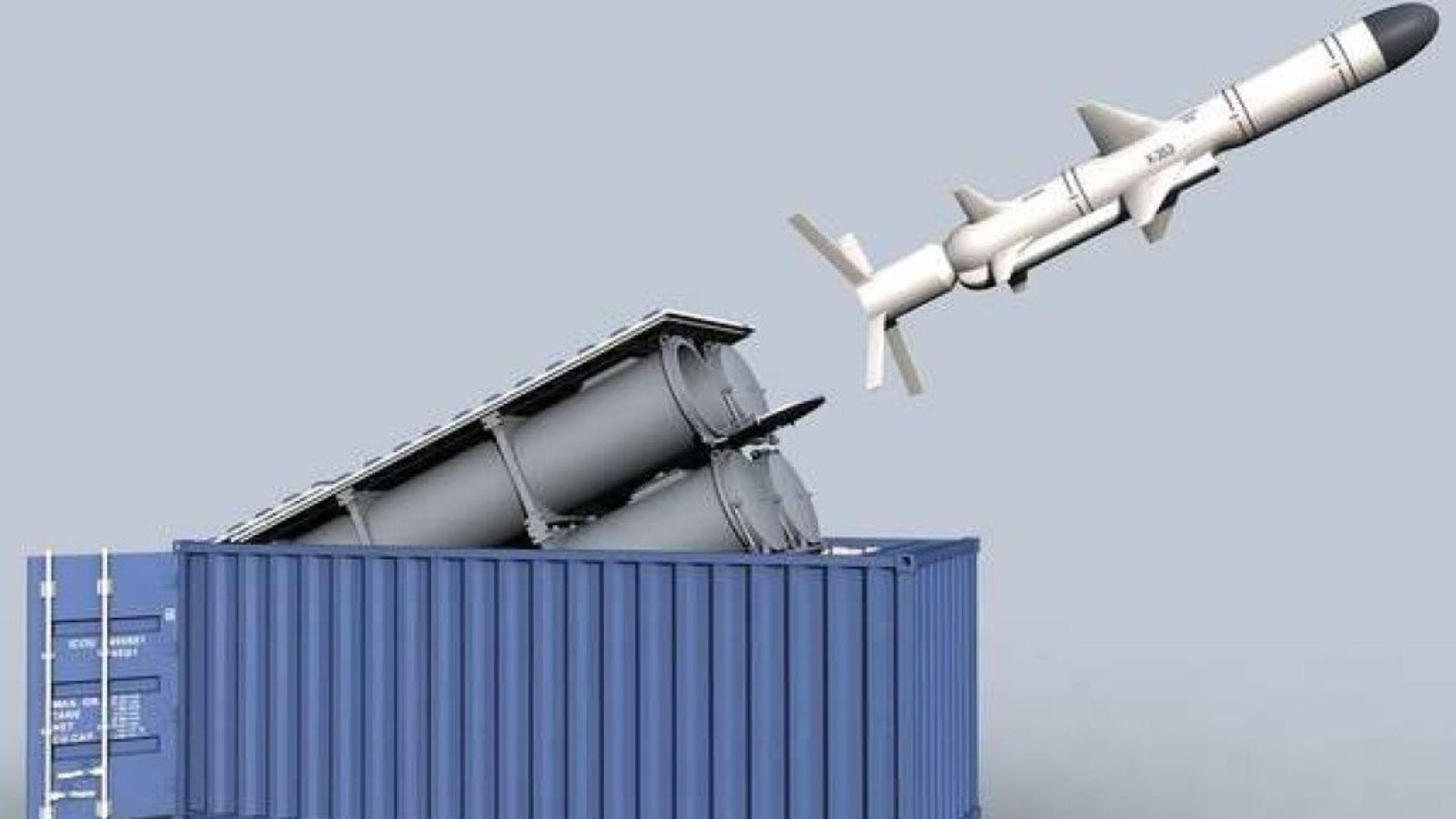


Russian Module in Shipping Container Format Tries to Hide Cruise Missiles in Global Trade Flow and Reignites Warnings About Inspections, Proliferation, and Maritime Security.
Over the last decade and a half, the Russian defense industry has unveiled a weapon concept designed to blend into the more common scenery of ports.
Instead of a visible military platform, the project uses a standard shipping container as an external “shell.”
Dubbed Club-K, the system envisions cruise missiles housed in a structure identical to that of a 40-foot container, which would allow for transport on merchant ships, trains, and trucks.
-
Scientists in Saudi Arabia create an “electricity-free refrigerator” that uses a chemical reaction to lower the temperature from 25°C to 3.6°C in 20 minutes and then uses the sun itself to restart the system without a compressor, outlet, or generator.

-
MIT study creates method to search for dark matter in gravitational waves and finds possible evidence in black hole signal

-
After 107 years at the bottom of the Atlantic, divers find the wreck of the Tampa, a World War I ship torpedoed with 131 people on board.
-
Scientists test 24 million routes and discover the most economical way to reach the moon using less fuel



When activated, the module would convert into a launcher, according to the product’s promotional presentations.
The proposal caught international attention following a report by Reuters published on April 26, 2010.
In that text, the agency described a package containing four missiles hidden in an ordinary-looking container.
Editor Robert Hewson, associated with technical publications in the sector, said that the possibility of “hiding a missile system in a box” and moving it without being detected was “quite new,” while warning of the risk of the product “ending up in the wrong hands” if sales were not tightly controlled.
Container as Disguise and Logistical Advantage
The impact of the concept lies less in the metal of the box and more in what the container represents for the global economy.
The standardization of intermodal transport has transformed these units into the backbone of maritime trade, with dimensions and fixation points compatible with cranes, trailers, and wagons.
With this format, an arms module can fit into existing civil infrastructures, reducing the need for exclusive military platforms for transport and storage.

In theory, the same set could remain in a logistics yard, travel on a container ship, or circulate on highways without displaying the typical silhouette of a launcher.
Still, the proposal does not automatically turn “any container” into a threat.
The most immediate effect is to add uncertainty to environments operated at scale, where thousands of similar units are stacked and moved quickly.
Presentation of Club-K and What Was Described in 2010 and 2011
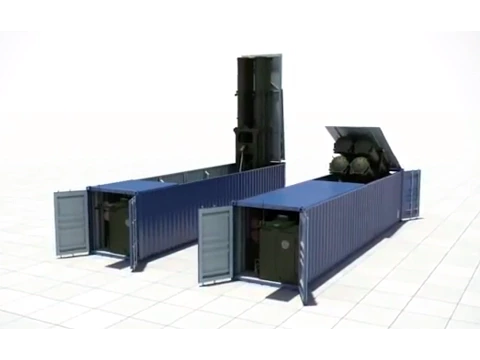
According to the description released in 2010, the Club-K would gather four missiles inside a standard container and have a structure capable of opening the roof and raising the tubes to the launch position.
Reuters reported that a promotional video showed the module being positioned among other containers on a train or ship.
Subsequently, the piece appeared ready for launch, with the cover lifting and the missiles standing vertically.
In August 2011, FlightGlobal reported that the Russian company Morinformsystem-Agat presented, at the MAKS aerospace salon, a version of the concept nicknamed “Pandora’s Box.”
According to the publication, the project would use a 12-meter container and would include communication features and target data reception, as well as a protected cabin for two operators.
The same report noted that the set could receive information via satellite while remaining concealed aboard a ship, train, or truck.
Even when it made headlines, there were signs that it was more of a product associated with demonstrations and marketing than confirmed deployment.

In the 2010 Reuters report, analyst Mikhail Barabanov from the Center for Analysis of Strategies and Technologies stated that he understood that the Club-K was still in the concept stage.
Estimated Cost and Concerns About Arms Proliferation
One of the points that helped amplify the debate was the price argument.
Hewson estimated to Reuters in 2010 that the system would cost between 10 and 20 million dollars.
For discussions about precision strike capabilities, this range is generally considered relatively low, shifting the conversation away from the realm of major powers.
From there, the focus shifts to the possibility of diffusion to more actors, depending on export controls, tracking, and oversight.
This type of warning connects to a recurring concern in international security.
The diversion of technology and arms.
When the launcher presents itself as cargo, the unease also involves the difficulty of attributing responsibility and calibrating responses in crises.
Moreover, experts mention that operational ambiguity and psychological impact can be exploited even without large-scale use.
The reading that the equipment would be a shortcut for clandestine attacks was countered by the manufacturer.
On April 29, 2010, Radio Free Europe/Radio Liberty reported that the company issued a statement on April 28, rejecting the association of the Club-K with terrorist use and asserting that the system was primarily intended for installation on ships called for military service in the event of a threat.
Port Inspections and the Dilemma Between Fluidity and Risk
The main challenge pointed out by analysts is not just to identify missiles but to understand how the container format alters inspection routines.
Ports and customs operate under a permanent tension between the fluidity of trade and risk mitigation.
In practice, physical and image inspections follow criteria of intelligence, document analysis, and sampling, with decisions aimed at prioritizing what seems most suspicious.
When a weapons system tries to fit into the “standard” of the container, the cost of error increases on two fronts.

On one side, there is increasing pressure for more inspections and investment in detection.
On the other, expanding screening without criteria can create bottlenecks, delays, and economic impacts on chains that depend on predictability.
It also weighs the fact that a launcher does not operate solely with tubes and missiles.
To operate consistently, these systems require a command chain, security protocols, technical support, and communication integration, as well as reliable target data.
This complexity helps explain why the topic remains in public debate, amid demonstrations and warnings.
Civilian Ships, Military Ambiguity, and Escalation Risk
By shifting attention from warships to potentially armed civilian platforms, the concept pressures defense planning and maritime surveillance.
The doubt shifts from merely where armed means are located.
It now includes what means could be armed, even without immediate visual signs.
This ambiguity touches on a sensitive point in international law and practice.
The separation between civil and military functions at sea.
Merchant ships carry expectations of behavior and protection, while warships are recognized as part of a confrontation logic.
In this context, a module attempting to navigate between the two worlds raises doubts about identification, responsibility, and the risk of misinterpretation in busy routes.
As promotional videos, technical analyses, and reports keep the subject in circulation, a practical question remains at the center of the discussion.
How to reinforce inspections and cargo monitoring without paralyzing ports and routes that sustain international trade?






Perigoso! Objetivo óbvio de aumentar o Pânico Mundial da segurança. Embora existem comprovadamente poder bélico e tecnológico, a Rússia não responde ao Xerife Gobal quando suas embarcações foram saqueadas ficam as dúvidas de ser propaganda x verdades.
O ocidente europeu e outras EUA desacreditando do oreshnik viram o potencial de alcance, alvos, e precisão. Onde a fumaça a fogo. Propaganda? De qualquer modo, o efeito do medo psicológico está semeado. Qual nação hoje pode dizer com segurança (inclusive os EUA) que não têm um contêiner apontado para o seu governo e infraestrutura críticas? Operadores? Muito fácil de introduzir em qualquer lugar. Precisão? Discutível mais temeroso!
Lixo.
A Rússia,A China ,e a Coreia do Norte três potências Bélicas de alto nível.
Três lixos ditadores.