






 Portuguese
  Spanish


The Positioning of Batteries in Opposing Directions Is Not by Chance. Understand the Logic Behind This Engineering Choice.
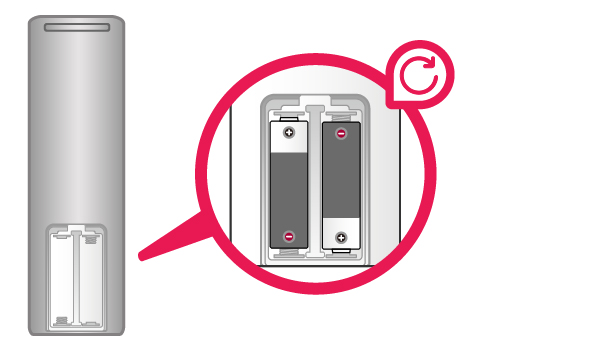
When opening a new electronic device, such as a remote control or a child’s toy, it is common to notice that the instructions indicate the insertion of batteries in opposing orientations.
This arrangement is not random; there is a technical and efficient reason behind this pattern, related to the circuit design and the optimization of the internal space of devices.
What Is a Battery?
A battery is a device that converts chemical energy into electrical energy through electrochemical reactions. It consists of two electrodes: the anode (negative terminal) and the cathode (positive terminal), immersed in an electrolyte that facilitates the transfer of ions.
-
Xiaomi Unveils Smart Glasses in Brazil with 12MP Camera, 4K Video, and AI Features, Challenging Ray-Ban Meta

-
Volkswagen Unveils Bold Strategy to Compete with Chinese Automakers in Brazil, Featuring 5,000 Parts, 76% Localization, and a Surprising Turnaround
-
Three Teens Win Global Prize for Low-Cost AI Microscope Diagnosing Malaria Species in Seconds for Remote Villages
-
Xiaomi Unveils Revolutionary Fridge: Eliminates Odors in 3 Minutes, Sterilizes in 2, Offers 508 Liters in Compact Design, Operates at 31 dB, and Is Smartphone-Controlled.


During use, electrons flow from the anode to the cathode through an external circuit, generating electricity to power electronic devices.
How Are They Organized?
Batteries can be connected in two main ways:
- In Series: The total voltage is the sum of the voltages of each cell, while the capacity (measured in ampere-hours) remains the same.
- In Parallel: The voltage remains the same, but the capacity increases proportionally to the number of connected cells.
In portable electronic devices, such as toys and remote controls, series connection is common as it allows for increased voltage to meet the circuit’s needs.
The Efficient Design of Batteries
When batteries are organized in series within a device, the positive and negative terminals of adjacent cells need to be connected to allow for continuous electric current flow. Arranging the batteries alternately, with the poles oriented in opposing directions, offers several advantages:
- Facilitates Connection Between Cells: This arrangement allows a simple metal plate to connect adjacent terminals, eliminating the need for additional wires and reducing design complexity.
- Optimizes Space: In electronic devices with limited internal space, this layout allows for better use of the available volume, accommodating more cells in a smaller space.
- Reduces Short-Circuit Risks: The alternate orientation minimizes the chance of accidental contact between terminals of the same type, enhancing device safety.
- Improves Heat Distribution: This design helps dissipate heat generated during use, preventing overheating and prolonging battery life.
These design practices are fundamental to ensuring the efficiency and safety of modern electronic devices.
Practical Application
Different devices require specific battery arrangements. For example, in flashlights, batteries are often organized in a straight line, with terminals pressed together to complete the circuit. In video game controllers or toys, batteries are placed side by side, maintaining the alternate layout to ensure efficiency and space-saving.
In the automotive sector, especially in electric vehicles, large battery packs are connected in series and parallel to optimize energy and increase vehicle range.
The layout of batteries is meticulously designed to ensure safety, efficiency, and durability. With advances in solid-state battery technology, it is expected that the performance and safety of these systems will further improve in the coming years.
The arrangement of batteries in opposing directions within devices results from efficient and well-thought-out design. This setup maximizes electrical efficiency, reduces the use of additional components, and optimizes internal space.
As new battery technologies emerge, such as solid-state batteries, new ways of organization may arise, but the principle of energy efficiency will continue to be fundamental.
Information from scienceabc.


