





 Portuguese
  English
  Spanish
  4 min of reading
  0 comments


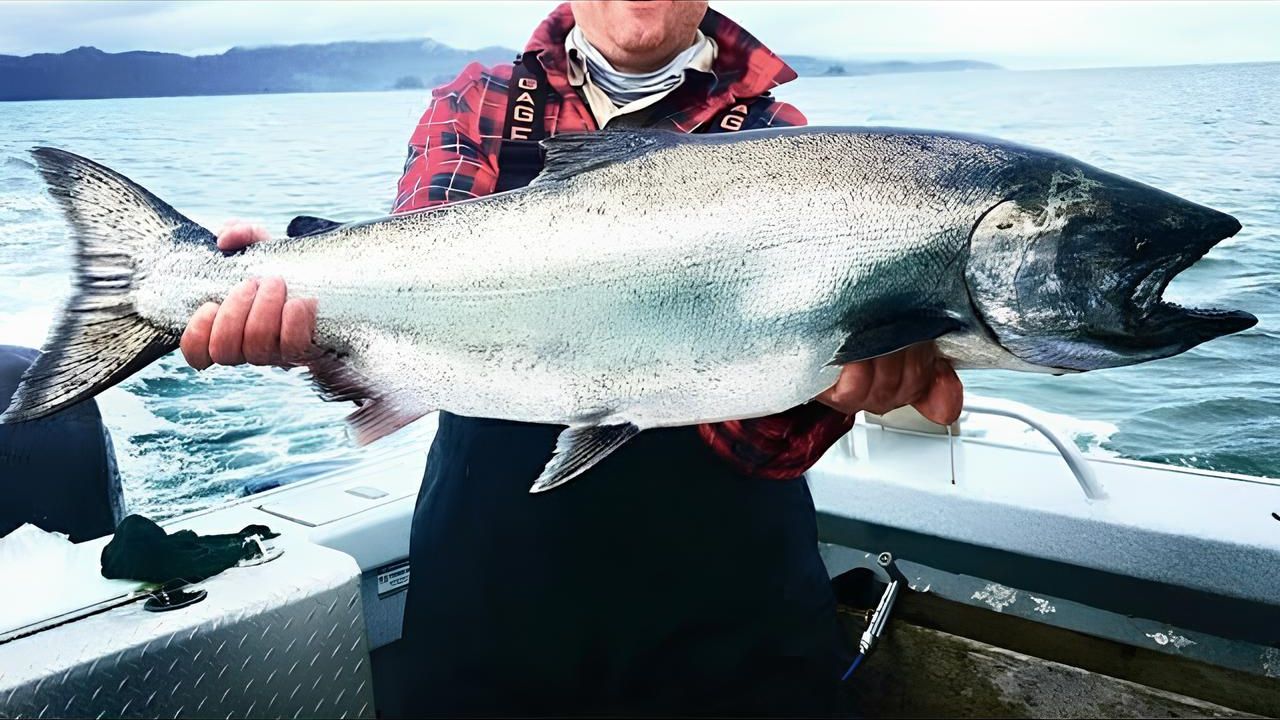
Capable of Traveling Over 4,000 Km Between the Ocean and Mountain Rivers, the King Salmon Faces Extreme Currents, Uses Up All Its Stored Energy, and Dies After Reproduction, in One of the Most Intense Life Cycles in Nature.
Few animals on the planet push their bodies to the physiological limit like the king salmon, also known as chinook salmon (Oncorhynchus tshawytscha). Considered the largest and most powerful among Pacific salmon, it not only migrates long distances: it crosses entire oceans, enters violent rivers, scales natural elevations, and uses all its energy reserves in a single biological mission. At the end of the process, it does not survive.
This extreme cycle is not an exception. It is a rule.
Dimensions and Strength That Justify the Name “King”
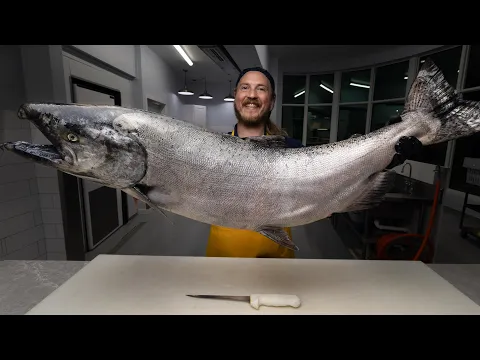
The king salmon earns this title for objective reasons. Adults can reach 1.5 meters in length and weigh over 60 kg, although the average is between 10 and 25 kg. It is the largest salmon in the world, with powerful musculature and a tail adapted for long continuous movements.
-
Abandoned boars and pigs in Fukushima create fast-breeding hybrids and turn the nuclear area into a natural laboratory

-
Notary offices raise a red flag about old documents at home, and many people only find out at the counter.

-
A futuristic steel and glass tiny house imported from China has become an Airbnb in the countryside, featuring a retractable roof for stargazing, a hybrid stove kitchen, and lights, curtains, and air conditioning controlled by a tablet.
-
Beach puts São Paulo city on the national tourism scene with a 350,000 m² complex, 15 million liters of water, a beach with waves, four beachfront resorts, an international standard winery, and one of the largest zip lines in the country.



The swimming strength is impressive: hydrodynamic studies indicate that the chinook can sustain speeds of 2 to 3 meters per second in sections of strong current, something that few migratory fish can maintain for long periods.
A Journey of Over 4,000 Km Without Return
The life cycle begins in freshwater rivers of North America, especially in Alaska, Canada, and the northwest United States. While still juveniles, the salmon descend the rivers to the Pacific, where they spend 3 to 7 years in open water, accumulating fat and muscle mass.


When they reach sexual maturity, something extraordinary happens: they return exactly to the river where they were born, guided by a chemical navigation system based on smell, considered one of the most precise in the animal kingdom.
This journey can surpass 4,000 km, adding oceanic and riverine stretches, often against intense currents, freezing waters, and natural obstacles.
Climbing Rivers is Just Part of the King Salmon’s Challenge
Upon entering the rivers, the king salmon faces the most brutal part of the journey. It navigates rapids, crosses shallow waters, overcomes natural falls, and heights that can reach 3 meters in single jumps.
During this phase, the fish completely stops feeding. All the energy used for swimming, jumping, and reproducing comes from reserves accumulated in the ocean. The body begins to visibly deteriorate: muscles are consumed, organs deteriorate, and the immune system undergoes progressive collapse.
Unique Reproduction and Programmed Death of the King Salmon
The king salmon is semelparous, meaning it reproduces only once in its life. After reaching spawning grounds, females dig the riverbed with their tails, creating nests where thousands of eggs are deposited. Males fertilize and defend the area until total exhaustion.
Days or weeks later, they all die.
This death is not a biological failure but an essential part of the ecosystem. The bodies of the salmon release nitrogen, phosphorus, and carbon into nearby rivers and forests, fertilizing plants, feeding insects, birds, bears, and even riverside trees. In some regions of Alaska, isotopic analyses show that up to 25% of the nitrogen in certain forests comes from salmon.
An Invisible Engineer of Ecosystems
Upon their death, king salmon connect the ocean, rivers, and forests into a single ecological system. Bears capture the fish and drag remains into the woods, spreading nutrients far from the banks.
Insects feed on the bodies, birds benefit, and the young salmon grow in more productive rivers thanks to the previous cycle.
It is such an efficient mechanism that ecologists consider salmon a biological vector of marine nutrients to terrestrial environments, something rare on the planet.
Modern Threats to a Millennia-Old Cycle
Despite its physical resistance, the king salmon is vulnerable to human interference. Dams, river warming, reduced flow, overfishing, and pollution have interrupted historical migratory routes.
In some rivers, return rates have drastically decreased in recent decades. Fish ladder programs, dam removals, and habitat restoration attempts to keep alive a cycle that has existed for millions of years, long before human presence in the region.
An Animal That Lives to Fulfill a Single Mission
The king salmon does not seek longevity, comfort, or repetition. Its entire biology is shaped for a single task: to be born, grow, return, and die, ensuring that the next generation repeats the process.
Few examples in nature show so clearly how life can be built around an extreme purpose. The king salmon does not just migrate. It consumes itself entirely to keep rivers, forests, and entire ecosystems functioning.





-

-

2 people reacted to this.