






 Portuguese
  Spanish


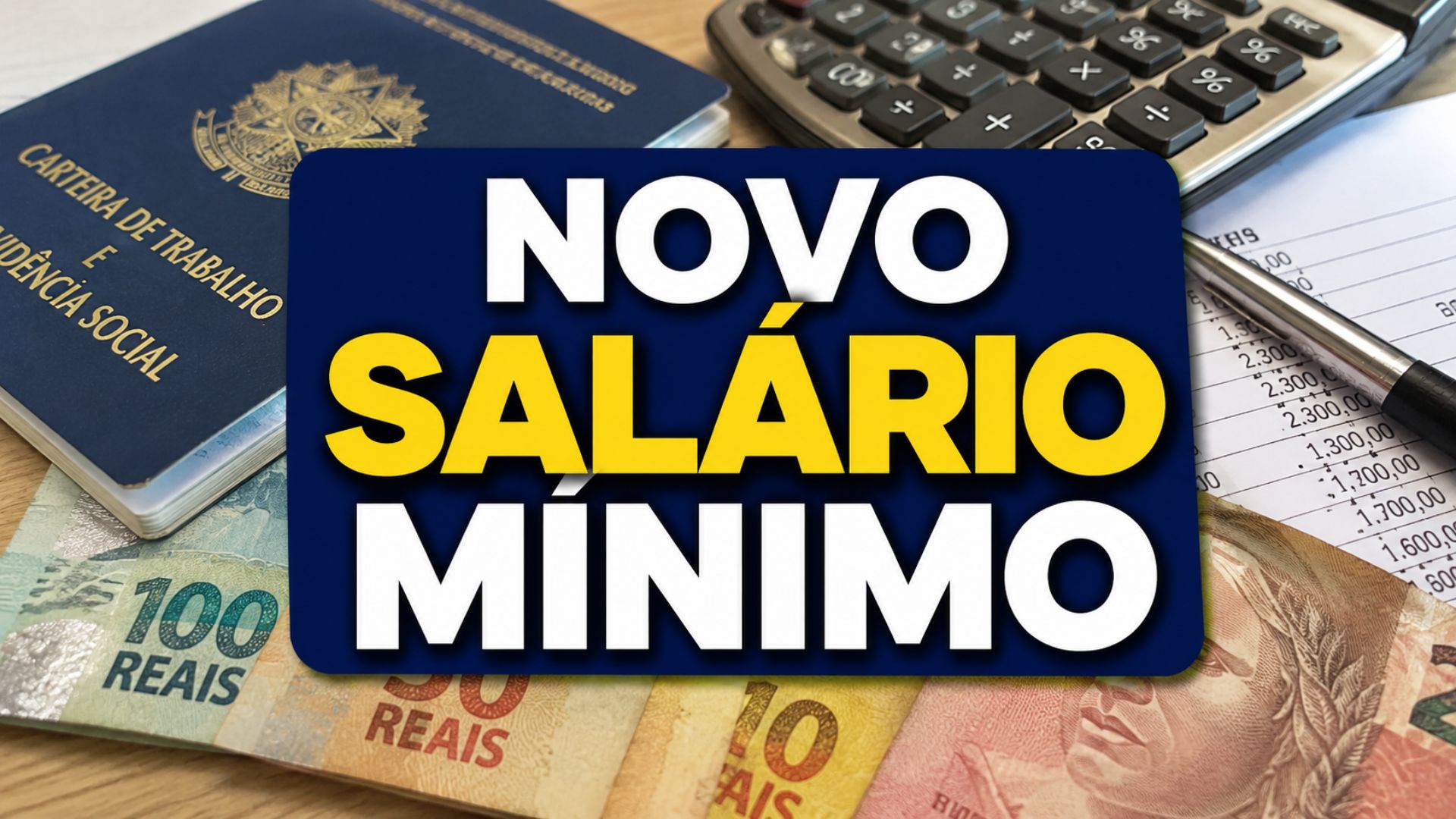

Adjustment approved by Alesp updates the São Paulo regional minimum wage, expands salary protection for dozens of professional categories, and guarantees a new complementary bonus to thousands of state employees linked to the São Paulo government.
The deputies of the Legislative Assembly of São Paulo approved the adjustment of the São Paulo Minimum Wage to R$ 1,874.36 and also the update of the complementary bonus intended for state employees whose monthly remuneration remains below the new floor defined by the state government.
Submitted by the administration of Tarcísio de Freitas, the two proposals now advance to the governor’s sanction, a necessary step for the new values to officially take effect under the rules approved by the São Paulo parliamentarians.
New São Paulo minimum wage will affect about 70 categories
Through Bill 386/2026, the São Paulo regional minimum wage receives an adjustment of R$ 70.36 compared to the previous value, which was R$ 1,804.00, raising the state minimum above the current national wage.
-
Electrolux to Close Hungarian Refrigeration Plant by 2026, Impacting Over 600 Jobs

-
Brazilian Workers May See FGTS Profit Deposited by August 31, But Funds Aren’t Freely Withdrawable: Over R$14.2 Billion Distribution Awaits Council Decision, Aims to Counter Inflation, Surprising Workers with Balance Increase Without Immediate App Withdrawal

-
Brazilian Congress Moves to End 6-Day Workweek, Sparking Industry Concerns Over Competitiveness and Costs

-
Labor Shortage: Despite More Doctors Graduating in Brazil, Lack of Anesthesiologists Leads to Surgery Cancellations and Exposes Hidden Bottleneck in Hospitals




Calculated based on the accumulated INPC in 2025, the correction of 3.9% was used by the São Paulo government as a reference to recover part of the inflationary losses and preserve the purchasing power of the lower salary ranges.
The update will be applied to private sector workers who do not yet have a salary floor defined by specific federal legislation, collective agreement, or convention signed between employer unions and representatives of professional categories.
Among the groups covered are domestic workers, elderly caregivers, caregivers of people with disabilities, delivery riders, assistants, and fishermen, as well as other categories that use the São Paulo minimum wage as an official reference for remuneration.
According to the state government, the proposal is part of a set of measures aimed at valuing formal work and preserving the income of workers who depend directly on the regional floor to compose their monthly earnings.
In the justification sent to Alesp, the Department of Economic Development stated that the measure seeks “the appreciation of work, the preservation of the purchasing power of the lower-income population, productive inclusion, and the reduction of regional inequalities.”
Adjustment of the complementary bonus benefits more than 89 thousand employees
During the same extraordinary session held by the São Paulo parliamentarians, Bill 385/2026 was also approved, responsible for updating the complementary bonus intended for state public employees.
In practice, the mechanism ensures that the total monthly remuneration of employees does not remain below the minimum values established for each type of work schedule provided by the state administration.
For the Full Workday, the minimum wage becomes R$ 1,874.36.
In the Common Workday, the defined amount is R$ 1,405.77.
For the Partial Workday, the reference becomes R$ 937.18.
According to the São Paulo government, more than 89,000 active employees, retirees, and pensioners are expected to be directly benefited by the update approved by state deputies this week.
This group includes professionals linked to state departments, autarchies, the State Attorney General’s Office, and also the State Comptroller General, according to data presented by the São Paulo Executive.
Approved projects proceed to Tarcísio de Freitas for sanction
After approval in the plenary of the Legislative Assembly of São Paulo, the two projects now proceed to the final analysis by Governor Tarcísio de Freitas before the official publication of the new rules.
Only after the sanction do the adjustments gain legal validity, allowing the application of the values approved by the parliamentarians for both private sector workers and the covered state employees.
Even so, the adjustment of the regional minimum wage in São Paulo does not replace salary floors defined by specific existing norms in certain professional categories covered by their own agreements.
Whenever there is a higher remuneration provided for in federal legislation, collective bargaining, or labor agreement, the rule considered more advantageous for the worker continues to apply.
In this scenario, the state minimum continues to function as a minimum reference for categories that do not yet have their own salary protection established in specific negotiations.
Thus, the update tends to directly impact occupations with lower remuneration and formal ties that use São Paulo legislation to define the salary base applied to employment contracts.
INPC was used as a basis for updating the values
To calculate the 2026 update, the government used the National Consumer Price Index accumulated throughout 2025 as the main parameter for salary correction.
The INPC is usually adopted in adjustments of this nature because it measures the price variation faced by lower-income families, the group most impacted by cost of living fluctuations.
In the specific case of state employees, the complementary allowance does not necessarily alter career plans or permanent remuneration structures provided in each public agency.
The benefit functions as an additional installment created to ensure that the total monthly compensation reaches the minimum corresponding to the workday performed by the state employee.
With the approval of the projects, the São Paulo government maintains the policy of periodic updates to the regional minimum wage adopted in recent years by the state administration.
In 2026, the new value remains above the national minimum wage and continues to serve as the official benchmark for workers and employees covered by the state rules approved by Alesp.


