Portuguese
  Spanish


Metal Fragments Have Already Hit the Ground in Inhabited Areas. Scientists Warn: Solar Storms Are Disrupting the Orbit of the Largest Satellite Network on the Planet.
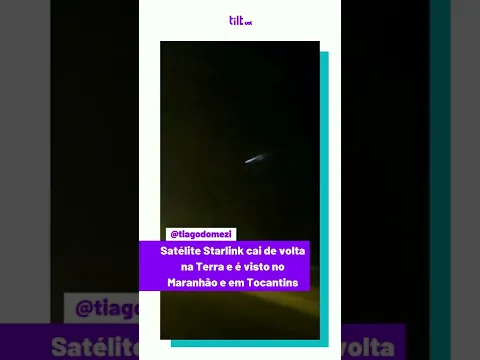
Elon Musk’s ambitious project to connect the world via satellite faces an unusual — and dangerous — challenge. Intense solar activity, part of a natural cycle peaking between 2024 and 2025, is causing an unexpected side effect: the premature fall of Starlink satellites over Earth.
More than just a logistical hassle, this poses a real risk. In August 2024, a 2.5 kg aluminum piece fell on a farm in Canada. SpaceX itself acknowledged that the object was part of one of its satellites. The piece survived the atmospheric reentry process — something that, in theory, should not happen.
Uncontrolled Reentry
Starlink satellites have an average lifespan of five years. After this period, they are directed for a gradual reentry into the atmosphere, where they should disintegrate almost completely due to friction. Small remaining fragments, according to SpaceX, usually fall into the ocean, out of danger.
-
Scientists Uncover “Amazon Stonehenge” with 127 Giant Rocks, Shedding Light on Indigenous Solar Observations Before European Arrival

-
Fisherman Catches 18kg Catfish Near Brazil’s Itaipu Lake, Among Largest Recorded in Recent Years
-
Six-Year-Old Uncovers 400-Million-Year-Old Coral Fossil in Backyard, Revealing a Pre-Dinosaur Ocean World

-
India Gains 2.1 Million Hectares of Dry Tropical Forest in a Decade, but Scientists Warn Much of It May Be Commercial Plantations, Not Genuine Biodiversity Recovery




But this scenario has changed.
With increased solar activity, satellites are facing an unexpected drag. The energy released by the Sun during storms — radiation, charged particles, and coronal mass ejections — heats and expands Earth’s atmosphere. This creates more resistance for objects in low orbit, like the Starlink satellites, forcing their fall sooner than expected.
The reentry process, which would normally take two weeks, can now last less than five days. And this time is insufficient for the complete burn-up of certain pieces. The result? Considerable metal debris can reach populated areas.
According to NASA experts, the current Solar Cycle 25 is among the most intense in recent times. The peak activity is expected to extend until the end of 2025.

A Problem That Has Already Caused Losses
SpaceX, which operates the largest satellite constellation in history — with over 7,000 units in orbit — has already felt the impacts directly. In February 2022, an unexpected solar storm destroyed 40 satellites shortly after launch. At the time, Musk publicly acknowledged the problem but assured that the latest units were more resilient.
However, in 2024, the company admitted difficulties again. Internal documents cite instances of service degradation and fragments that survived reentry — like the one in Canada. So far, there are no reports of injuries, but the possibility of an impact in urban areas cannot be ruled out.
“With each solar cycle, we face new challenges. The problem is that now there are thousands of satellites in low orbit, and this completely changes the game”, warns astrophysicist Brian Weeden from the Secure World Foundation, an organization specializing in space security.
What Does This Have to Do With Brazil?
Much more than it seems. With the expansion of Starlink satellites to Latin America — especially in remote areas of the Amazon and the Midwest — Brazil is on the radar of these orbits.
In April 2024, Anatel (National Telecommunications Agency) renewed SpaceX’s license to operate in the country, citing connectivity benefits in isolated areas. However, there is still no clear legislation regarding responsibilities in the event of the fall of space debris on Brazilian territory.
In theory, the UN Convention on Registration of Objects Launched into Outer Space — signed by Brazil in 1972 — obliges the country of origin of the satellite to compensate any victims. But there has never been a concrete case ruled based on this treaty.

The Environmental Impact Is Still an Unknown
There is another growing concern: the atmospheric pollution caused by these satellites during reentry. A study published in April by the University of British Columbia suggests that the burning of thousands of devices may release rare metals and synthetic materials into the upper atmosphere, with unknown impacts on the ozone layer and Earth’s climate (Space.com).
Additionally, the increasing presence of satellites in low orbit raises the risks of collisions and the formation of space debris. Even though SpaceX claims to accurately control the destination of its satellites, solar storms like the current ones are unpredictable — and increasingly frequent.
And Now, What to Do?
SpaceX claims to be redesigning some of its satellites to make them more resistant to these interferences. Company sources say that the new models of the Starlink V2 Mini series already have enhanced protection against solar radiation and a structure designed to burn up completely during reentry.
Still, engineers from ESA (European Space Agency) and NASA are pushing for new international rules for managing megaconstellations. The idea is to create global protocols that ensure safety for Earth’s inhabitants and preserve orbital space for future generations.
In the meantime, we can only hope that the next fragment doesn’t fall in a populated area.