Portuguese
  Spanish


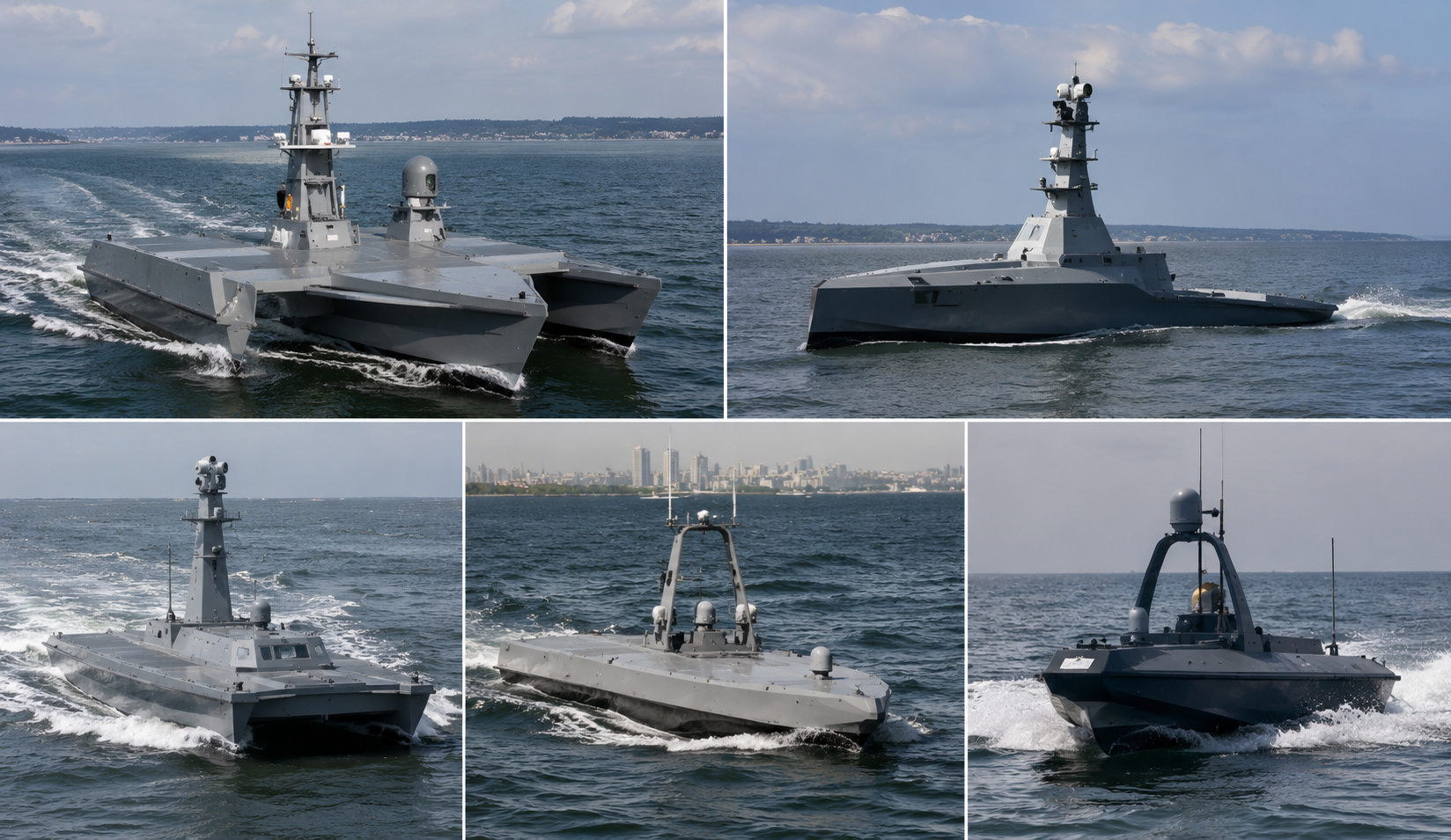

US Navy plans 47 autonomous MUSV ships by 2031, with mission modules for reconnaissance, electronic warfare, attack, and operations in the Pacific.
According to Defense One, the United States Navy Shipbuilding Plan released on May 13, 2026, included, for the first time, the Medium Unmanned Surface Vessels, known as MUSV, alongside frigates, destroyers, and aircraft carriers as formal components of the combat fleet. The move signals that the platform has transitioned from merely a technological experiment to being treated as an operational asset.
The plan allocates $171 million in the fiscal year 2027 for the purchase of three ships and $3.11 billion by 2031 to form a fleet of 47 platforms. The long-term projection is to reach 72 MUSVs in permanent service by 2056, creating an autonomous surface layer within the American Navy.
The ships are 59 meters long, about 500 tons in displacement, operate without a crew on board, and carry interchangeable modular containers. These modules can be configured for reconnaissance, electronic warfare, anti-submarine warfare, surface attack, or communications relay, depending on the mission.
-
China Unveils Laser Weapon Capable of Instantly Neutralizing Military Drones, Marking a Significant Advancement in Air Defense Technology

-
U.S. Navy’s Ticonderoga-class Cruiser Becomes a 9,800-Ton Missile Fortress with Advanced Aegis System Capable of Tracking Hundreds of Targets

-
France’s Charles de Gaulle: The Sole Nuclear-Powered Aircraft Carrier Outside the US, Weighing 42,500 Tons and Equipped with Two Atomic Reactors

-
The military spaceplane that almost took the Cold War into orbit: Boeing X-20 Dyna-Soar was designed to re-enter above Mach 20, fly for up to 40 hours, land like a plane, and transform Titan rockets into a gateway to a new era of orbital warfare.

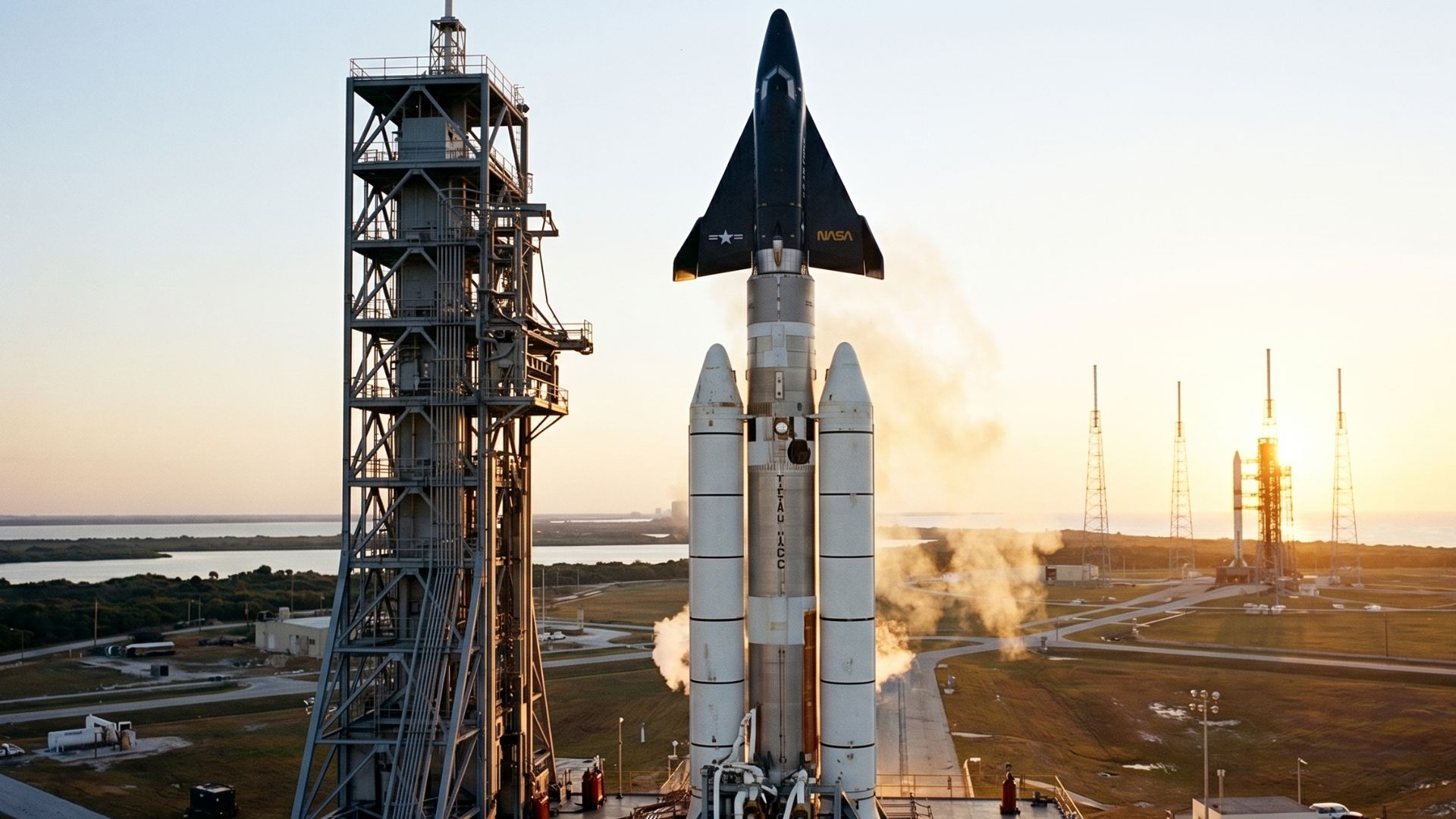
Autonomous MUSV ships officially join the US Navy combat fleet
The inclusion of MUSVs in the American naval plan marks a structural change in how the United States Navy intends to distribute combat power. Instead of relying solely on large manned ships, the force now incorporates smaller, cheaper platforms that are remotely or autonomously operated.


The plan itself states that high-level platforms remain essential but should be complemented by systems that can be produced in volume and adapted in real-time.
This phrase summarizes the new American naval design: aircraft carriers, destroyers, and frigates remain at the center but now operate surrounded by swarms of unmanned sensors and weapons.
The MUSV has no living quarters, kitchen, infirmary, or traditional command bridge. The structure is reduced to the essentials: deck, sensors, propulsion, communications, and mission containers that define the ship’s role in each operation.
Sea Hunter and Seahawk paved the way for the fleet of 47 unmanned ships
The plan to purchase 47 MUSVs did not arise suddenly. It is the result of six years of testing with two operational prototypes, the Sea Hunter and the Seahawk, used by the Navy to solve practical problems of autonomous navigation in real ocean waters.
The Sea Hunter was originally developed by DARPA and then transferred to the U.S. Navy. At 40 meters long, the trimaran was designed to autonomously pursue submarines for extended periods, tracking acoustic signatures without needing an onboard crew.

The Seahawk, the second prototype, was mainly used for integration with the conventional fleet. Both participated in exercises such as Integrated Battle Problem 23.1, Integrated Battle Problem 23.2, and RIMPAC 2022, operating as distributed sensors alongside manned ships.
Refueling of the Seahawk at sea proved operational autonomy of the MUSVs
The most recent milestone of the program occurred on April 15, 2026, when the Seahawk was refueled in open sea by the tanker USNS Guadalupe. According to the Military Sealift Command, the demonstration was an essential proof of concept for deployed operations of MUSVs alongside aircraft carrier strike groups.
This type of operation is decisive because an autonomous ship only becomes useful in naval warfare if it can remain in the theater of operations for long periods. Refueling at sea means operating beyond the coast, accompanying surface forces, and maintaining presence in contested areas.
The next step is already defined: MUSVs will be deployed with the Theodore Roosevelt Carrier Strike Group still in 2026. This places the unmanned ships within a real naval force, and not just in isolated tests.
U.S. Navy wants naval mass without risking crew in areas of Chinese missiles
To understand why the United States is investing $3.11 billion in unmanned ships, it is necessary to observe the strategic problem in the Pacific. China has developed long-range anti-ship missiles, such as the DF-21D and the DF-26, with estimated ranges of 1,500 km and 4,000 km.
These systems were designed to make it difficult for American aircraft carriers, cruisers, and destroyers to operate within the first island chain of the Western Pacific. A $13 billion aircraft carrier, with thousands of crew members, is a high-value target.
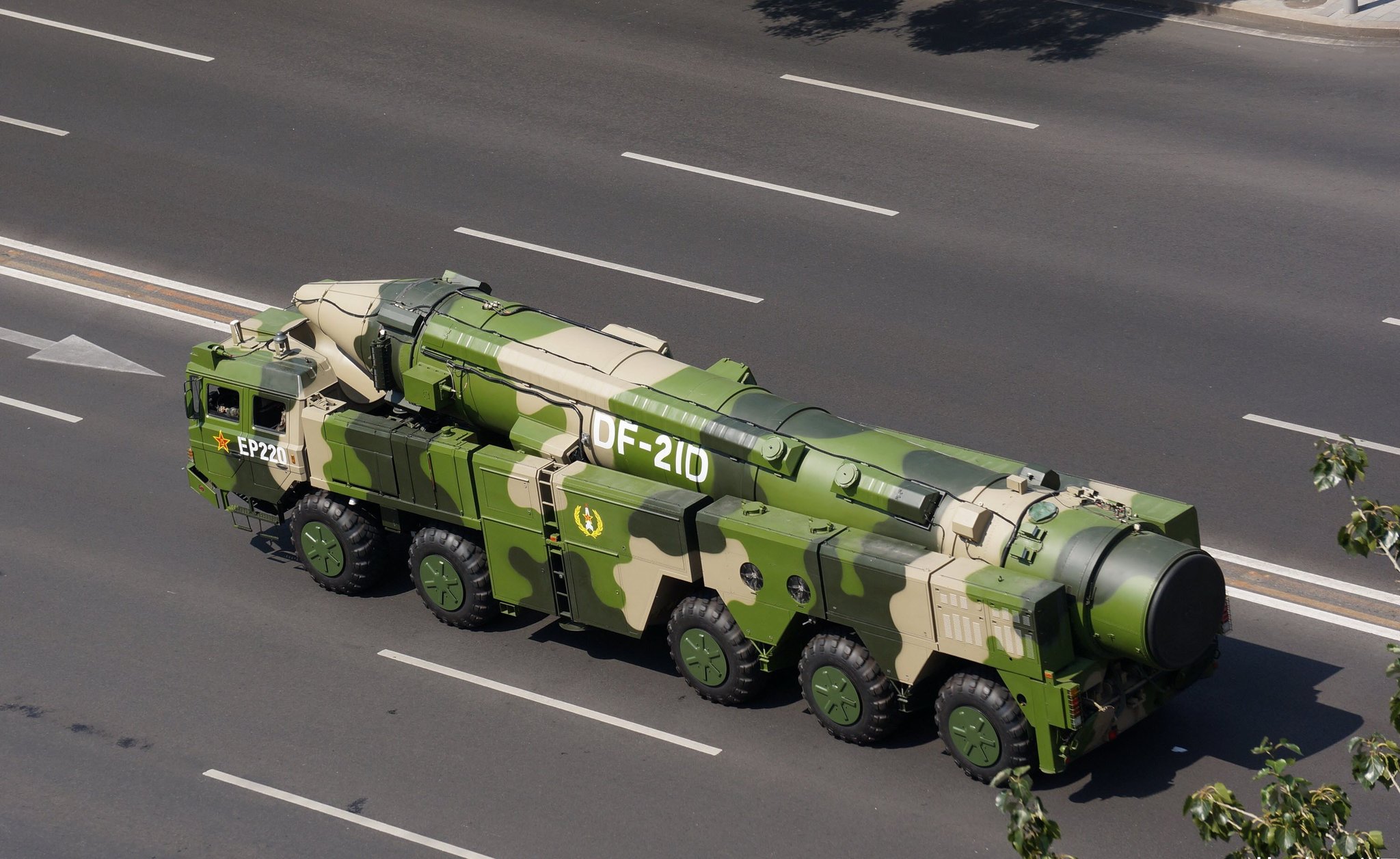
A MUSV costing around $66 million, with no sailors on board, changes this equation. It can operate in areas where it would be politically and militarily risky to send a manned ship, creating naval mass without directly exposing human lives.
Distributed Maritime Operations spreads sensors and weapons across dozens of smaller platforms
The operational concept behind MUSVs is called Distributed Maritime Operations, or DMO. The logic is to disperse sensors, communications, and attack capabilities across dozens of smaller platforms, instead of concentrating all power in a few high-value ships.

In a Pacific conflict scenario, this complicates the adversary’s decision-making. Attacking a fleet composed only of large ships is different from facing aircraft carriers, destroyers, and dozens of autonomous vessels spread over thousands of square kilometers.
This dispersion increases the force’s survivability and creates operational saturation. The adversary starts to expend sensors, missiles, time, and attention against cheaper, more numerous, and replaceable platforms.
MUSVs can reinforce aircraft carrier groups with surveillance, communication, and reconnaissance
Captain Garrett Miller, commander of the Surface Development Group One, told USNI News that MUSVs provide flexibility to the fleet commander. According to him, the platform can perform maritime domain awareness work for a strike group, using camera systems and sensors for different functions.

This means that autonomous ships can operate as advanced eyes of the fleet, transmitting data on targets, enemy movements, electromagnetic signatures, and submarine threats. Instead of exposing a manned destroyer on the front line, the Navy can send an unmanned platform.
This use is especially relevant in the Indo-Pacific, where distances are vast and the information race can decide the survival of a naval force. Whoever sees first, transmits first, and attacks first gains an advantage in an environment saturated with missiles.
Accelerated schedule foresees dozens of MUSVs in the Indo-Pacific by 2031
The acquisition schedule released in May 2026 is ambitious. The plan foresees 36 MUSVs in 2026 with resources from the One Big Beautiful Bill Act, followed by 3 in 2027, 10 in 2028, 10 in 2029, 12 in 2030, and 12 in 2031.
With this, the projected fleet would grow from 39 ships in 2027 to 83 in 2031 and 95 in 2032. If fulfilled, this number would make MUSVs a significant portion of the combined American naval fleet.
Garrett Miller stated that, by around 2030, he expects to see more than 30 MUSVs just in the Indo-Pacific, in addition to thousands of small USVs. The American Navy wants to transform autonomous platforms into a permanent presence in the areas of greatest tension with China.
XLUUV drone submarines expand the autonomous fleet from the surface to the seabed
The American naval plan is not limited to surface MUSVs. It also includes 16 XLUUV drone submarines by 2031, with an additional investment of $1.1 billion.
These platforms extend the autonomous logic to the submarine environment, creating a mixed fleet of unmanned surface and subsurface. Together, MUSVs and XLUUVs can operate as sensors, relays, reconnaissance platforms, and potentially, attack systems.
The integration between surface, seabed, space, and command networks is one of the central points of the new strategy. The American Navy is designing a fleet where humans command, but machines increasingly occupy the risk zone.
Autonomous armament in MUSVs still raises legal and military questions
The $3.11 billion plan also leaves important questions unanswered. The first involves autonomous armament, as the documents mention missile modules as a possible payload but do not detail which weapons would be used or what rules of engagement would apply.
A crewless ship capable of firing missiles at targets identified by sensors raises questions of international law, risk of accidental escalation, and legal responsibility. Who is accountable for a misidentification: the remote operator, the fleet commander, the system manufacturer, or the algorithm?
This gap will be central in the coming years. Transforming a MUSV into an advanced sensor is one thing; authorizing an unmanned platform to launch lethal weapons in a contested environment is another much more sensitive issue.