






 Portuguese
  Spanish


Euronews report shows that the Alps, Europe’s “water tower,” are becoming drier: glaciers are melting at a record pace and the mountain range is warming twice as fast as the global average. To understand the problem, the WATERWISE project, funded by the European Union, measures data from various peaks in the name of the continent’s water security.
The largest freshwater reserve in Europe is shrinking. The Alps, nicknamed the continent’s water tower, are becoming drier, with glaciers melting at a record pace, as shown in the Euronews report released in a video on July 6, 2026. The alert raises a red flag for the water security of millions of people.
To tackle the problem, a major scientific effort was born. According to the official page of the WATERWISE project, funded by the European Union, scientists from various countries measure data from the high-altitude springs of the Alps to understand the future of the water these glaciers hold and protect water security.
The rate of warming is alarming. The Alps are warming about twice as fast as the global average, and their glaciers and snow caps, which function as Europe’s water tower, are losing ice faster than expected, threatening the water security of the entire continent.
-
Australia plans massive artificial reef project to protect Gold Coast and save storm-battered beaches from erosion

-
Humanoid Robots Begin Replacing Workers in Repetitive Roles as Companies Accelerate Industrial Automation

-
Humanoid Robots Begin Replacing Factory Workers in China, Working 64-Hour Shifts and Driving Industrial Automation Forward
-
Miniature Nuclear Reactor to Be Installed in South Wales, Powering 20,000 Homes and Reviving UK’s Nuclear Industry After Nearly 50 Years



Next, see why the Alps are Europe’s water tower, how they are drying up, what WATERWISE does, how many people depend on these glaciers, and why this water security crisis is closely related to Brazil.
Why the Alps are Europe’s “water tower”
The nickname is no exaggeration. The Alps are called Europe’s water tower because they store, in the form of snow and glaciers, the winter precipitation, which then melts and feeds rivers precisely when water is scarce in the plains, ensuring the continent’s water security.
The mountain range is the source of great rivers. From the Alps originate some of the largest rivers in Europe, such as the Rhine, the Rhône, the Po, and the Danube, and it is the water from the glaciers and snow that sustains their flow, making the water tower a pillar of European water security.
The role is disproportionate to the size. Even occupying a small fraction of European territory, the Alps provide a huge portion of the water used in the lowlands during dry periods, which reinforces the importance of this water tower and its glaciers for water security.
The water from the Alps serves everything. It supplies cities, irrigates crops, and powers hydroelectric plants, which means that any threat to the glaciers of the water tower simultaneously affects supply, agriculture, and energy, putting water security at risk.
Therefore, what happens in the Alps concerns the whole of Europe. If the water tower dries up, millions of people feel it, and it is this dependence on the Alpine glaciers that makes the continent’s water security so vulnerable to climate changes.
The Alps are drying up: the melting glaciers
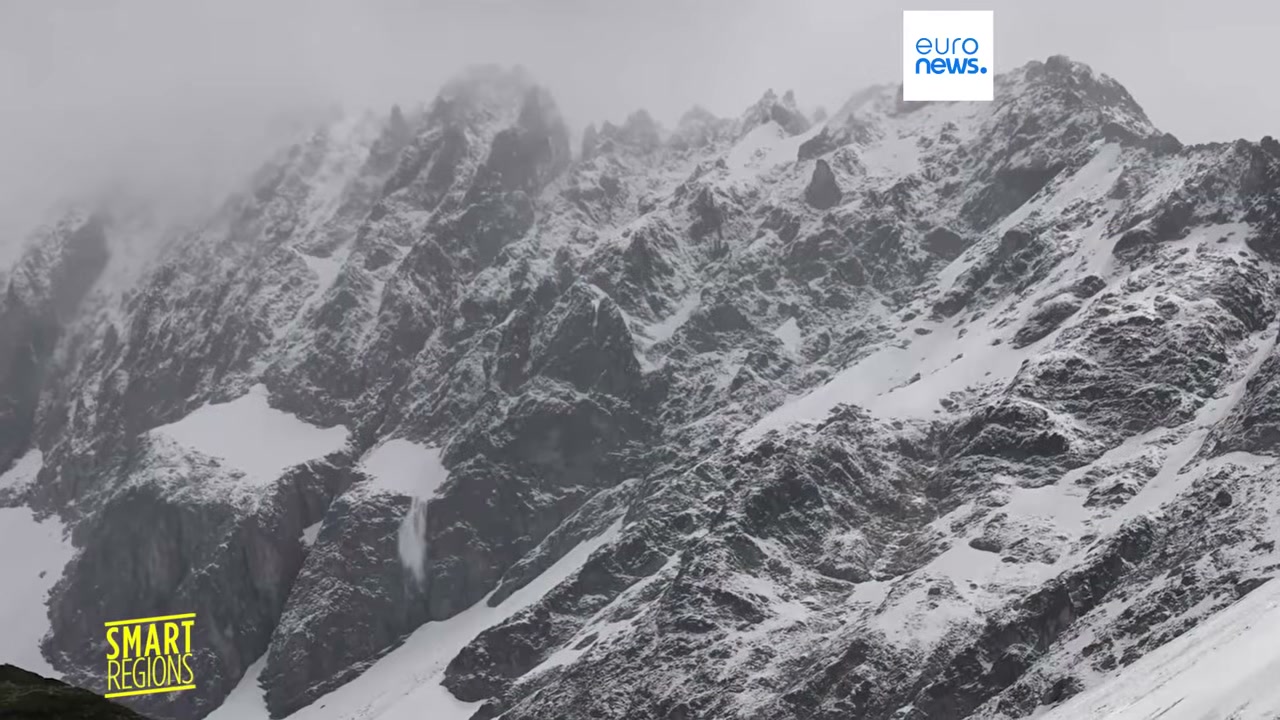
Signs of drought are already appearing. The Alps are becoming drier because the heat melts the glaciers and reduces the accumulated snow, which compromises Europe’s water tower and threatens the water security of those who depend on it.
The numbers of ice melt are alarming. Swiss glaciers have lost about 10% of their volume in just two years, a loss comparable to entire decades, a sign that the water tower of the Alps is shrinking rapidly and water security is at risk.
Warming accelerates everything. As the Alps warm twice as fast as the rest of the world, the glaciers are visibly retreating, and areas that were once covered in ice all year round now appear bare, undermining the water tower and water security.
The loss is historic. Over the last century, the glaciers of the Alps have already lost a significant portion of their ice, and hundreds of small glaciers have simply disappeared, gradually emptying the water tower that supports European water security.
The effect is double and dangerous. In the short term, accelerated melting can even increase water flow; in the long term, when the Alps glaciers dwindle, the water tower will lose its reserve, and Europe’s water security will be seriously threatened.
The WATERWISE project: measuring every peak of the Alps
Faced with the threat, science has stepped in. WATERWISE is a project funded by the European Union that brings together scientists, communities, and managers to measure data from the high-altitude springs of the Alps and understand the future of the water tower and water security.
The effort is international. WATERWISE involves more than a dozen partners from six Alpine countries, coordinated by a Swiss university, all committed to mapping the glaciers and springs of the Alps to protect the continent’s water security.
The funding is considerable. With a budget in the millions of euros, much of it coming from European funds, WATERWISE invests in closely monitoring the Alps, collecting data on glaciers, rivers, and climate to preserve the water tower and water security.
The goal is practical. By gathering previously scattered information, WATERWISE aims to predict the vulnerability of the Alps water and help communities adapt, turning glacier science into concrete tools for water security and water tower management.
There is also a motto behind it. As one of those involved summarizes, you can only protect what you know, which is why WATERWISE is committed to measuring every peak of the Alps, understanding the glaciers to ensure the water security of future generations.
The disappearing glaciers of the Alps
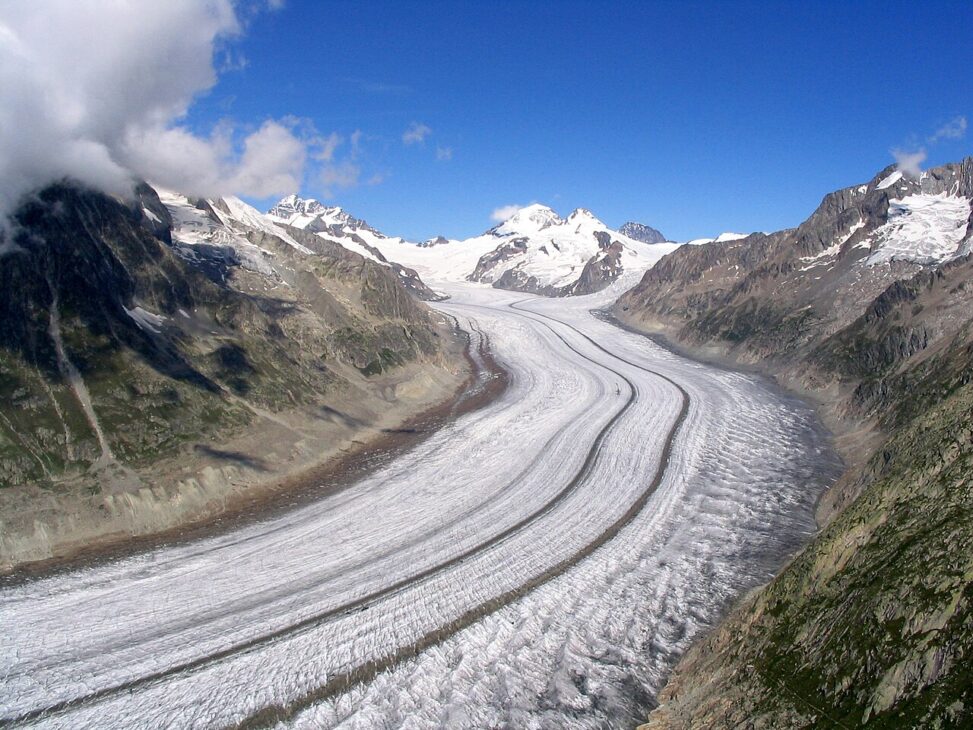
Some glaciers have become symbols of the crisis. The Aletsch glacier, the largest in the Alps, retreats year after year, visibly showing how Europe’s water tower is dwindling and how the continent’s water security depends on the remaining ice.
The retreat is measured precisely. Monitoring networks have been tracking the glaciers of the Alps for decades, and the data confirms that ice loss has accelerated, depleting the water tower faster than nature can replenish, with direct impacts on water security.
Every lost glacier matters. When a glacier in the Alps disappears, it takes with it a reserve that took millennia to form, and this irreversible loss compromises the water tower and reduces the water security of rivers and cities that depend on it.
The phenomenon is global, but visible there. The glaciers of the Alps act as a climate thermometer, and watching them shrink is seeing, in real-time, the effect of warming on Europe’s water tower and on the water security of millions.
That’s why monitoring is urgent. Understanding how much ice remains in the glaciers of the Alps is essential for planning water use, and it is this race against time that WATERWISE is engaged in to save what is possible of the water tower and water security.
170 million people depend on this water
The reach of the water tower is immense. It is estimated that the water descending from the glaciers and snow of the Alps benefits about 170 million people along the major European rivers, a number that illustrates the water security at stake.
This water drives the economy. In the lowlands, the water tower of the Alps irrigates crops, supplies cities, and generates energy, so the melting of the glaciers threatens food, drink, and electricity for much of Europe and its water security all at once.
In summer, the dependency is even greater. When it rains less, it is the melting of the glaciers of the Alps that maintains river levels, and without this reinforcement from the water tower, the continent would face severe droughts, with a strong impact on water security.
The problem is that the reserve is finite. As the glaciers of the Alps shrink, the water tower loses its capacity to aid the plains during dry periods, and this is the concern that alarms scientists worried about future water security.
Therefore, the issue is one of survival. Ensuring the water security of 170 million people involves protecting the glaciers of the Alps and understanding the water tower, a challenge that involves science, politics, and changes in habits throughout Europe.
The “smart stones” and the open platform
Technology helps measure. To monitor the health of the rivers descending from the Alps, WATERWISE uses discreet sensors, nicknamed “smart stones,” that monitor the water in real-time and feed studies on the glaciers and water security.
The data is varied. The project measures river flow, groundwater, local climate, and snow and ice conditions of the Alps, cross-referencing everything to understand how the water tower responds to warming and what it means for water security.
The information becomes a tool. All this data about the glaciers and the sources of the Alps feed an open digital platform, so that communities and managers can track river flow and plan water security based on facts, not assumptions.
The idea is to democratize knowledge. By opening up the data of the water tower, WATERWISE allows municipalities, farmers, and citizens of the Alps to understand the situation of the glaciers and make better decisions about water use and water security.
Thus, science and community walk together. More than measuring glaciers, WATERWISE wants to involve those living in the Alps in protecting the water tower, turning monitoring into concrete action for the continent’s water security.
Will the Alps lose all the water?
The question is alarming but requires context. In the worst-case scenario, scientists warn that the glaciers of the Alps could almost disappear by the end of the century, emptying Europe’s water tower and severely threatening the continent’s water security.
However, it is not a sealed fate. The future of the glaciers of the Alps depends on how much the planet will warm, and reducing emissions can slow down ice loss, preserving part of the water tower and delaying the water security crisis.
Adaptation has already begun. Projects like WATERWISE exist precisely to prepare the Alps and Europe for a scenario with fewer glaciers, seeking new ways to ensure water security even as the water tower shrinks.
Time, however, is short. As the glaciers of the Alps melt quickly, every year counts, and therefore science is racing to map the water tower and create strategies before the continent’s water security collapses.
In the end, everything depends on choices. Saving the water tower of the Alps and its glaciers requires global action against warming, and what is at stake will ultimately be the water security of entire generations of Europeans.
What the “water tower” of the Alps has to do with Brazil
Brazil has its own water towers. Just as the Alps supply Europe, the Amazon and the Cerrado store and distribute the water that sustains Brazil, making the European glacier crisis a reflection of our own water security.
The lesson about springs is straightforward. The Cerrado, the birthplace of major Brazilian rivers, is called the country’s “water tank,” and seeing it threatened by deforestation is reminiscent of what melting does to the water tower of the Alps and to water security.
The memory of the crisis also weighs heavily. Brazil has already experienced blackouts and water rationing in major cities, and the history of the glaciers of the Alps reinforces that relying on a single reserve is risky, whether it is an icy water tower or a forest, when it comes to water security.
There is also the parallel with the Andes. The Andean glaciers, which supply neighboring countries, are retreating like those of the Alps, and this water reaches Brazil through the Amazon basin, showing that the continent’s water security is all connected.
Finally, there is the common warning. While Europe rushes to map the water tower of the Alps, Brazil needs to take care of its forests and springs, because, here or there, without a water reserve, there is no water in the tap, in the crops, or in the power supply, threatening water security.


The history of the Alps shows that not even Europe’s largest water reserve is safe. Seeing the continent’s water tower dry up, with glaciers melting at a record pace, is a frightening picture of what warming does to the planet’s water security.
More than a European problem, it is a global message. While WATERWISE rushes to measure every peak of the Alps and save what remains of the glaciers, the whole world is reminded that water security depends on protecting natural water reserves.
And you, did you imagine that the Alps, Europe’s water tower, could be drying up due to the melting of the glaciers? Do you think Brazil is taking good care of its own reserves and its water security? Tell us in the comments and share with those who care about water.


