Portuguese
  Spanish


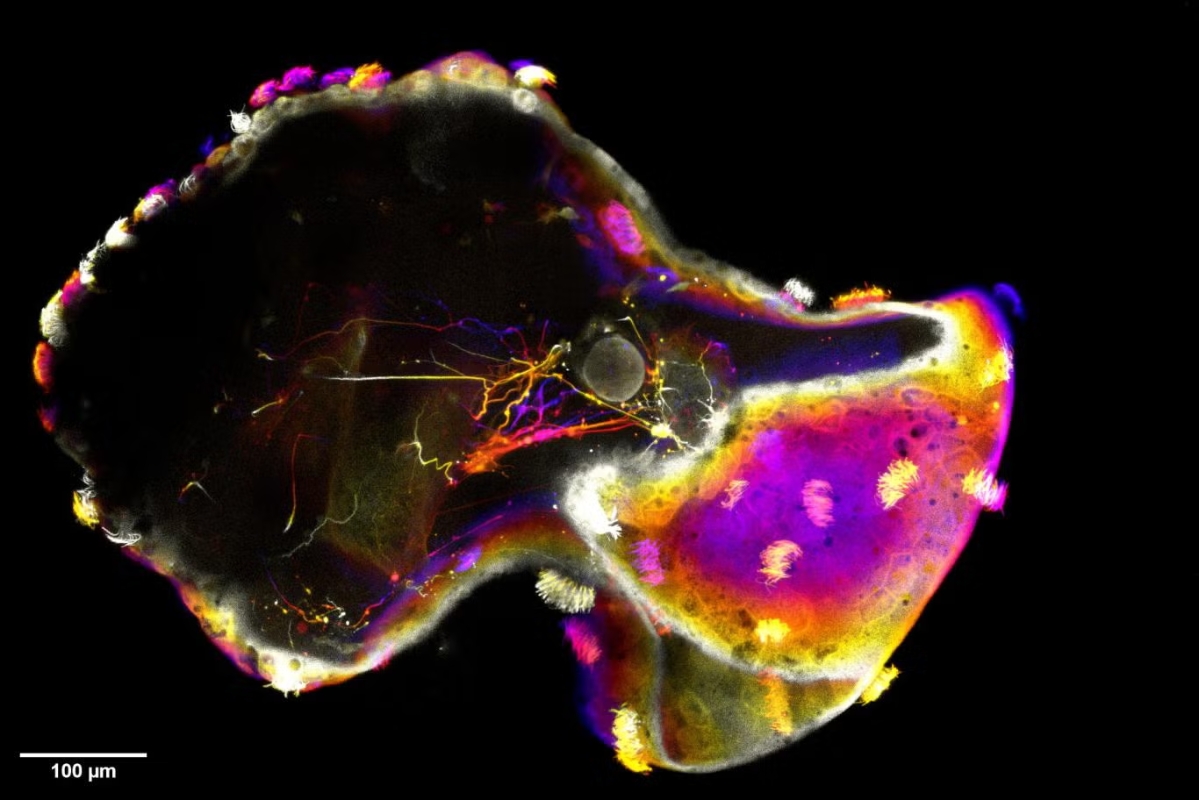

The experiment reignites the debate on the limits of synthetic biology by showing that living structures can gain new functions outside of natural design, although any medical use is still far from clinical practice.
A new stage of biological robotics has taken shape in laboratories in the United States. Researchers assembled living organisms with cells from Xenopus laevis and added nervous components capable of organizing within the body itself.
The result drew attention because these microscopic bodies began to exhibit self-movement, nervous activity, and signs of repair. The advancement also reinforced interest in more precise medical uses in the future.
At the same time, the topic requires careful reading. Part of what circulates includes discoveries from different phases of this field, including xenobots and the new neurobots.
-
China Develops Custom 140-Ton Electric Mining Truck with 770 kWh Swappable Battery, Deploys 290 Units in Xinjiang’s Largest Zinc Mine

-
Meta to Launch Arena, a New Prediction App Targeting 3.56 Billion Users, Competing with Polymarket and Kalshi

-
Scientist Challenges Famous Human Evolution Theory, Argues Homo Sapiens Evolved Gradually Over Thousands of Years
-
15-Year-Old American Builds Ocean Generator with PVC Pipe and 3D-Printed Propeller for $12, Wins National Prize, Presents at White House, and Makes Forbes 30 Under 30 List




Cells from Xenopus laevis formed a living body outside the natural pattern
To create the neurobots, scientists gathered embryonic cells from Xenopus laevis and added neuronal precursors during the organism’s closure. This arrangement produced a structure that does not exist in the same way in nature.
As these cells matured, neurons, axons, and dendrites emerged distributed throughout the interior and surface of the body. This opened up space for a simple, yet active, nervous network.
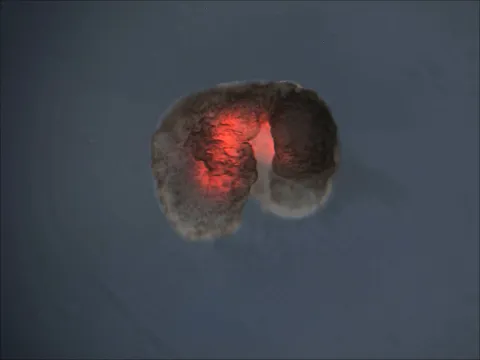

Nervous network appeared during the organism’s own reorganization
As the body closed and adjusted, the nervous tissue also formed. The central point is that the network emerged in a self-organized manner, without copying a known model in the species.
In comparison with versions without neurons, the new organisms became more elongated, more active, and had more complex trajectories in the water. This behavior added another weight to the experiment.
Test with chemical substance showed different response in movement
According to PubMed, a database of indexed biomedical summaries and studies, tests with pentylenetetrazol altered the response of the neurobots in a way different from that seen in organisms without nervous tissue.
The records of calcium activity also indicated that the nerve cells were not just present. They participated in the control of movement and internal organization.
Field had already shown swimming and repair in previous stages
Before this phase, the xenobots had already demonstrated movement in water, repair after damage, and even simple forms of molecular memory. This history separates the current advancement from what had been observed before.
The most recent leap is in the formation of a nervous network of its own within a living organism built in the laboratory. It is this change that repositions the scientific debate around these systems.
Medical potential grows, but real application still remains in the laboratory
The most cited perspective for these organisms involves precise delivery of therapies, tissue repair, and less invasive actions in the future. This path, however, still remains restricted to the research environment.
So far, what exists are concrete signs of biological self-organization and control of movement. Transforming this into real treatment still requires new steps, validation, and safety.
The creation of living organisms with functional neurons raises the level of research and broadens the debate on how cells can form biological machines outside the traditional designs of nature.
If the next results confirm control and safety, this advancement could open a new front for precision therapies. For now, the clearest impact is scientific and changes the strategic reading.