






 Portuguese
  Spanish
  5 min of reading
  0 comments


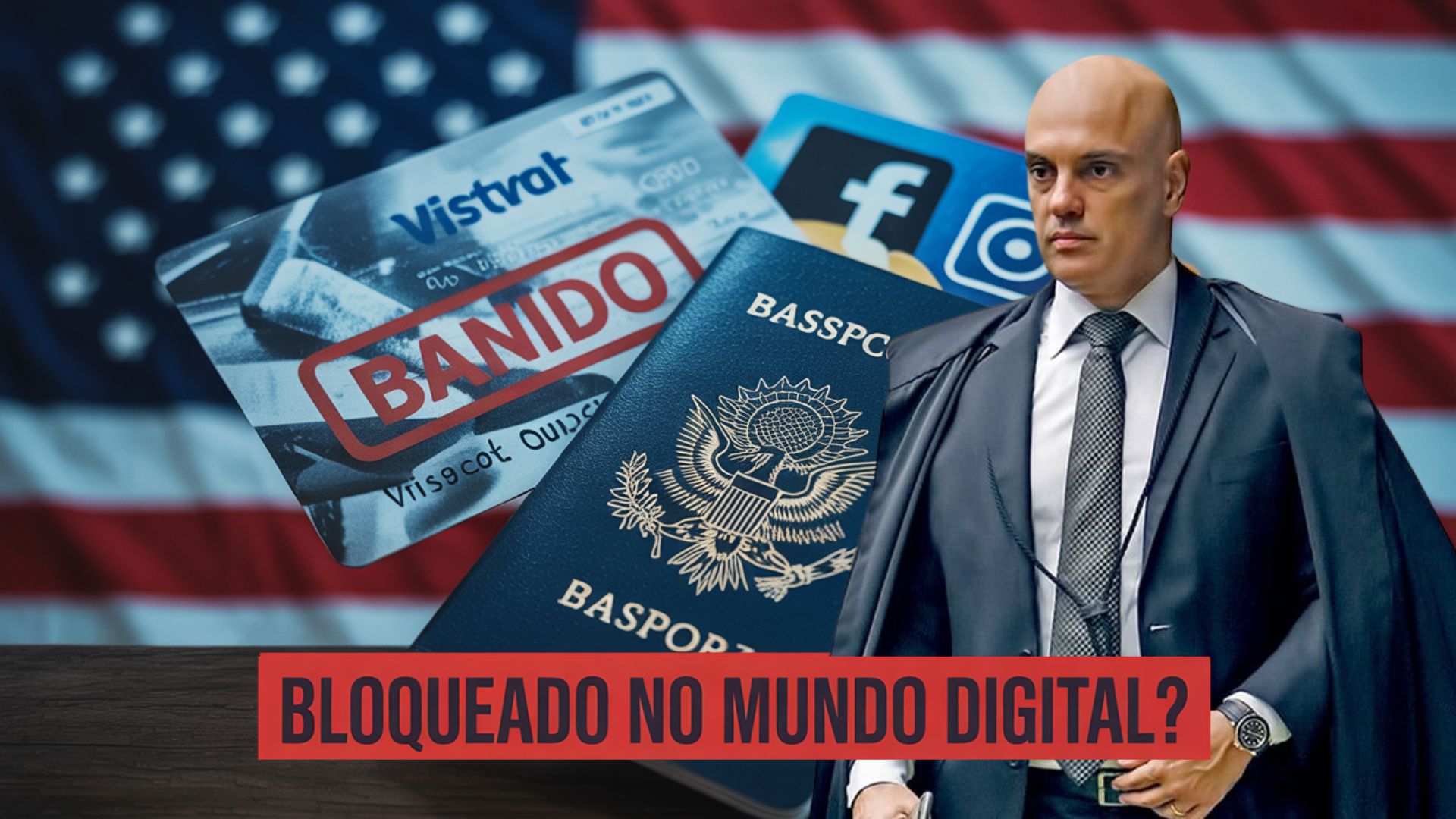
Supreme Minister Targeted by Unprecedented U.S. Sanction, with Measures That May Affect Access to Technology Services, Banks, and International Companies. Understand the Impacts and Reach of the Magnitsky Act on Brazilians.
The U.S. State Department sanctioned Minister Alexandre de Moraes of the Federal Supreme Court (STF) on July 30, 2025.
The magistrate was added to the Magnitsky Act list, U.S. legislation aimed at penalizing foreigners suspected of human rights violations or engaging in acts of corruption.
This unprecedented measure against a member of the Brazilian Judiciary brings potential consequences for access to social media, international credit cards, and dollar transactions.
-
Survivor of 1966 SS Daniel J. Morrell Shipwreck in Lake Huron Recounts 38-Hour Ordeal in Extreme Cold

-
The Greatest Hoax in World Cup History? The Film That Denied Brazil’s 1958 Victory and Exposed How Fake Evidence Can Seem Convincing on TV
-
Fake South Korean Online Stores Offer Shopping Thrill Without Spending Money or Receiving Products
-
The War of Jenkins’ Ear: How a Severed Ear Sparked One of the 18th Century’s Most Unusual Conflicts


The decision was announced by Marco Rubio, U.S. Secretary of State, who highlighted the reasons for the sanction.
According to the statement, Alexandre de Moraes was held accountable for “arbitrary detentions involving blatant denials of fair trial guarantees and violations of freedom of expression”.
According to the U.S. government, such actions included decisions that directly impacted online platforms and affected access to content on networks like Instagram, Facebook, X (formerly Twitter), Google, and other U.S. technology companies.
The document does not specifically mention individual cases but refers to decisions made by Moraes that resulted in the removal of content classified as antidemocratic, as well as orders to suspend or restrict the operation of social media platforms in Brazil.
In August 2024, the minister ordered the suspension of X within national territory, a measure that remained in effect for more than a month.
The sanctions imposed by the U.S. government include a series of severe restrictions on the Brazilian magistrate.
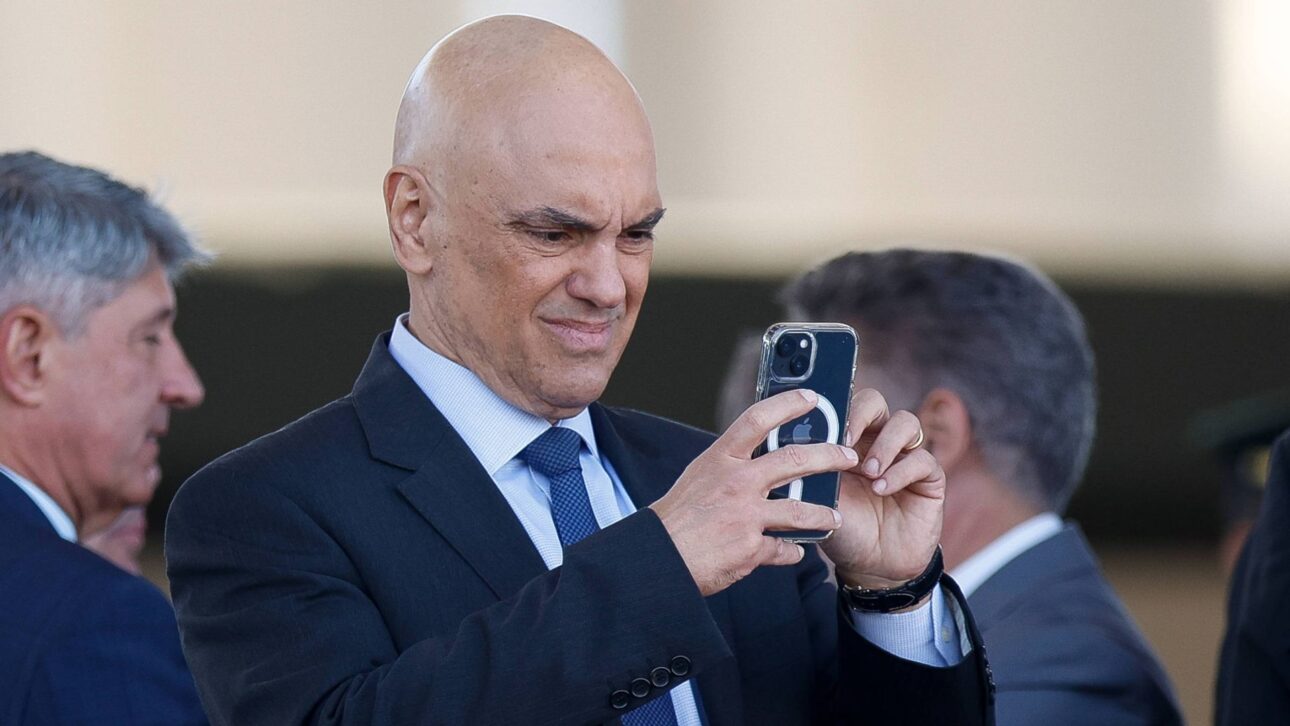
Among them are the freezing of financial assets in the United States, prohibition of entry into U.S. territory, and prohibition from conducting financial transactions with U.S. citizens and companies, as well as exclusion from the international financial system.
In practice, Moraes will not be able to access services from U.S. companies, such as international credit cards, banks, and digital payment systems.
What the Magnitsky Act Provides
The Global Magnitsky Human Rights Accountability Act, known as the Magnitsky Act, was approved in 2012 by then-President Barack Obama.
The main objective of the legislation is to enable the U.S. to impose sanctions against foreigners accused of serious human rights violations, crimes against democracy, or corruption.
The name of the law honors Sergei Magnitsky, a Ukrainian lawyer who died in 2009 after reporting financial crimes linked to the Russian government.
With the approval of the law, officials and public agents from various countries became subject to penalties for practices that contravene international human rights norms.
Over the years, the legislation has been used to sanction figures such as:
- Ramzan Kadyrov, leader of Chechnya
- Yahya Jammeh, former president of The Gambia
- Gao Yan, former Chinese Communist Party official
- Roberto Rivas Reyes, former Nicaraguan politician
- Elyas Nirumand Toomaj, businessman linked to the Armed Forces of Iran
- Antal Rogán, politician from Hungary
With the July 2025 decision, Alexandre de Moraes became the first Brazilian to be included on the sanctions list of the Magnitsky Act, a fact that amplifies the international repercussions of the case and draws attention to the severity of the imposed measures.
Impacts on Access to Cards, Banks, and U.S. Services
Among the most immediate consequences of the sanctions is the blocking of assets and financial resources held by Minister Alexandre de Moraes in the United States.
The freeze extends to any asset registered in U.S. territory, including bank accounts, investments, and properties.
Furthermore, the legislation stipulates that the sanctioned individual cannot engage in business or financial relationships with U.S. citizens and companies.
Attorney Daniel Toledo, a constitutional law specialist, explained that the restriction even affects U.S. business partners.
“The sanction extends even to U.S. business partners. It globally impacts all relationships with American companies. So, he won’t be able to have a Visa, Mastercard, or any other credit card. [He won’t be able to have an account at] banks that transfer to the United States or that conduct transactions in dollars,” Toledo detailed.
Foreign companies and banks that operate in dollars, even outside the United States, may also adhere to the U.S. decision, out of fear of potential secondary sanctions.
In practice, this could lead to the freezing of accounts in other countries, including Brazil, if there is a connection with the U.S. financial system.
Social Media, Email, and Technology: What Could Be Affected
With the sanctions, questions arise about Minister Alexandre de Moraes’s access to technology services from U.S. companies, such as email on Gmail, use of iPhone (dependent on iCloud account) or profiles on social networks like Facebook, Instagram, and X.
According to experts, the scenario is considered uncertain, as there are no clear precedents for applying the Magnitsky Act in this sector.
Attorney Daniel Toledo clarified that, although the law does not explicitly prohibit creating profiles on social media, companies may adopt restrictive measures to comply with legal determinations.
“I’m not saying that the big techs can’t sanction the minister, but I couldn’t find and I’m not aware of any record of an application of the Magnitsky Act that effectively cited a prohibition on having a Facebook profile. However, these companies will certainly try to enforce such a block in a hypothetical decision of his to actually have an account,” Toledo stated.
According to him, even if there are blocks, methods like using VPNs (virtual private networks) or profiles with other names could be employed to circumvent potential restrictions.
However, this type of practice may violate service terms of the platforms and is not recommended.
Can U.S. Companies Ban Services?
Arthur Igreja, a specialist in Technology and Innovation, considers it possible that technology companies will adopt blocking measures in response to the sanctions.
“Technology companies may impose some type of blocking or interpretation that would exclude him from certain services, yes,” Igreja explained while analyzing the premises of the Magnitsky Act.
However, he emphasizes that companies usually await official guidance from the U.S. government to act in such situations.
Currently, Alexandre de Moraes does not maintain active public profiles on social media.
Therefore, any restrictions would have a limited impact in this regard, but the restriction of access to financial systems and technology platforms could more broadly affect the use of products and services from U.S. companies.





-

-

4 people reacted to this.