






 Portuguese
  Spanish


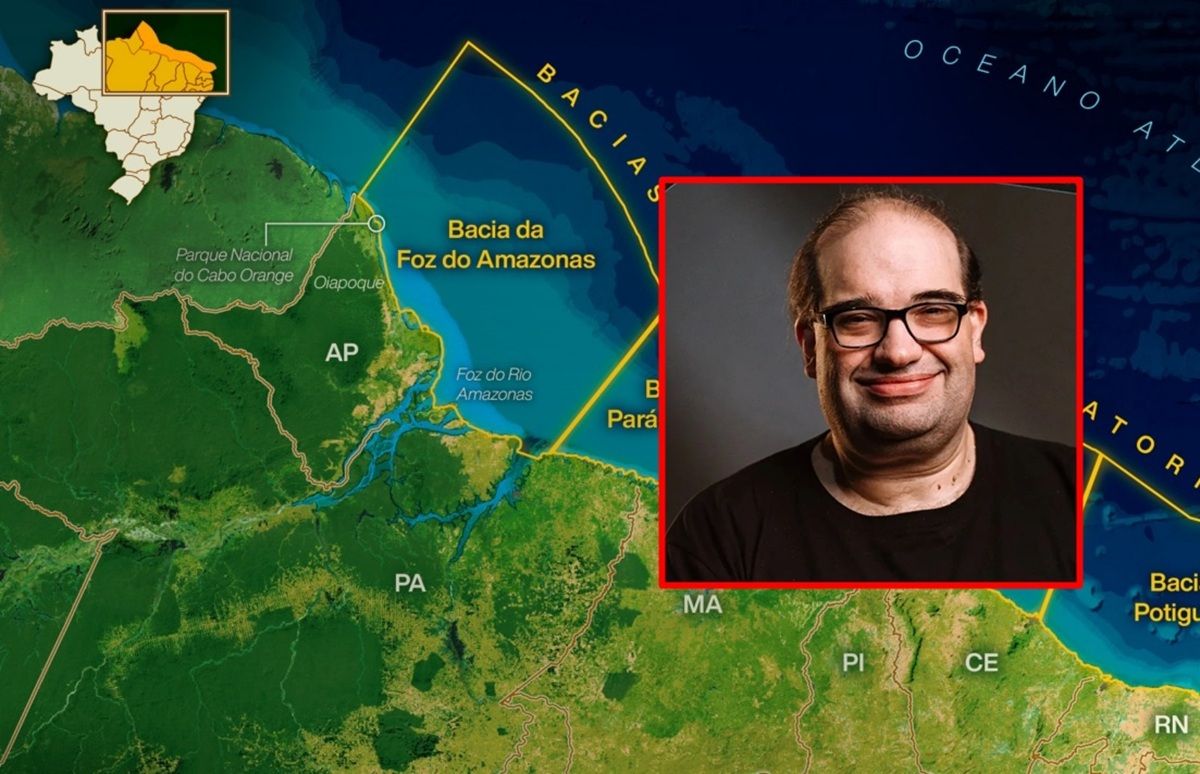

The Scientific Communicator Explained That Pre-Salt Is Expected to Enter Decline in 2027 and That Exploration of the Equatorial Margin Is Vital to Avoid Energy Crisis and High Fuel Prices
Petrobras received the operating license from Ibama on Monday (20) to drill an exploratory well in deep waters in the region of Amazon River Mouth, one of the country’s new frontiers for oil and gas.
The authorization ends a process that has dragged on for more than a decade and marks the beginning of a phase seen as strategic for national energy security.
According to Ibama, the license was granted after Petrobras made a series of improvements to the project.
-
Brazilian Executive Takes Helm of Heineken Amid Decline in Sales: 51-Year-Old Has Led Operations Across Four Continents and Managed a $7 Billion Empire

-
Brazilian Actress Turns Waxing Clinic into 400-Unit Chain with $50 Million Revenue, Sells Stake After 13 Years
-
Major Company Shuts Down 70-Year-Old Factory in Brazil, Relocating Production and Impacting Over 100 Families
-
Toyota Shuts Down Brazilian Plant After Producing Over 1 Million Vehicles, Plans Special Destination for Final Corolla Produced Following $2.1 Billion Investment and Expansion.


The state-owned company stated that it proved the “robustness of the entire environmental protection structure” that will be used in the drilling.
Additionally, it emphasized that new exploratory frontiers are essential to “ensure the country’s energy security and the resources necessary for a fair energy transition“.
Environmentalists and opposing entities reacted critically, labeling the decision a setback for the environment on the eve of the COP30.
The Exploration Region
The block FZA-M-059, located about 500 kilometers from the mouth of the Amazon River and 175 kilometers from the coast, will be Petrobras’ first target in the area.
This is an open sea region, difficult to access, where drilling is set to start immediately and last for about five months.
At this stage, the operation is exclusively exploratory — that is, there is no commercial extraction of oil.
The objective is to collect geological information and assess whether there is economic potential for future production.
If viable reserves are confirmed, Petrobras will need to complete three stages before starting production: proving a sufficient volume to justify the investment, declaring the area commercial, and obtaining a new specific environmental license for productive exploration.
Economic Potential and Estimated Reserves
Estimates for the Equatorial Margin generate great expectation. Studies from the Ministry of Mines and Energy (MME) indicate that it would be possible to extract up to 10 billion barrels of oil, a volume that could transform the area into a new “pre-salt”.
If confirmed, the productive potential of the Amazon River Mouth would reach 1.1 million barrels per day, surpassing already established fields like Tupi (1 million barrels/day) and Búzios (800,000).
Currently, Brazil has proven reserves of 16.8 billion barrels, enough to ensure self-sufficiency until 2030.
Environmental Requirements and Improvements
The Ibama authorization came after an initial denial in May 2023, when the environmental agency pointed out flaws in Petrobras’ emergency plan.
From there, a series of negotiations began that, according to the institute, resulted in a “significant enhancement of the project”.
Among the new requirements, Ibama mandated the construction and operation of a Rehabilitation and Oil Spill Response Center (CRD) in Oiapoque (AP), in addition to the already existing facility in Belém (PA). The state-owned company will also have to maintain three offshore vessels dedicated to rescuing oiled wildlife and four nearshore support vessels for emergency response.
These measures, according to the agency, were fundamental to guarantee the environmental viability of the operation, given the “exceptional characteristics of the Amazon River Mouth basin”.
A Stalemate of More Than Ten Years
The license ends a process that began in 2013, when the block was granted to Petrobras. Environmental licensing started in April 2014 and dragged on for more than a decade, with back and forth between the company and Ibama.
In August this year, Petrobras conducted an emergency drill supervised by the environmental agency, the final step to demonstrate response capability to accidents and ensure operational safety.
The Debate Over Risks and Opportunities
The decision reignited discussions about the economic, environmental, and political impacts of exploration in the Equatorial Margin. Scientific communicator Sérgio Sacani discussed the topic in the RedCast podcast, highlighting that the well is not located exactly at the river mouth, but about 500 kilometers away, in an area called the Equatorial Margin.
Sacani emphasized that the region is a petroleum province of great potential — the same one that has driven economic growth in neighboring countries like Guyana and Suriname, whose GDPs have quadrupled in recent years due to oil exploration. According to him, “it is estimated that there are double the reserves of pre-salt” in the Equatorial Margin.
Cost of Waiting and Haste in Decision Making
During the impasse with Ibama, Petrobras faced high waiting costs. The drilling ship contracted for the operation, a specialized and rare vessel, cost about US$ 4 million per day while it remained idle.
Sacani explained that there are few ships of this type in the world and that the operating schedule for these vessels is tight — new contracts would only be available in about four years. “That’s why it had to be now,” he said, referring to the urgency to start exploratory drilling.
Political and Economic Reaction
The podcast also highlighted that the decision could transform the economy of Amapá, the third poorest state in the country.
Exploration in the Equatorial Margin could make Amapá the richest state in Brazil, creating formal jobs and reducing dependence on illegal activities, such as mining and land grabbing.
He argued that the presence of Petrobras infrastructure could increase the opportunity cost of environmental devastation, as the local economy would start to rely on technical jobs and the formal market.
The Environmental Dilemma and Energy Security
Sacani acknowledged the environmental risks but suggested that Petrobras “does not have a recent history of accidents in deep waters” and has advanced response and rescue plans.
He mentioned that in other operations in the Amazon, the company adopted strict conservation measures, such as the management and protection of species before clearing operations.
For the communicator, the debate should not be seen merely as a conflict between “the environment versus development.” He stated that Brazil still relies heavily on oil: about 80% of the fuel consumed comes from pre-salt, whose production is expected to start declining from 2027.
The Risk of Dependence and The Future of Fuel
Sacani argued that new discoveries are essential to avoid an “energy void” when pre-salt production decreases.
Without new sources, the country could face scarcity and a drastic rise in prices: “Fuel at the pump could reach R$ 20,” he said.
For him, the start of exploration in the Equatorial Margin is well timed so that by the time pre-salt production declines, the country will already have new reserves in operation, maintaining internal market stability.
Energy Transition Is Still Distant
According to Sacani, Brazil — and the world — are still far from a complete energy transition. “The fleet is not electrified, and everything we use still depends on oil,” he stated, arguing that the shift to clean sources will take decades.
He mentioned that many areas of the Amazon still rely on diesel-fired thermal power plants, making local energy extremely expensive and polluting. For him, regional exploration can reduce costs and increase energy autonomy.
Political Issues and Criticism of Management
Despite supporting the decision, Sacani expressed concern about the political developments. He stated that he believes “many positions and interests” are involved in the approval of the license and warned of the risk of mismanagement of resources.
The communicator cited international examples, such as the so-called “oil curse“, where producing countries enrich their revenues but do not convert profits into social development. “Attention is needed to ensure that wealth does not get concentrated and benefits reach the population,” he warned.
Next Steps
With the license in effect, Petrobras will immediately begin drilling the exploratory well. In the coming months, the company should collect geological data that will define the commercial potential of the area.
If the results are positive, new licensing will be necessary for large-scale production. The complete cycle — from research to extraction — is expected to take several years, coinciding with the period when pre-salt production is expected to enter its declining phase.
The Ibama decision concludes one of the longest and most controversial processes in Petrobras’ recent history. For its supporters, the project represents an opportunity to ensure sovereignty and economic growth in the North of the country. For critics, it poses an environmental risk in one of the most sensitive areas on the planet.
Amid expectations and concerns, drilling in the Amazon River Mouth inaugurates a new phase in oil exploration in Brazil — a stage that promises to redefine the national energy map and reignite the debate over the balance between development and preservation.





Great article! I really appreciate the clear insights you shared – it shows true expertise. As someone working in this field, I see the importance of strong web presence every day. That’s exactly what I do at https://webdesignfreelancerhamburg.de/ where I help businesses in Hamburg with modern, conversion-focused web design. Thanks for the valuable content!