Portuguese
  Spanish


Exemption Ensures Competitiveness and Preserves Trade Flow
The decision by the United States to suspend the 50% tariff on Brazilian energy products was welcomed with enthusiasm by the sector.
Crude oil and liquefied natural gas are among the benefited items.
The Brazilian Institute of Oil and Gas (IBP) recognized the measure as a strategic step to preserve competitiveness in bilateral trade.
-
Oil production grows in Rio, but reserve replacement raises a warning sign

-
Petrobras is expected to complete the drilling of the Morpho well in the Foz do Amazonas in August 2026, the first well in the Equatorial Margin, an oil frontier that the ANP estimates at more than 30 billion barrels and could redraw the map of Brazil.

-
Oil returns to the center of concerns with tension between the US and Iran

-
IEA reduces forecast for global oil demand in 2026 after impacts of the Middle East crisis



Especially considering the economic and geopolitical importance of energy, the decision strengthens relationships.
Brazil Maintains Strategic Position in Energy Trade
With the formal exemption announced in July 2025, Brazilian energy products become part of a group of essential goods for bilateral trade.
According to the IBP, this decision represents a direct acknowledgment of the specificity of the oil and gas sector.
This sector plays a significant role in exports and in Brazil’s domestic supply of imported derivatives.
The measure directly impacts businesses involving crude oil, derivatives, and liquefied natural gas.
The movement between Brazil and the United States occurs consistently.
According to IBP data, Brazil exported US$ 2.37 billion in oil to the North American market in the first half of 2025.
This volume reinforces the relevance of the commercial relationship between the two countries.

Decision Strengthens Energy Security and Attracts Investments
In addition to protecting commercial interests, the removal of the tariff favors the investment environment in the Brazilian energy sector.
The elimination of barriers in strategic markets, such as that of the United States, contributes to reinforcing regulatory stability.
Brazil demonstrates the capacity to maintain solid and reliable bilateral agreements.
With trade flows free of tariffs, the oil and gas sector remains attractive to international investors.
These investors seek predictability and fair conditions to operate in Brazil.
The exemption avoids immediate impacts on market balance and the supply of derived fuels.
Trade Flows Remain Despite Global Complexity
Even with geopolitical instabilities and variations in supply chains, the partnership between Brazil and the United States remains resilient.
The exclusion of energy products from the elevated tariff is part of a reliable supply strategy.
Geopolitical risks are reduced with suppliers like Brazil.
Brazil, as a crude oil exporter and consumer of derivatives, maintains interdependent relationships with several nations.
Especially with the United States, this decision strengthens regional energy balance.
The country is seen as a reliable and strategic supplier.
Exemption Signals Mutual Trust and Institutional Stability
The exemption shows that the United States recognizes Brazil’s importance in global energy security.
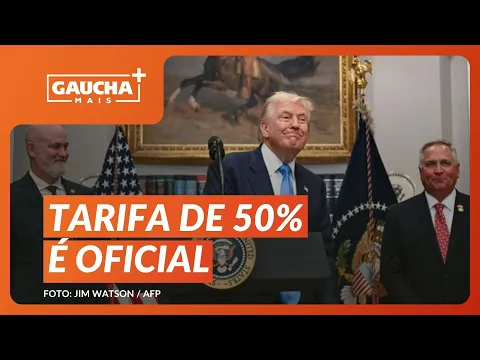
The decision not to apply the 50% tariff demonstrates trust in Brazil as an energy partner.
The country is viewed as a clean, reliable, and high-quality energy supplier.
The measure strengthens dialogue channels between the two countries and paves the way for new partnerships.
Technical cooperation, cross investments, and joint energy policies may intensify.
This decision also proves the maturity of Brazilian regulatory and diplomatic institutions.
Brazil has been able to effectively defend its interests without generating trade disruptions.
IBP Advocates for Continuity of Policies That Stimulate Competitiveness
The Brazilian Institute of Oil and Gas advocates for a competitive and transparent business environment.
The entity emphasizes that to maintain the sector’s dynamism, it is necessary to ensure fair access to international markets.
Avoiding tariff distortions is essential to preserving business fluidity.
According to the IBP, the exemption helps mitigate immediate impacts caused by elevated tariffs.
The sector operates with sensitive margins and long-term planning.
Public policies and diplomatic measures are fundamental to reinforce Brazil as a global energy player.
International Context Influenced US Decision
The exclusion of Brazilian energy products from the tariff comes amidst intense debates on global energy security amid rising geopolitical tensions.
Although the war between Russia and Ukraine continues, it still strongly influences gas and oil markets throughout 2025.
Therefore, the United States seeks to diversify its sources to reduce energy dependence on unstable regions and thus ensure autonomy.
Thus, investing in Brazilian oil means accessing a product that, besides being reliable, presents lower risk and greater volume available in the market.
Moreover, Brazil continues to advance in sustainability standards, thereby strengthening its international image in the energy sector.
Consequently, by maintaining its reliability, the country reinforces its position in global energy supply chains and also attracts more strategic partners.
Decision Reinforces Brazil’s Role in the Energy Future
With this measure, therefore, Brazil consolidates its position as one of the main energy suppliers, in addition to serving developed markets more efficiently.
Domestically, the country benefits as imports of derivatives become more competitive, reducing costs and strengthening the national production chain.
The expectation, according to the IBP, is that the exemption will also promote new trade agreements as well as expand partnerships in technological innovation.
In addition, the measure should stimulate the energy transition, as it facilitates investment in renewable sources in the coming years.
Finally, the sector gains more strategic importance, especially as it reinforces Brazil’s presence on the global stage and attracts the attention of major economies.
Energy Trade Between Brazil and the US Gains Momentum With Strategic Decision
Finally, the tariff exemption formalized in July 2025 represents more than a fiscal relief, as it also strengthens bilateral economic ties.
Additionally, it consolidates energy trade between Brazil and the United States, further boosting integration between the two countries.
As a consequence, the gesture strengthens diplomatic relations and expands investment opportunities in the energy sector, with a direct impact on new partnerships.
Thus, the measure ensures predictability for an essential industry, both for the national and international economy, fostering trust in business.
Moreover, the removal of the tariff avoids contractual disruptions and thus signals stability in commercial relations between the two countries.
In this way, Brazil and the United States continue to be protagonists in the global energy market, due to growing trust and cooperation.