






 Portuguese
  Spanish


In São João do Oeste, the wooden church considered a symbol of Latin America preserves German tradition, thermal waters, and cultural tourism. The city of just over 6,000 residents combines community heritage, quiet streets, and Germanic heritage in a historical and surprising itinerary in the far west of Santa Catarina for visitors.
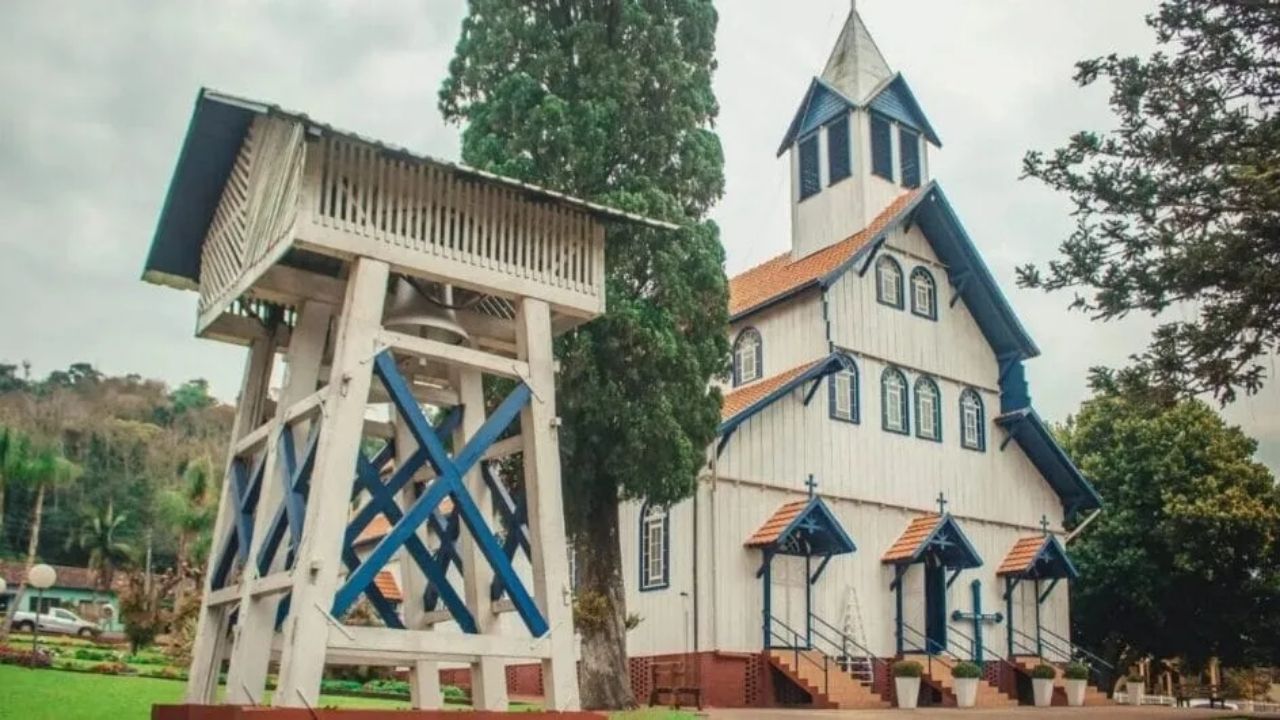
A wooden church has transformed São João do Oeste, in the far west of Santa Catarina, into a cultural tourism destination linked to German tradition and thermal waters. The temple is the São João Berchmans Mother Church, considered the largest church entirely built of wood in Latin America and the main symbol of the Santa Catarina municipality.
The story was highlighted by NSC Total on June 30, 2026. The construction took place between 1945 and 1948, with wood taken from the region itself and voluntary participation of residents, in a city of just over 6,000 inhabitants that still preserves German customs, thermal waters, and a strong community identity.
The small city that holds a giant heritage
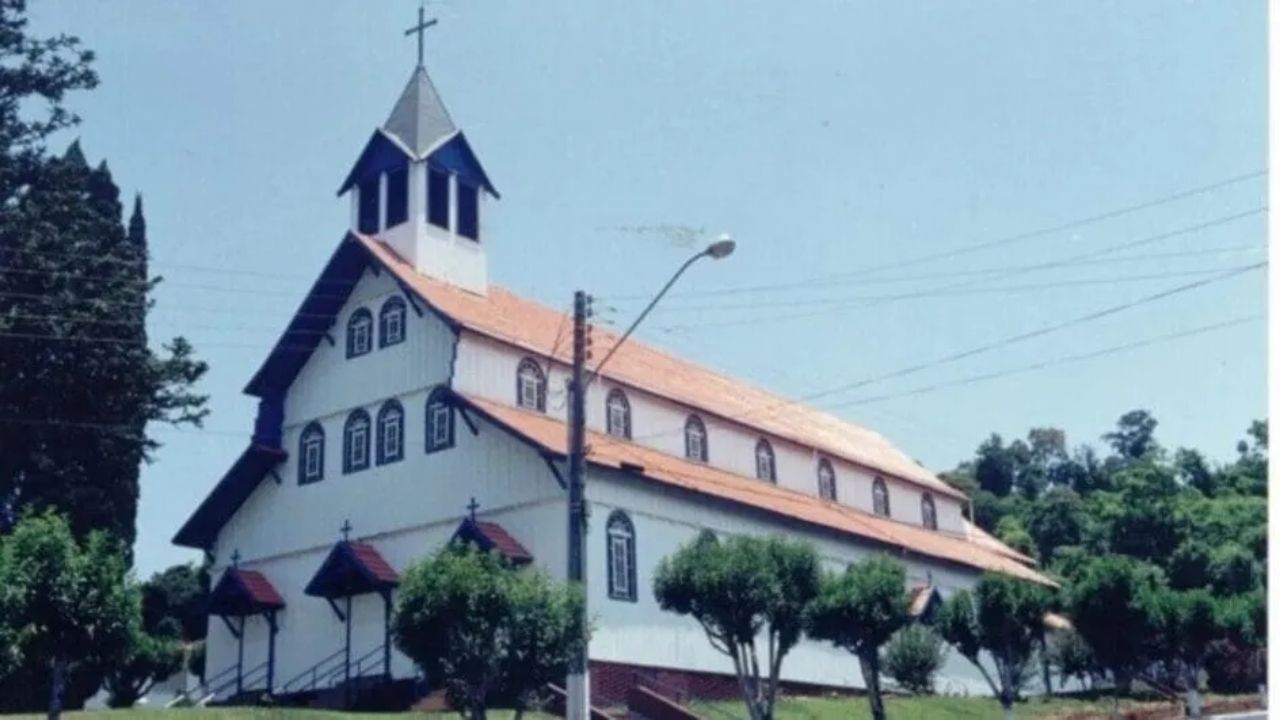
São João do Oeste draws attention precisely because of the contrast between size and significance. The municipality has just over 6,000 residents, but it houses a construction recognized for its grandeur, historical value, and symbolic strength. The wooden church functions as a postcard and as a kind of living memory of the community.
-
Brazilian Official Proposes Plan to Revive 223 km Railway, Connecting 13 Cities and Transporting 32,000 Passengers and 600 Containers Daily, Plus a Tourist Train in Just 2 Hours 20 Minutes.

-
China Completes Mountain-Top Airport After Major Engineering Feat Near Three Gorges
-
Freelance Construction Worker Reveals Earnings After 20 Days of Plastering Work

-
From a Small Brazilian Town to 120 Countries: Tramontina Reaches R$ 10 Billion in Revenue at 115 Years




Located in the far west of Santa Catarina, the city is in a region marked by countryside landscapes, a peaceful routine, and a strong presence of traditions inherited from German colonization. For those arriving in the municipality, the temple appears not only as a tourist spot but as a visual synthesis of local history.
The wooden church was born from the work of the residents themselves
The São João Berchmans Parish Church was built between 1945 and 1948, during a period when community mobilization was crucial to turn plans into works. The wood used in the construction came from the region itself, and the work involved voluntary participation from the residents.
This detail helps explain why the wooden church has value beyond architecture. It does not represent just a religious building, but a collective effort erected by families who helped shape the identity of the municipality. Almost eight decades later, the work remains connected to the memory of those who live in the city.
The temple retains traces of Germanic tradition
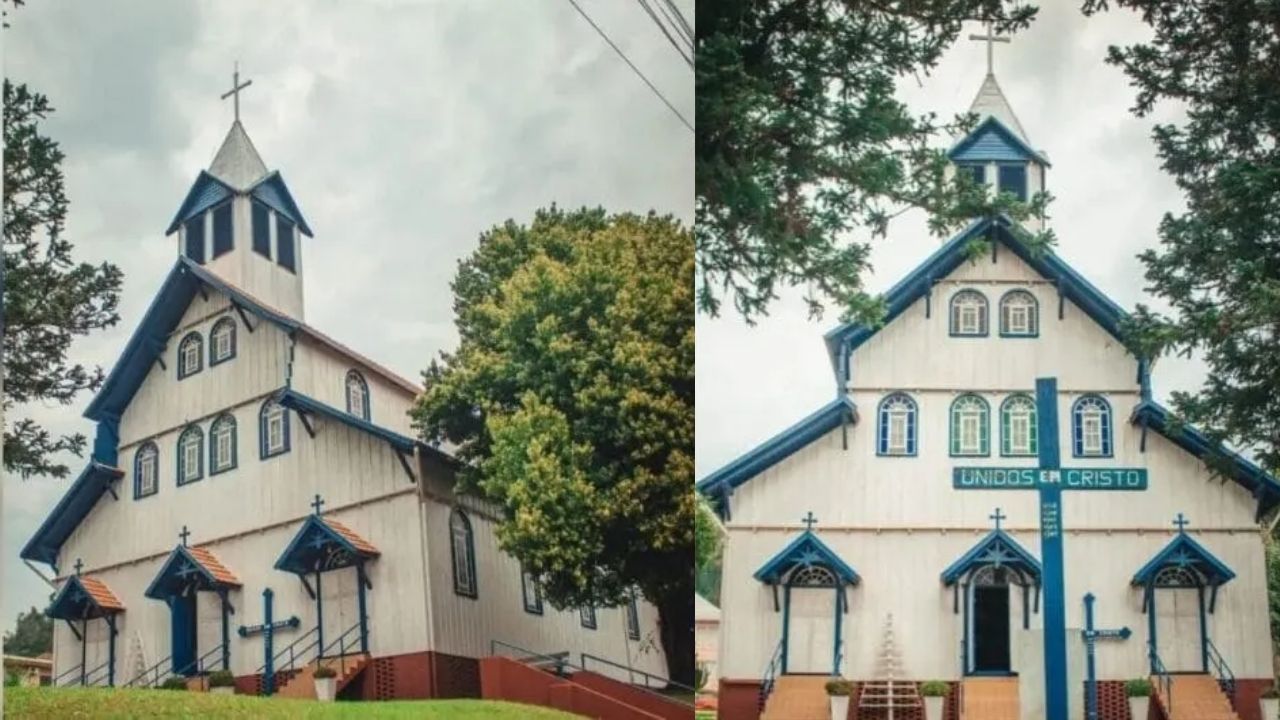
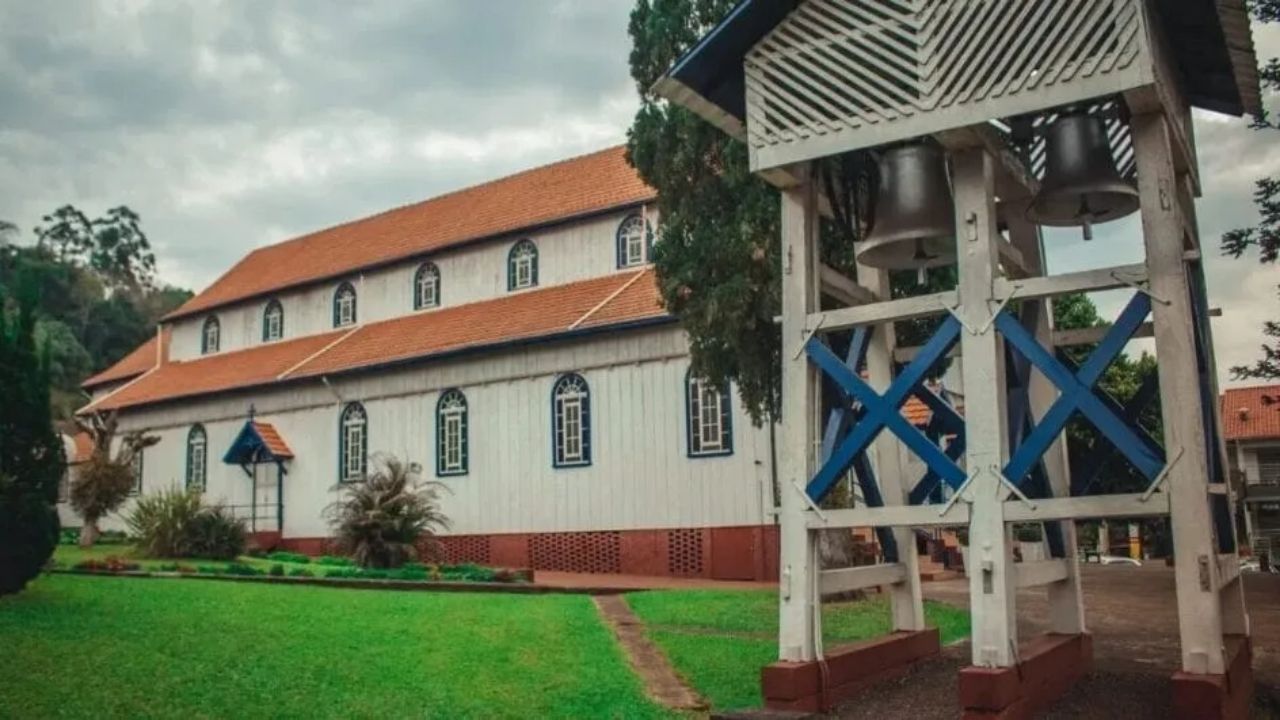
The architecture of the São João Berchmans Parish Church draws attention for its details linked to Germanic tradition. The influence appears in the shape of the building, the grandeur of the structure, and the way the space preserves an aesthetic associated with the origins of the local community.
This cultural connection was not limited to the temple. In São João do Oeste, German customs remain present in the routine, in typical festivals, in cultural groups, in gastronomy, and even in the language, still spoken by part of the population. The wooden church, in this context, is a gateway to understanding the entire city.
São João do Oeste preserves customs that span generations
Founded by families descended from German immigrants, the municipality maintains a strong relationship with its roots. This heritage appears in religious celebrations, community habits, cuisine, architecture, and forms of coexistence that still mark the local daily life.
For visitors interested in cultural tourism, this set creates a different experience from more common itineraries. The city does not rely solely on an isolated monument. The attraction lies in the combination of heritage, tranquility, and a way of life that preserves references passed down from generation to generation.
The thermal waters complete the tourist itinerary
Besides the wooden church, São João do Oeste also attracts visitors with the São João Thermal Baths, considered one of the main tourist enterprises in the Extreme West of Santa Catarina. The naturally heated pools welcome tourists throughout all seasons of the year.
This proximity between history and leisure strengthens the local itinerary. In a single visit, tourists can explore the religious heritage, observe the Germanic influence, walk through quiet streets, and enjoy the thermal waters. It is this mix that makes the small municipality more competitive as a regional destination.
Tranquility has also become part of the attraction
São João do Oeste is described as an organized city, with well-maintained streets and a strong community spirit. The local economy relies mainly on agriculture, agribusiness, commerce, and service provision, maintaining a dynamic typical of small inland municipalities.
For those seeking rest, this environment weighs as much as the tourist spots. The feeling of security, the slower pace, and the contact with local culture help form an image of a refuge. The wooden church attracts visitors, but the city’s tranquility helps prolong the experience.
Access places the city on a regional itinerary
The municipality is located in the Extreme West of Santa Catarina and is accessible via SC-163. São João do Oeste is about 140 kilometers from Chapecó, one of the main urban references in the region, which facilitates the arrival of visitors already traveling through the West of Santa Catarina.
The proximity to cities like Itapiranga and Iporã do Oeste also favors short trips and combined itineraries. For regional tourism, this is important because it allows combining culture, countryside, gastronomy, thermal waters, and historical heritage in a broader trip.
A heritage that withstands time and oblivion
Almost eight decades after its construction, the wooden church remains one of the most important historical landmarks in Western Santa Catarina. Its permanence shows how a community project can span generations without losing symbolic relevance.
The case of São João do Oeste also provokes a reflection on conservation. In a country where many local landmarks disappear due to lack of maintenance or recognition, the temple shows the value of preserving structures that tell the story of an entire community. Do you think small towns should invest more in preserving these symbols or prioritize new tourist attractions?


