Portuguese
  Spanish


An abandoned stadium in Cidreira, former stage of Gre-Nal, will be demolished to become a R$ 50 million racetrack inspired by Nascar. The replacement of stands overtaken by weeds with an oval track reignites the debate on sports memory, urban abandonment, and new uses on the Gaucho coast.
An abandoned stadium in Cidreira, in Rio Grande do Sul, is set to be demolished to make way for a racetrack estimated at R$ 50 million and inspired by Nascar. The location is the Estádio Antônio Braz Sessim, known as Sessinzão, which once hosted games of Grêmio and Internacional, including the memory of Gre-Nal, and today is marked by weeds, trash, debris, and structures in ruins.
The information was published by NSC Total on June 30, 2026. The transformation depends on a concession of the area to private enterprise, after authorization approved by the Cidreira City Council in November 2025, while the Federação Gaúcha de Automobilismo emerges as the main interested party in leading the project.
The abandoned stadium that was once a showcase of football became a ruin on the coast
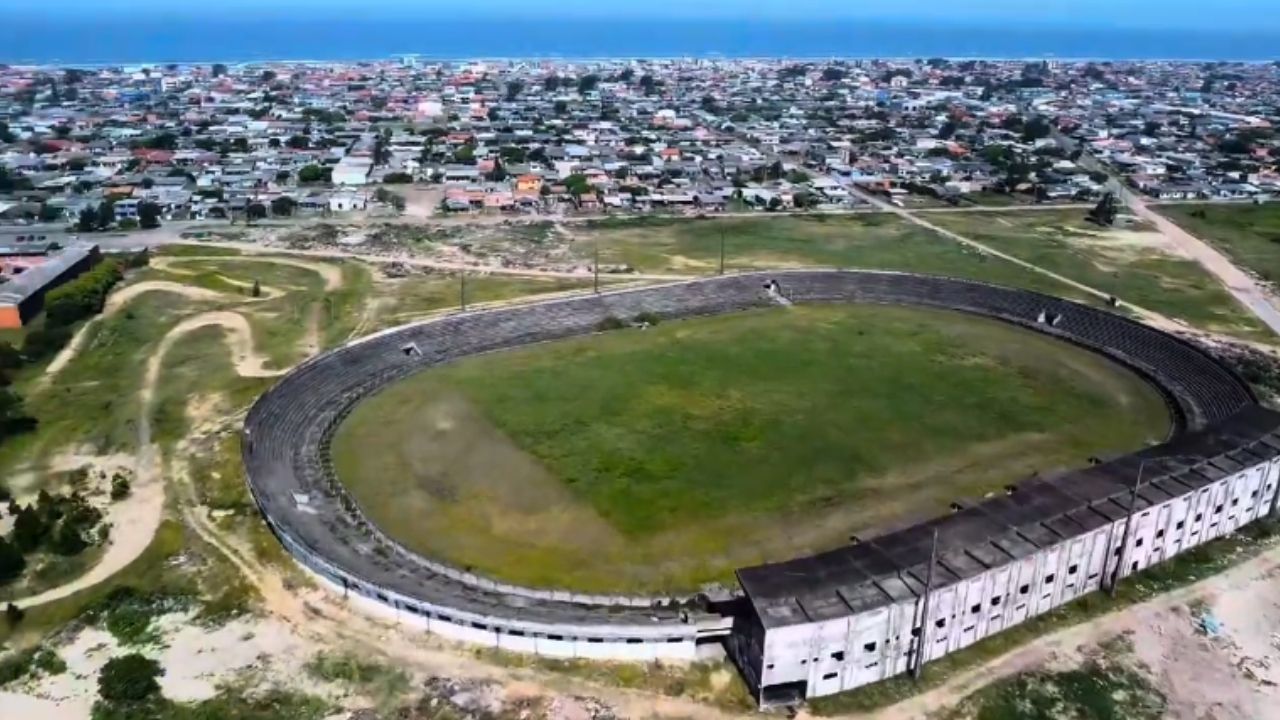
The Sessinzão was inaugurated in 1996 with the ambition of boosting the local economy and serving as a sort of second home for the Gre-Nal duo. The idea was to transform Cidreira, a coastal city between dunes and sea, into a point capable of hosting significant games and attracting audiences beyond the summer season.
-
Brazil’s First Immersed Tunnel to Connect Santos and Guarujá in 2 Minutes at a Cost of $1.2 Billion

-
British Asphalt May Soften in 40°C Heatwaves, While Indian Roads Withstand Harsh Heat with Tougher Materials, Highlighting Engineering Challenges Amid Climate Change

-
World’s Tallest Bridge Opens in China, Cutting Travel Time from 2 Hours to 2 Minutes
-
Proper Cement Mix Extends Plaster Durability, Prevents Early Detachment, and Reduces Home Structural Risks


But the football journey was short. According to the report, the stadium hosted only 19 official games before being closed in 2010 due to structural problems. What was born as a promise of development ended up becoming an uncomfortable symbol of abandonment, with empty stands and a space that lost its sporting function over the years.
From the memory of Gre-Nal to the project of an oval track
The proposed change is radical: the football field is out, and an oval track racetrack is in. The project plans to transform the old stadium into a circuit focused on motorsport, with an estimated budget of R$ 50 million and a construction period that could reach ten years.
The Gaúcha Federation of Motorsport has shown interest in taking charge of the proposal, seeking investors and leading the implementation. The city hall, in turn, is expected to launch a concession bid for the area. In practice, the old sports temple would stop focusing on football and start aiming for a new economic vocation linked to racing.
The inspiration comes from a Nascar arena in the United States
The design of the new racetrack is based on the Bowman Gray Stadium in the United States, a track associated with Nascar. The American circuit is located in Winston-Salem, North Carolina, and started as a football stadium before hosting races, back in the late 1930s.
For Cidreira, the project envisions a 498-meter track, slightly larger than the American layout, which is about 400 meters. If it progresses, the responsible parties still need to discuss technical details with Nascar, such as inclination and specific characteristics of the modality. The proposal attempts to import to the Gaúcho coast a sports spectacle logic that is uncommon in Brazil.
The land carries abandonment, but also the capacity to attract the public
The Sessinzão has an approximate capacity of 17,000 people, the same attributed to Bowman Gray. This fact helps explain why the space still arouses interest, even after years without fulfilling its original function. The structure, despite the wear, occupies an area that can be repurposed in another sports format.
Today, however, the contrast is strong. The location described by the report appears overgrown with weeds, litter, and signs of deterioration. The image of an abandoned seaside stadium weighs heavily because it mixes nostalgia, waste, and the possibility of a new beginning, especially in a city seeking new ways to attract visitors, investments, and events.
The concession could define the future of Sessinzão
The first institutional step occurred in November 2025, when the Cidreira City Council authorized the city hall to lease the area to the private sector. The planned concession is for 30 years, during which the project could materialize and transform the old stadium into a motorsport facility.
This model indicates that the city hall does not intend to merely refurbish the space to return it to football. The bet is on a change of use, with the Gaúcha Federation of Motorsport as an interested agent and the private sector as a potential financier. The future of Sessinzão, therefore, depends less on nostalgia and more on the economic viability of the new track.
Football lost space, but the city tries to recover urban value
The story of the abandoned stadium also exposes a common problem in sports facilities: structures created to generate movement can become urban liabilities when they no longer host events, maintenance, and audiences. Instead of attracting income, they occupy valuable areas without fulfilling a clear function.
In the case of Cidreira, the racetrack proposal tries to reverse this logic. The oval track could host specific races and other types of modalities, according to the project mentioned in the report. The central question is whether replacing a football arena with a motor racing circuit will be enough to transform abandonment into permanent activity.
The racetrack could put Cidreira on a different route
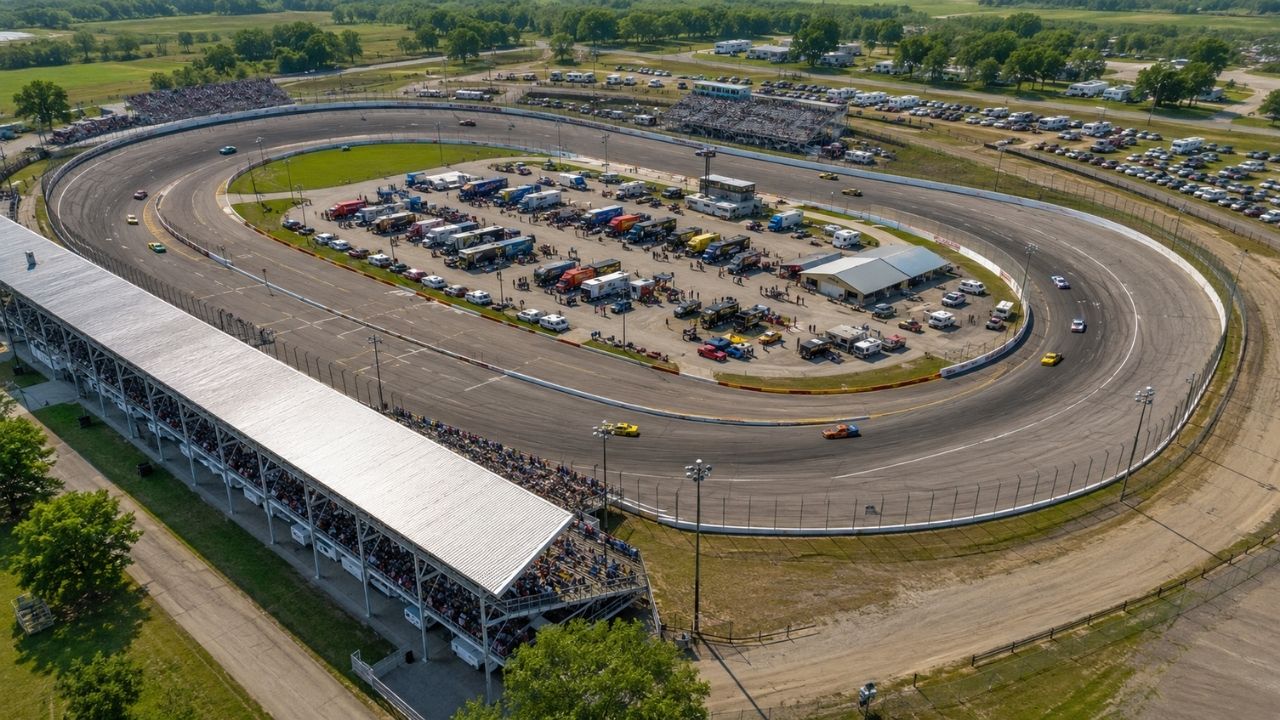
If the project advances, Cidreira could stop being remembered only for the abandoned Sessinzão and start competing for space on the motor racing map. The fact that the circuit is designed as an oval track, inspired by a model associated with Nascar, makes the proposal more unusual in the Brazilian scenario.
Even so, the path to the construction is long. There is concession, fundraising, licensing, technical definition, and execution planned over a broad timeframe. Between the abandoned stadium and the promised racetrack, there is a distance that will be measured in investment, planning, and the ability to keep the project alive for years.
Sports ruins raise a bigger question in Brazil
The case of Sessinzão is not just about Cidreira. It touches on a larger discussion about the fate of sports facilities that lose their function over time. Small stadiums, local arenas, and municipal structures can become emotional memories for fans but also turn into degraded areas when there is no continuous use.
The demolition of the old field to make way for a racetrack shows a pragmatic choice: replacing a frustrated promise of football with a bet on motor racing. For some, this may seem like a loss of history; for others, it may be the chance to bring life back to a forgotten space.
The gaucho coast could gain a new speed arena
The location of Sessinzão, between dunes and near the sea, adds a strong visual element to the project. An oval track on the coast of Rio Grande do Sul would have a different appeal from traditional racetracks, especially if it manages to combine events, tourism, and frequent use throughout the year.
The challenge is to ensure that the new structure does not repeat the cycle of the old stadium. To prevent the investment from becoming another empty promise, the project will need a schedule, management, maintenance, and an audience. In your opinion, should Cidreira preserve the memory of the abandoned stadium or bet on demolition to try to transform Sessinzão into a new racing hub?