Portuguese
  Spanish


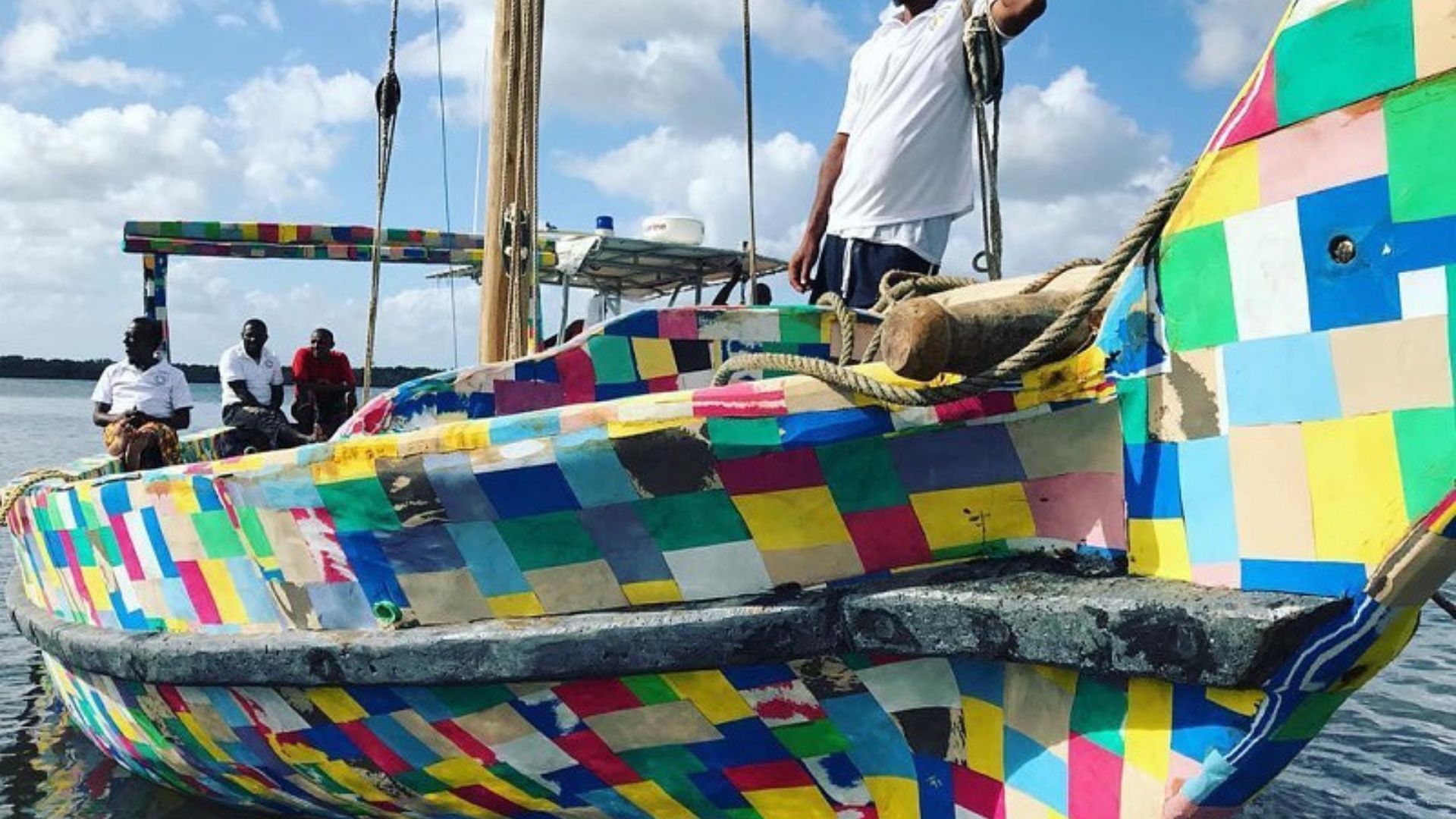

Flipflopi united recycled plastic, 30,000 flip-flops, and Swahili tradition to combat marine pollution on the East African coast.
When environmentalists, artisans, and residents began collecting plastic scattered on the beaches of Lamu, Kenya, the goal was not just to remove waste from the sand. The proposal was to show, in a visible and navigable way, that part of the waste choking the ocean could return to the productive chain instead of remaining on the beaches, in landfills, or in the sea. From this idea, the Flipflopi was born, presented by the project itself as the first sailing dhow made 100% from recycled plastic.
The traditional vessel of the Swahili coast was built with about 10 tons of plastic waste and incorporated approximately 30,000 discarded flip-flops, becoming one of the most well-known cases of creative recycling linked to environmental education in East Africa.
Flipflopi was born in Lamu and transformed beach plastic into a recycled dhow
The origin of the project dates back to 2016, when Ben Morison began advocating the idea of building a traditional dhow with discarded plastic found on the Kenyan coast. Alongside shipbuilder Ali Skanda, a local reference in Swahili boat tradition, and environmental activist Dipesh Pabari, the plan began to take shape in Lamu.
-
Welder Discovers 16th-Century Diamond Ring in England After 7 Hours with Metal Detector; Gold Jewel Linked to Edward I Pattern Auctioned for £17,000

-
Former Merchant Marine Captain Invents Fuel-Free Barrier, Removes 20,000 Tons of Trash from Chennai Rivers
-
14-Year-Old Maxim Harris Turns School Project into Anti-Rage Gaming Accessory, Sells 1,000 Units Across 46 U.S. States, Donates 20% of Profits to Charity
-
Brazilian Health Agency Approves First Oral Medication for Cancer Patients



The proposal united two central objectives. The first was to tackle pollution caused by single-use plastics. The second was to preserve and value a centuries-old shipbuilding technique from the Swahili coast, showing that environmental innovation and traditional knowledge could go hand in hand.
The hull and other parts of the boat were produced with locally repurposed plastic, while the flip-flops found on the beaches gained a new function in the structure. The result was a functional, colorful, and highly symbolic vessel, designed to prove that plastic does not need to end as permanent waste when it enters a real circular economy model.
Recycled plastic boat traveled 500 kilometers between Kenya and Tanzania
Once completed, the Flipflopi embarked on its first major journey in January 2019. According to the United Nations Environment Programme, the 9-meter dhow departed from Lamu and sailed about 500 kilometers to Zanzibar, Tanzania, carrying the message of combating plastic pollution to coastal communities in East Africa.


The crossing was not conceived solely as a technical demonstration. At each stop, the project facilitated discussions with residents, students, fishermen, local leaders, and public representatives about the impacts of disposable plastic in the ocean and about alternatives for reuse and recycling.
The boat became a kind of floating classroom. The vessel served as a practical showcase to demonstrate that waste found on beaches and coastal cities could gain economic, educational, and social value when treated as raw material rather than as waste with no destination.
Environmental education and marine pollution became the center of Flipflopi’s mission
From the beginning, the creators made it clear that the boat was just the most visible part of a larger campaign. The project defines itself as a circular economy movement aimed at tackling plastic pollution through education, innovation, and advocacy, focusing on coastal and island communities.
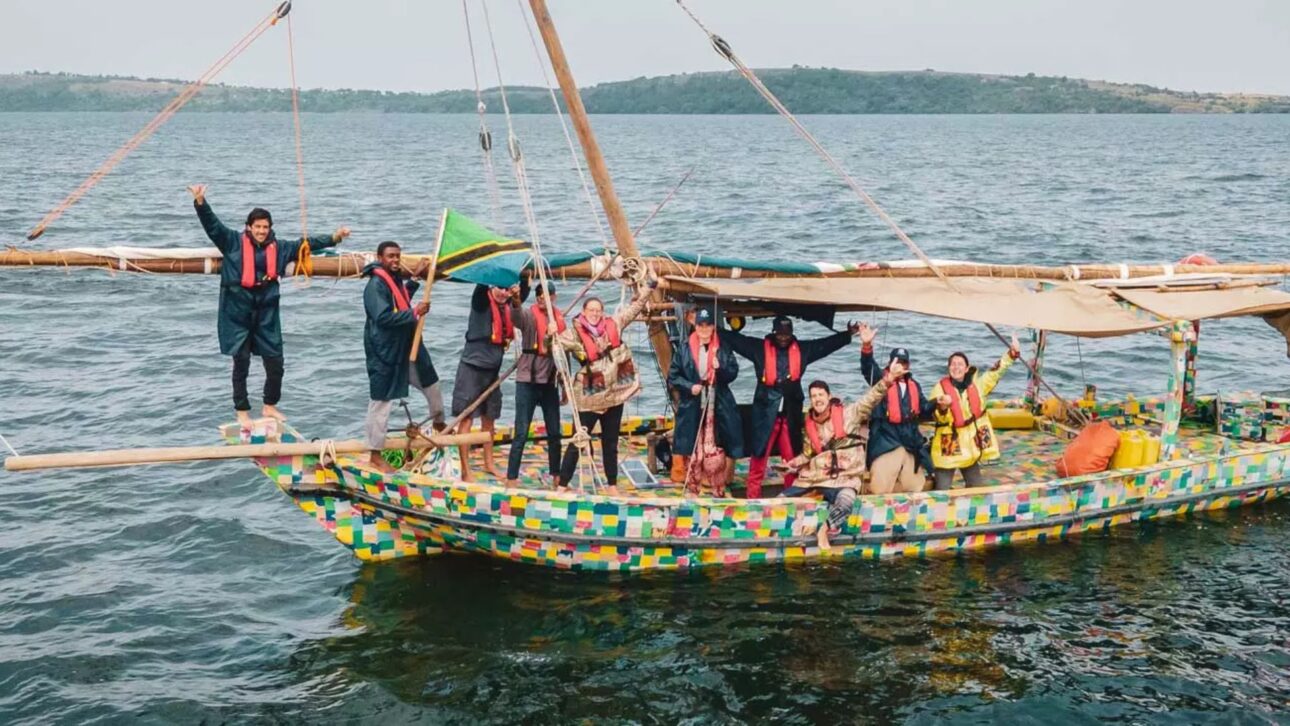
Therefore, the expedition was accompanied by awareness actions about reducing the use of disposable plastics, strengthening recycling, and changing consumption habits. The central message was simple and powerful: the plastic problem will not be solved just by cleaning beaches, but also by reducing unnecessary disposal and creating local reuse systems.
This educational focus helped Flipflopi gain international projection. More than an unusual boat, it became a symbol of a local response to a global problem, connecting marine litter, coastal culture, circular economy, and pressure for stricter policies against single-use plastic.
Recycling project in Lamu grew and started producing furniture and boats
With the advancement of the initiative, the knowledge accumulated in the construction of the dhow ceased to be limited to a single vessel. The Flipflopi Project reports that it now maintains a structure in Lamu focused on the recovery and recycling of plastic, using this material as a basis to manufacture durable products and support new local productive models.
Among the developments of the project are the production of handcrafted furniture, components for boats, and new experiences in shipbuilding with reused plastic. The Flipflopi’s own website highlights that the organization has already built other boats and develops products related to Swahili heritage and the logic of material reuse.
The proposal also gained economic and social dimensions. Instead of treating waste only as an environmental liability, the project started to work on the idea of income generation, community innovation, and valuing artisanal work, associating recycling with a concrete opportunity for local development.
Flipflopi Training Center Teaches Recycling and Preserves Traditional Knowledge
Another important step was the creation of a training center linked to the project. According to Flipflopi, this space was structured to teach practical skills of the circular economy while preserving traditional knowledge of furniture making and boat building on the Swahili coast.
The program started offering courses and training activities related to plastic reuse, product design, and artisanal production. The proposal is to train young people and local workers to operate in a chain that combines recycling, manufacturing, and environmental conservation.
With this, Flipflopi ceased to be just a striking case of a boat made from recycled waste. The project transformed into a broader platform for training, innovation, and waste recovery, reinforcing the idea that combating marine pollution also requires infrastructure, professional training, and sustainable economic alternatives.
Boat Made from Discarded Flip-Flops Became a Global Symbol of Circular Economy
The impact of Flipflopi goes beyond the vessel itself. By transforming about 10 tons of plastic and 30,000 flip-flops collected on the Kenyan coast into a fully navigable dhow, the project managed to convert a diffuse environmental problem into a powerful, concrete, and easy-to-understand image.

This symbolic strength explains why the boat gained so much attention outside Kenya. It brings together in a single story elements that rarely appear together with such clarity: local tradition, marine waste, recycling, environmental education, social innovation, and advocacy for a circular economy applied to real life.
In the end, Flipflopi showed that the fight against plastic in the oceans does not depend solely on major technologies or global promises.
In Lamu, a coastal community transformed waste collected from beaches into a tool for education, mobilization, and behavior change, creating one of the most emblematic examples of waste repurposing in East Africa.