






 Portuguese
  Spanish
  3 min of reading
  0 comments


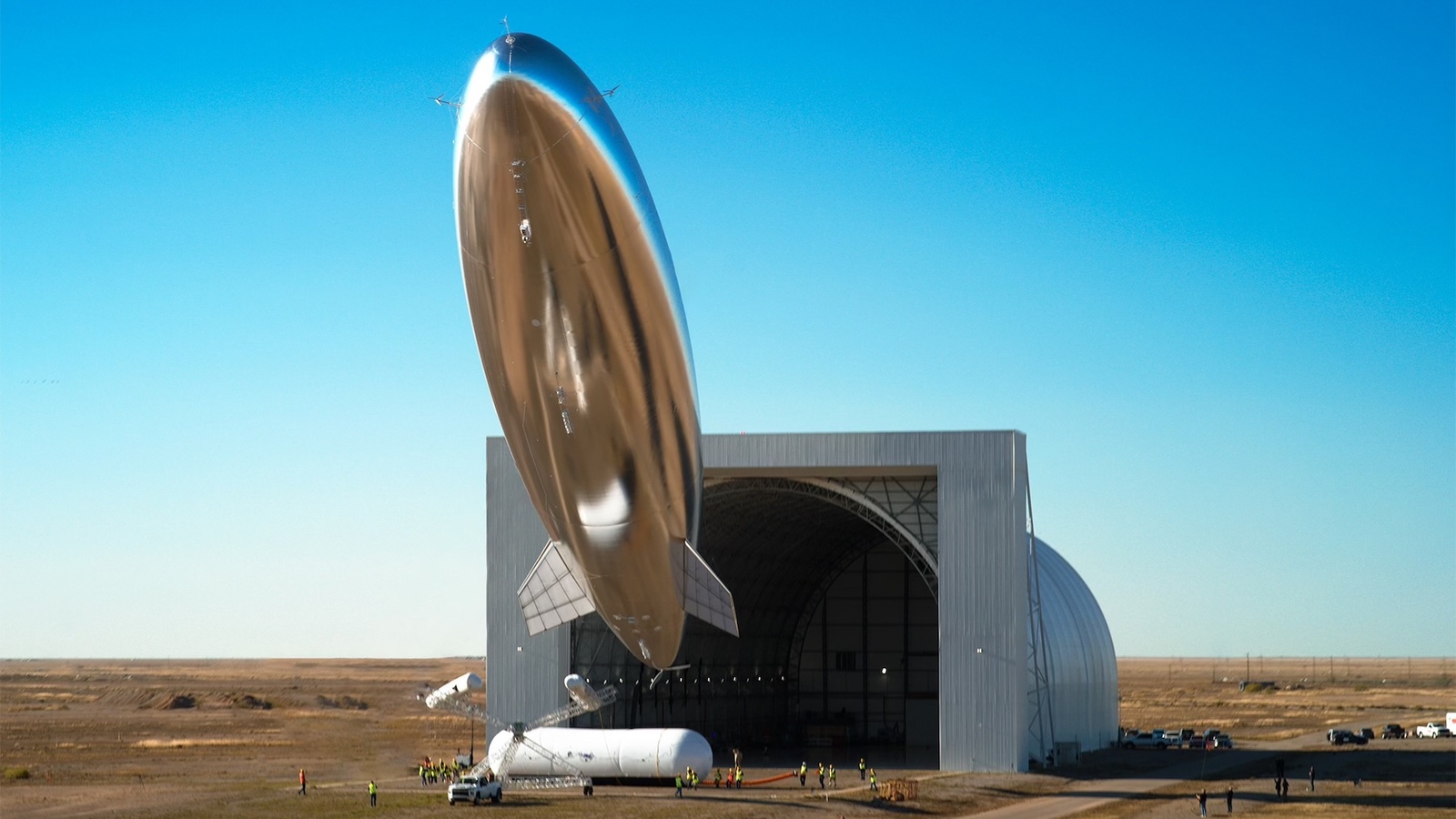
The solar airship SE2 flew for 12 days above 52,000 feet, traveled 10,300 km to Brazil, and advanced to pre-commercial tests
The solar airship SE2, from Sceye, completed a 12-day mission between New Mexico and the coast of Brazil, flying above 52,000 feet and paving the way for use in telecommunications and environmental monitoring.
Mission completed
Sceye reported that the SE2 completed the flight of the Resilience Program, which started on March 25 and ended on April 6.
During this period, the solar airship traveled 6,400 miles, about 10,300 km, from New Mexico to the Brazilian coast, concluding the operation with a controlled landing in international waters.
-
For the first time, researchers find the fuel of the first stars in galaxies formed only 700 million years after the Big Bang.

-
Silent invasion in the Amazon raises alarm: 82 exotic animals and 59 plants threaten native species, crops, and the forest’s balance, while authorities rush to prevent something worse caused by invasive species.

-
Scientists have created a material six times lighter than air, 75 times lighter than styrofoam, and that becomes stronger the more it is compressed: aerographite seems impossible, but it can reinforce structures, batteries, and satellites.

-
USA prepares a 408 kg time capsule with synthetic DNA, national treasures, and a secret message to reveal to Americans in 2276 what it was like to live in the country in 2026.


The vehicle spent over 88 hours flying over selected locations, maintaining altitudes above 52,000 feet during the test.
For Sceye, the flight represents an important step towards the commercial deployment of the aircraft in telecommunications and environmental monitoring.
Structure and energy of the solar airship
The SE2 is 82 meters long and was designed to stay in the air for months or even years.
On top, the solar airship carries solar cells that generate energy to charge lithium-sulfur batteries. The batteries, with 425 Wh/kg, power an electrically driven tail propeller.
Throughout the journey, the vehicle completed a cycle of day and night over New Mexico and three consecutive daytime cycles on the coast of Brazil.
With this performance, Sceye stated that it has the necessary data to move towards months-long flights in the stratosphere.
Network and response
The company highlighted the role of the airborne cellular network antenna SceyeCELL, used to provide connectivity from the stratosphere.
According to Sceye, this structure can be used in response to emergencies and disasters, providing connectivity where traditional networks and other technologies cannot reach.
Mikkel Vestergaard Frandsen, founder and CEO of Sceye, stated that resilience makes it possible to transform the stratosphere into a new layer of infrastructure.
He declared that staying over an area for extended periods allows for persistent connectivity and real-time monitoring where other networks fail.
Frandsen said that the technology could extend the reach of existing networks globally and help connect billions of people with practical information during natural disasters.
Upcoming flights
The Resilience Program builds on the progress made with the Control Dynamics Program, which started in 2024.
In the previous stage, Sceye stated that its airship was the first HAPS to remain powered during a full day and night cycle, maintaining power over a specific operational area.
During the most recent flight, the SE2 maintained its position with a maintenance radius of only 0.62 miles, equivalent to 1 km.
The goal of the program was to align flight duration with commercial requirements. After achieving this objective, the startup said it would move on to pre-commercial testing.
The first flight of this new phase will take place in Japan and aims to provide backhaul connectivity to SoftBank’s main network.
Frandsen stated that, with this mission, the company is advancing to pre-commercial test flights, treating the outcome as an achievement for Sceye and the stratospheric sector.
With information from Interesting Engineering.




Be the first to react!