Portuguese
  Spanish


The growing local opposition in the U.S. uses claims of health risks to pressure authorities to block renewable energy installations in rural areas.
The resistance comes at a time when Michigan ranks among the top four states with the largest share of new capacity planned for solar farms directly connected to the U.S. power grid. Texas, Arizona, and California are also part of this group, while local communities pressure authorities to halt or complicate new ventures.
The case of Kevin Heath, in southeast Michigan, illustrates the direct impact of this reaction. About six years ago, he agreed to lease part of his family’s farm for a solar project, but the opportunity was blocked in 2023 when his municipality approved a rule prohibiting large solar projects on agricultural land after pressure from residents.
Health claims pressure local authorities
Criticism of solar energy has gone beyond land use and entered the realm of public health. Residents and opponents raise concerns about possible effects of electromagnetic fields, glare, noise, toxic materials, and future contamination when projects reach the end of their lifespan.
-
China Launches World’s First 307-Meter Floating Wind Platform to Supply Oil Rigs, Aiming to Cut 35,000 Tons of CO2 Annually

-
Japan Deploys Offshore Concrete Factory, Constructs Massive Caissons in 8 Days, Revolutionizing Port Construction with Industrial Efficiency

-
China Builds World’s Largest Power Grid, Generating Enough Energy to Supply 15 Times Brazil’s Needs, Surpassing the US, EU, and India Combined
-
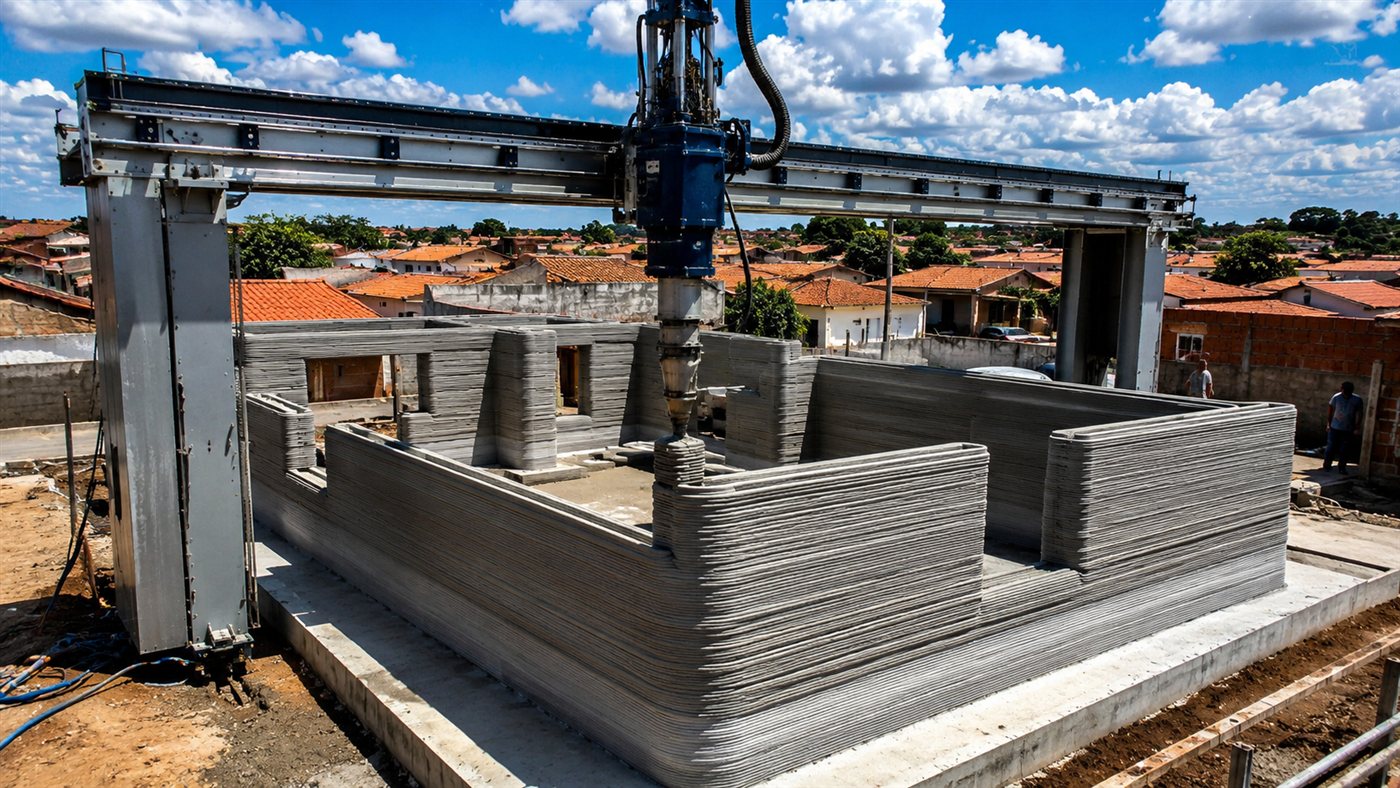
Brazil’s First 3D-Printed House Built in 30 Hours with Two Operators and 20% Lower Costs


The reaction has fueled restrictions in various parts of the country. An article published late last year in the Brigham Young University Law Review pointed out that limitations on solar development have been spreading nationally, often associated with misinformation or unfounded fears, including about environmental and human risks.
In Ohio, a state authority rejected a solar project proposal last month, even though its team had initially indicated that it met all requirements. Among the concerns cited by opponents were possible impacts on residents’ health, in an episode that reinforced the political weight of solar fear.
In Missouri, a bill seeks to halt commercial solar projects, including those already under construction, at least until 2027, while a state agency prepares new regulations. The emergency clause of the proposal states that the measure would be necessary to preserve public health, welfare, peace, and safety.

Science indicates low risk in the most common panels
Large solar projects can occupy hundreds or thousands of acres of rural areas with crystalline silicon and tempered glass structures. The visual transformation of the territory helps explain part of the resistance, but researchers indicate that the most common types of panels contain small amounts of potentially toxic materials, if they do, and are encapsulated, with a low likelihood of leaking into the soil.
A person’s exposure to the electromagnetic field of a solar farm is described as similar to that found in common household appliances, and it decreases rapidly with distance. Noise and glare are also often reduced with vegetation, setbacks between structures and neighboring properties, as well as positioning inverters away from homes.
Inverters, equipment that converts current for use in the power grid, are seen as one of the main sources of noise in solar installations. In a project in Morrow County, Ohio, noise modeling indicated that the equipment would be virtually inaudible to the public, with a requirement for correction if it exceeded a certain limit.
Michigan becomes a battleground over solar energy
In St. Clair County, in eastern Michigan, the debate gained momentum when the medical director of the Health Department, Dr. Remington Nevin, stated in memos that large solar installations could pose a health risk to rural residents. He also argued that state standards would not be sufficient to protect them from environmental hazards, sources of contamination, and conditions that could cause diseases.
The county adopted a public health regulation last year with limits on solar development and battery storage. The measure became the center of a legal dispute, and a circuit judge ruled in February that the rule was invalid, null, and of no effect, but local authorities chose to appeal unanimously.
Michigan requires electricity suppliers to achieve a portfolio of 80% clean energy by 2035 and 100% by 2040. Despite this, only 2.55% of the state’s electricity comes from solar energy, while the rate is nearly 6% in Ohio and almost 11% in Texas.
Decline in installations shows reaction effect
The rise of solar fear occurs as new solar installations in the United States fell 14% last year. Local pressure against solar panels complicates the expansion of renewable infrastructure precisely at a time of rising costs for consumers.
The resistance also affects companies trying to develop projects. Open Road Renewables, which has eight solar projects permitted in Ohio, reported that it will not start new projects in the state due to a licensing process described as subject to manipulation and misinformation.
At the center of the dispute, solar panels remain associated with local fears that researchers and experts contest. The solar fear has gained political strength, stalled projects, and turned a power generation technology into a target of municipal battles over health, rural landscape, property, and energy future.
The solar fear has led cities and counties in the United States to ban, block, or complicate new projects with solar panels, even in the face of a lack of solid evidence that large solar installations harm health. The backlash involves claims about noise, glare, soil contamination, groundwater, and electromagnetic fields, in a movement that is already affecting projects in states like Michigan, Ohio, and Missouri.
The resistance occurs at a time when Michigan ranks among the four states with the largest share of new capacity planned for solar farms directly connected to the U.S. power grid. Texas, Arizona, and California are also part of this group, while local communities pressure authorities to halt or complicate new ventures.
The case of Kevin Heath, in southeastern Michigan, illustrates the direct impact of this backlash. About six years ago, he agreed to lease part of his family’s farm for a solar project, but the opportunity was blocked in 2023 when his municipality approved a rule prohibiting large solar projects on agricultural land after pressure from residents.
Health claims pressure local authorities
Criticism of solar panels has gone beyond land use and entered the realm of public health. Residents and opponents raise concerns about potential effects of electromagnetic fields, glare, noise, toxic materials, and future contamination when projects reach the end of their lifespan.
The backlash has fueled restrictions in various parts of the country. An article published late last year in the Brigham Young University Law Review pointed out that limitations on solar development have been spreading nationally, often associated with misinformation or unfounded fears, including about environmental and human risks.
In Ohio, a state authority rejected a request for a solar project last month, although its team had initially indicated that it met all requirements. Among the concerns cited by opponents were potential impacts on residents’ health, in an episode that reinforced the political weight of solar fear.
In Missouri, a bill seeks to halt commercial solar ventures, including those already under construction, at least until 2027, while a state agency prepares new regulations. The emergency clause of the proposal states that the measure would be necessary to preserve public health, welfare, peace, and safety.
Science points to low risk in the most common panels
Large solar projects can occupy hundreds or thousands of acres of rural areas with crystalline silicon and tempered glass structures. The visual transformation of the territory helps explain part of the resistance, but researchers indicate that the most common types of panels contain small amounts of potentially toxic materials, if any, and are encapsulated, with a low likelihood of leaking into the soil.
A person’s exposure to the electromagnetic field of a solar farm is described as similar to that found in common household appliances, and decreases rapidly with distance. Noise and glare are also often reduced with vegetation, setbacks between structures and neighboring properties, as well as positioning inverters away from homes.
Inverters, equipment that converts current for use in the power grid, appear as one of the main sources of noise in solar installations. In a project in Morrow County, Ohio, noise modeling indicated that the equipment would be virtually inaudible to the public, with a requirement for correction if it exceeded a certain limit.
Michigan becomes battleground over solar energy
In St. Clair County, in eastern Michigan, the debate gained momentum when the medical director of the Health Department, Dr. Remington Nevin, stated in memos that large solar installations could pose health risks to rural residents. He also argued that state standards would not be sufficient to protect them from environmental hazards, sources of contamination, and conditions that could cause illness.
The county adopted a public health regulation last year with limits on solar development and battery storage. The measure became the center of a legal dispute, and a circuit judge ruled in February that the rule was invalid, null, and void, but local authorities unanimously chose to appeal.
Michigan requires electricity suppliers to achieve a portfolio of 80% clean energy by 2035 and 100% by 2040. Despite this, only 2.55% of the state’s electricity comes from solar energy, while the rate is nearly 6% in Ohio and almost 11% in Texas.
Decline in installations shows effect of the reaction
The rise of solar fear comes as new solar installations in the United States fell 14% last year. Local pressure against solar panels complicates the expansion of renewable infrastructure precisely at a time of rising costs for consumers.
Resistance also affects companies trying to develop projects. Open Road Renewables, which has eight permitted solar projects in Ohio, reported that it will not initiate new projects in the state due to a licensing process described as subject to manipulation and misinformation.
At the center of the dispute, solar panels remain associated with local fears that researchers and experts contest. The solar fear has gained political strength, stalled projects, and turned a power generation technology into a target of municipal battles over health, rural landscape, property, and energy future.
With information from Zme Science