






 Portuguese
  Spanish
  4 min of reading
  0 comments


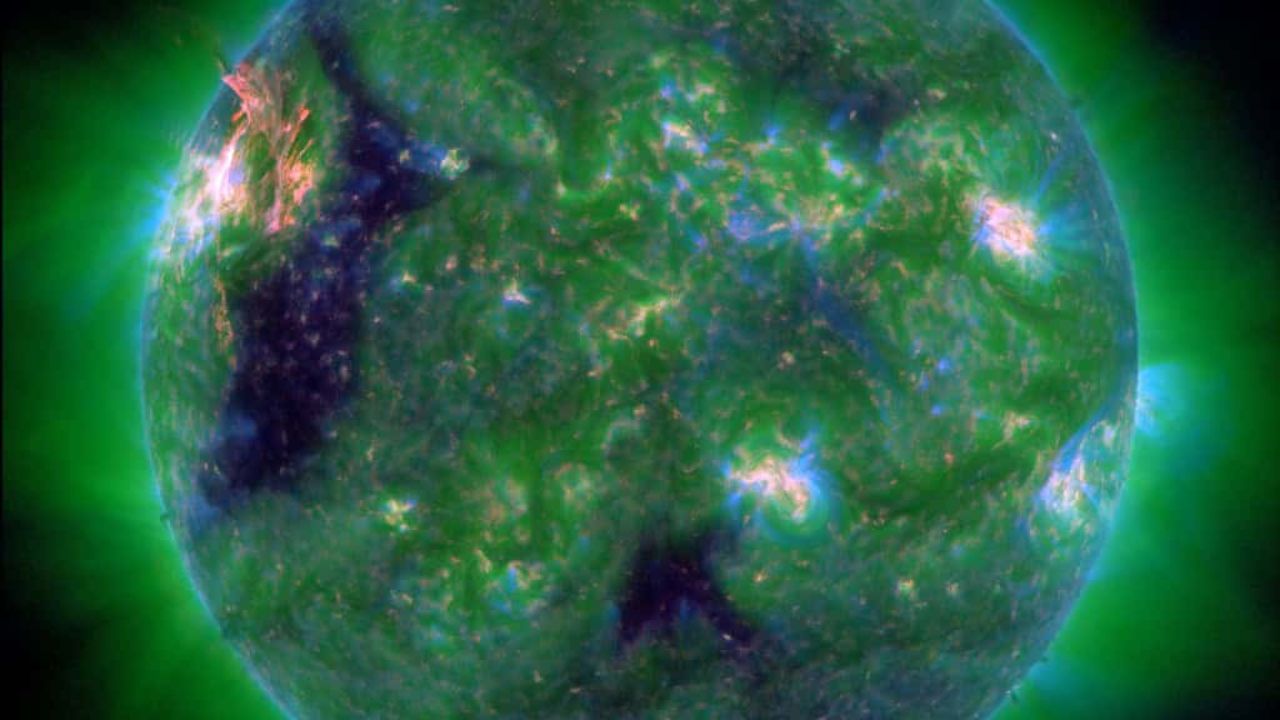
Solar explosion recorded on Sunday may graze the Earth and increase chances of auroras borealis this week.
A solar explosion observed on Sunday (10) put international space monitoring centers on alert after the release of a cloud of charged particles into space. Part of this material may reach the Earth between Wednesday (13) and Thursday (14), albeit indirectly. According to experts, the impact is expected to be limited, but there is a possibility of small geomagnetic storms and an increase in the intensity of auroras borealis in regions further north of the planet.
The phenomenon was identified at 10:39 AM, Brasília time, in an active area of the Sun called AR4436. The information was released by the platform Spaceweather.com, which monitors events related to space weather.
Although the activity was considered moderate, international authorities continue to monitor the behavior of the solar region responsible for the eruption due to the possibility of new episodes in the coming days.
-
Helicopter Drops 180 Tons of Sand and Gravel on Swedish River to Revive Ecosystem Damaged by Decades of Exploitation

-
Brazilian Company Launches Retro Smartphone with 48 MP Camera, T9 Keyboard, and Privacy Features for Social Media-Free Use

-
Self-Taught Chinese Farmer Builds 5-Ton Submarine from Scrap, Launches It in Anhui River
-
Invisible Induction Technology Enables Wireless Power for Blenders, Coffee Makers, and Air Fryers, Reducing Countertop Cables





Solar explosion launched magnetic material into space
In addition to the intense energy emission, the event also generated a coronal mass ejection, a phenomenon known for releasing plasma and magnetic fields from the solar atmosphere at high speed.
In this case, most of the material is not expected to directly hit the planet. Still, space forecast models indicate that a portion of the cloud may partially reach the Earth’s magnetic field.
According to analyses by the United States National Oceanic and Atmospheric Administration (NOAA) and the United Kingdom Meteorological Service, this approach may generate a G1-level geomagnetic storm, considered weak within the scale used by experts.

What does a G1 geomagnetic storm mean?
Geomagnetic storms occur when particles from the Sun interact with the Earth’s magnetic field. Depending on the intensity, the phenomenon can affect technological systems and cause temporary changes in communications.
In the case expected for this week, the anticipated effects are limited. Even so, some impacts may occur.
Among the possible consequences are:
- Small failures in radio signals
- Slight fluctuations in communication systems
- Intensification of the auroras borealis
- Temporary changes in the upper atmosphere
The auroras should be more visible in high latitude areas, including parts of Canada, northern United States, and regions of the United Kingdom.
Solar region continues under monitoring
The sunspot group AR4436, responsible for the solar flare, is located on the northeastern edge of the Sun. As the star rotates, this region gradually becomes more aligned with Earth.
Another point keeping scientists alert is the simultaneous activity of the AR4432 region. Both remain unstable and may produce new eruptions.
According to monitoring agencies, the observation will continue steadily in the coming days due to the potential for new solar energy emissions.
Solar flare was classified as M5.7
The recorded eruption was classified as M5.7. This category is part of the scale used by NASA to measure the intensity of solar flares.
The classes follow an increasing order:
| Class | Intensity |
| A | Very weak |
| B | Weak |
| C | Low |
| M | Moderate |
| X | Extreme |
Each category represents a significant increase in the amount of energy released by the Sun.
Although not among the most dangerous levels, a solar flare of class M can still cause temporary effects on radio systems and high-frequency communications.
Radio signals suffered interference after the event
Minutes after the eruption, the NOAA recorded a radio blackout in parts of the Atlantic Ocean.
According to experts, this happens because the X-rays and ultraviolet radiation emitted during the explosion temporarily alter the upper layer of the Earth’s atmosphere.
This type of interference can disrupt communications used by:
- Airplanes
- Maritime vessels
- Amateur radio operators
- High-frequency systems
The effects, however, are usually temporary.
Event occurs two years after strong historical solar activity
The new solar explosion also drew attention for occurring almost two years after one of the most intense episodes recorded in recent decades.
The Earth faced a G5-level geomagnetic storm in May 2024. During that period, northern lights were seen in unusual areas, reaching as far as regions in southern Mexico.
This time, experts state that the current activity is far below that historical scenario. Even so, monitoring remains reinforced due to the continued solar activities observed in spots AR4436 and AR4432.
Solar explosion reinforces period of increased activity on the Sun
The recent events are part of a period of more intense activity of our star. During these phases, sunspots and eruptions tend to occur more frequently.
Meanwhile, specialized international centers continue to assess the impacts of the solar particles released on Sunday.
If the cloud indeed grazes the Earth in the coming days, the effects should remain limited. Even so, the phenomenon could generate visible changes in the sky in regions near the poles, especially at night.
With information from Olhar Digital




Be the first to react!